


Gridiron Geopolitics: 49ers’ Global Gambit & The Price of Prime-Time Recovery
POLICY WIRE — Santa Clara, USA — It’s not just the thud of pads or the roar of the crowd that defines professional football anymore. These days, the battlegrounds extend far beyond the meticulously...

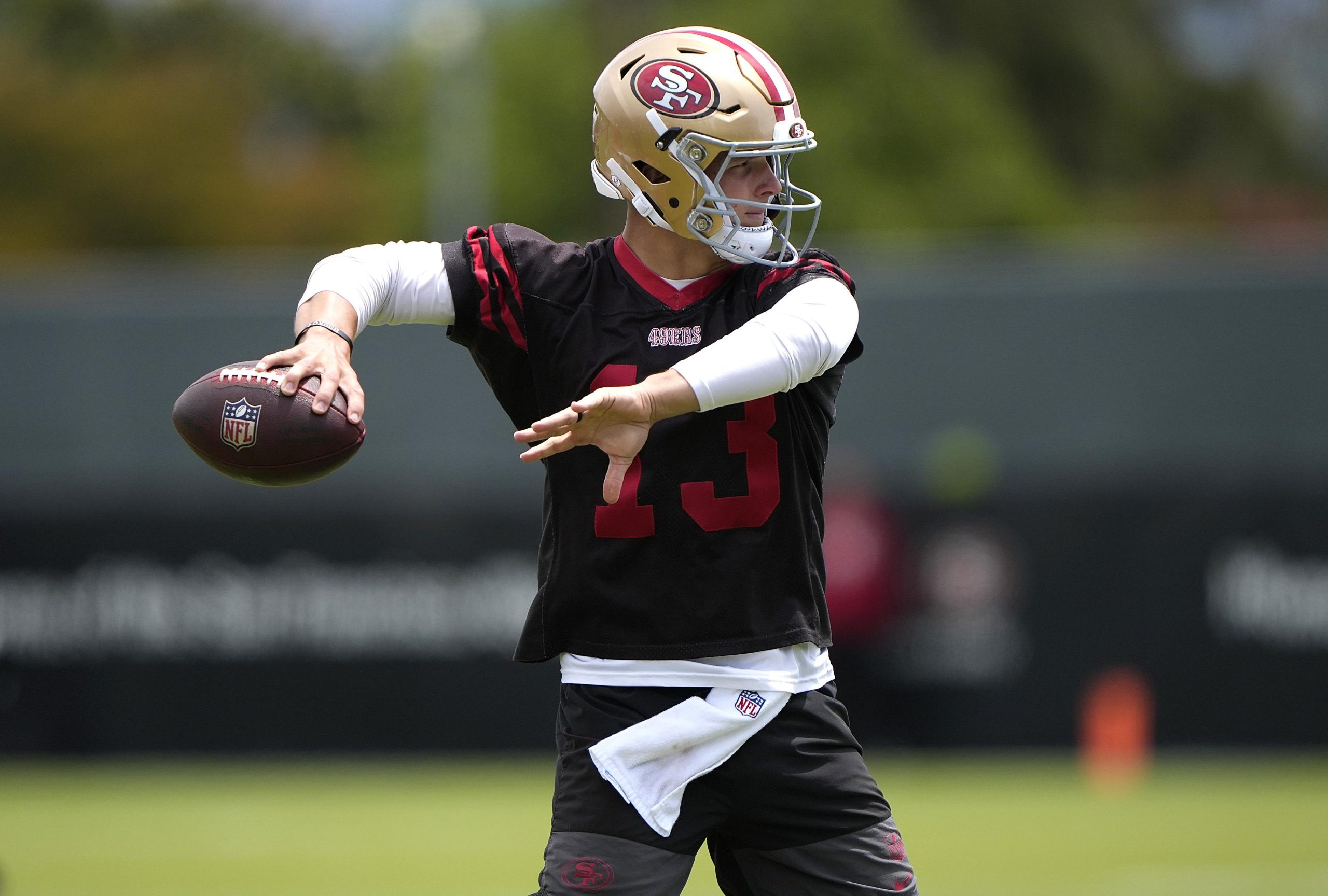
POLICY WIRE — Santa Clara, USA — It’s not just the thud of pads or the roar of the crowd that defines professional football anymore. These days, the battlegrounds extend far beyond the meticulously manicured gridiron, stretching to boardrooms, burgeoning international markets, and—perhaps most tellingly—the increasingly complex, astronomically priced human anatomy. The San Francisco 49ers, a franchise perpetually locked in a title hunt, are navigating this landscape with a clinical precision that’d make a Swiss watchmaker nod in approval.
While the focus at recent Organized Team Activities (OTAs) naturally gravitated to standout performances from fresh faces like rookie receiver Ricky Pearsall or the apparent vigor of speedy return man Jacob Cowing—a blur with surprising strength, mind you, given his past seasons—the deeper play involves strategic personnel management and a calculated push for global market penetration. Consider the saga of Nick Bosa, the team’s defensive titan. His latest recovery from a torn right ACL, sustained just shy of a year ago, is anything but a desperate sprint. It’s a marathon planned down to the very millisecond.
“After tearing my left ACL in 2020, I pushed every recovery milestone as hard as I possibly could,” Bosa reflected, a faint wince playing on his lips even now. “And I probably dealt with some stuff that I didn’t need to deal with in terms of bumps in the road of recovery.” His current comeback? Different story. He’s 29 in October; he’s a seasoned pro with less to prove to himself, or, more importantly, to his paymasters. This isn’t just about his knee healing, it’s about safeguarding a multi-million-dollar asset. The patellar tendon, compromised from a prior high school injury to the same knee, required more delicate handling. It’s methodical, almost detachedly so, a testament to modern sports science—and common sense, frankly.
And Bosa isn’t alone in this measured approach. Christian McCaffrey, the team’s all-purpose offensive weapon, was given an equally soft pedal during practice, a preemptive strike against burnout after what felt like an exhausting last season. Coach Kyle Shanahan, always a man who thinks several plays ahead, didn’t mince words about the bigger picture: “We’ve got to protect these guys. It’s a long haul, an unforgiving business. Our goal isn’t just to win this year; it’s to build a dynasty that lasts.” This isn’t just sentiment; it’s sound financial planning. Every managed minute in practice, every strategic day off, equates to prolonged performance—and sustained revenue. The investment in peak human performance is frankly, eye-watering.
But the team’s ambitions aren’t contained within America’s borders. The international stage beckons, specifically Australia, where the 49ers will kick off their regular season in September. This isn’t merely a game; it’s a statement. It’s an assertion of America’s cultural export — American football—on foreign soil, designed to court new audiences and, more crucially, unlock fresh streams of capital. The league knows it. The team knows it. You can’t tell me it isn’t a bit of an imperialist maneuver, packaging Americana — and delivering it Down Under.
Reports from sports finance analysts suggest the NFL’s global fan base now clocks in north of 150 million, a considerable leap fuelled by targeted international games and aggressive media strategies. It’s a game not just of touchdowns but of tariffs, viewership figures, — and national prestige. In many parts of the world, including pockets of South Asia, where traditional sports like cricket reign supreme, the slow, steady drip of NFL content is shaping a new generation of fans—or at least a curious segment of the populace. Imagine trying to explain the subtleties of a 3-4 defense to a devout Lahore Qalandars fan. It’s an uphill battle, yes, but money talks louder than tradition.
What This Means
The methodical management of superstar injuries and the strategic global deployment of franchises aren’t isolated decisions; they represent a coalescing economic and geopolitical strategy within professional sports. The cost of acquiring and maintaining elite athletes has soared, necessitating careful preservation—it’s not just about winning games, it’s about protecting shareholder value and a return on billions in investment. Because if Bosa tears something because you rushed him, well, that’s not just a setback on the field. That’s a measurable financial hit, impacting everything from merchandising to broadcast rights. The entire sports industrial complex is reliant on these meticulously calibrated human machines. You could argue the whole endeavor has become a global market flex.
the NFL’s aggressive international expansion, exemplified by games in places like Australia and Europe, isn’t simply about spreading the ‘love of the game’. It’s about cultivating new consumer bases, signing international broadcast deals, and extending the league’s soft power—America’s cultural influence packaged as entertainment. It subtly shifts focus, too, away from the domestic squabbles, making the NFL a truly transnational entity. Just like any multinational corporation, really. The irony is, for all the talk of ‘team’, it’s an increasingly individualized, highly monetized ecosystem where each player’s recovery and every strategic market move is weighed against an intricate ledger of risk and reward.