


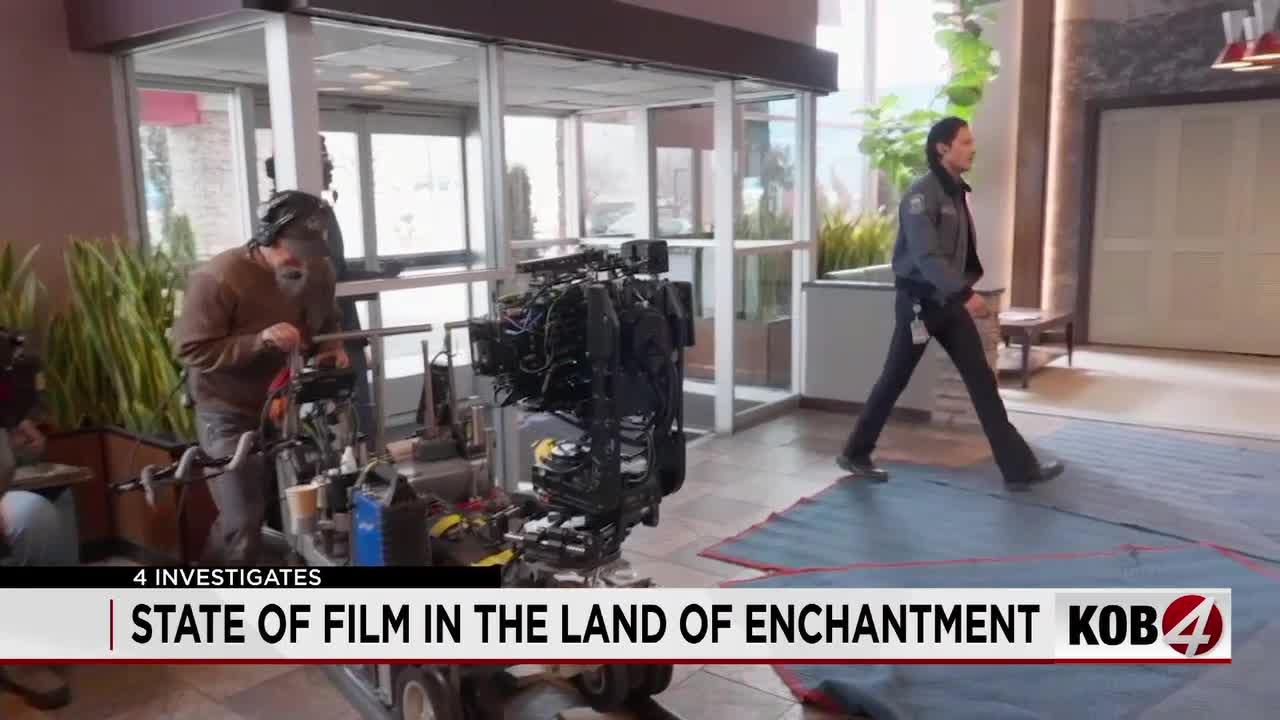
Hollywood Exodus: New Mexico’s Golden Age of Film Fades to Black, Leaving Behind Unpaid Bills and Broken Promises
POLICY WIRE — Albuquerque, New Mexico — The parking lot, freshly painted, stretches out like a stark white canvas where dreams of a thriving cinematic metropolis once stood. It was...

POLICY WIRE — Albuquerque, New Mexico — The parking lot, freshly painted, stretches out like a stark white canvas where dreams of a thriving cinematic metropolis once stood. It was meant for sound stages—more sound stages, an expansion beyond Netflix’s already considerable footprint here. But those dreams, like so many unfulfilled promises in this arid landscape, evaporated. Now it’s just asphalt, an unexpected monument to what could’ve been, and a tangible symbol of New Mexico’s sputtering film boom.
Down a ways, Kimmy Montoya, proprietor of Kimmy’s Snacks Craft Services, knows that feeling intimately. She’s watched the catering gigs — the lifeblood of her business — shrivel. Just a few short years ago, her company thrived, keeping hungry crews fed on bustling sets. Now? Not so much. She had to pivot, right? You always do. So, her business found a new home in an Albuquerque event venue, serving up sustenance to a different crowd. Most of her staff? They were film veterans too, now just trying to make it work. [QUOTE_PLACEHOLDER] Montoya declared, a grim sort of resignation in her voice. “You have to figure something out.” It’s a sentiment echoing across the Land of Enchantment.
What gives? This state spent years, decades even, building itself into a magnet for Hollywood, dangling generous tax incentives like shiny lures. Officials — mayors, governors, sundry bureaucrats — all patted themselves on the back. For a while, it worked. The money flowed. The lights hummed. But even as the latest Netflix sci-fi series, The Boroughs, painted New Mexico’s vistas across screens worldwide, something else was quietly unfolding in the background. A chill, perhaps. A slowdown no one wanted to admit. Production spending in the state plummeted from a record-setting $855 million in fiscal year 2022 to just $323 million in FY25, according to the New Mexico Film Office. That’s a gut punch, whichever way you slice it.
And it ain’t just the production accountants feeling the pinch. Every transportation crew, every set builder, every prop artist who carved out a living around this industry now faces an uncertain future. They expanded their shops, hired more hands, bought new equipment — betting on a sure thing. Turns out, there ain’t no such thing in Hollywood, or its southwestern outposts. Shani Orona, a seasoned locations manager and scout whose own career migrated back to New Mexico because of those early incentives, sees it plainly. [QUOTE_PLACEHOLDER] For her, it’s personal; for the small business owners, she says, “this is a necessary thing for them.” They’re hustling, scrambling for any scraps. But there’s just [QUOTE_PLACEHOLDER]
Netflix, the behemoth that once promised the moon, well, it’s just gotten a bit more, shall we say, “dynamic.” In 2018, its acquisition of Albuquerque Studios felt like the dawn of a new era. City — and state public dollars — grants, incentives, infrastructure aid — flowed into the venture. Plans for 10 new sound stages — and $150 million in capital expenditures were touted in a 2020 press release. Today, four additional stages stand, a mere fraction of the earlier visions. And those renders of grand expansion? The space for them became a parking lot, literally. Jamil Walker, a Netflix spokesman, offered a corporate shrug, explaining, “We chose to phase the project and expand slowly.” They’ve got 12 stages, and that’s apparently enough for now. The company, lest we forget, raked in $5.1 billion in free cash flow in its latest quarterly earnings. A mere drop in the bucket for them, but for New Mexico? It’s the whole darn well.
But there’s more to this than just Netflix changing its mind. The game has gone global, folks. The United States isn’t losing productions to California or Georgia anymore. Not primarily, anyway. We’re losing ’em to Canada, to the UK, Ireland, — and a whole smattering of places in Eastern Europe. And because why not? They offer cheaper labor, currency advantages, and incentives so aggressive they make New Mexico’s look like pocket change. As Orona points out with dry wit, [QUOTE_PLACEHOLDER] That’s a universal truth, cutting across continents, just as potent in South Asia’s vibrant, often low-cost production hubs as it’s in Budapest.
And let’s be real, even Pakistan, with its burgeoning local film scene and massive talent pool, is looking to attract international productions, aiming to compete on cost and creative infrastructure. It’s just a matter of time and consistent policy, an ever-tightening race for where productions — and their associated jobs and cash — will land. The world keeps turning, — and studios chase the lowest bid, plain and simple.
So, here we’re. This broader shift has completely complicated New Mexico’s pitch. The lever of control, once firmly in local government hands, is now far beyond its grasp. Tighter studio spending, the aftermath of industry strikes, — and a global streaming contraction haven’t helped. Congress, bless its heart, is trying to restart a federal tax incentive program to woo productions back to domestic soil. But as Orona aptly noted, “It may take some time, like all things in Washington D.C.” Patience, after all, isn’t D.C.’s strong suit. Nor, for that matter, are the hungry bellies of New Mexican film workers.
Kimmy Montoya, her resilience a testament to years in a volatile industry, is just one of many watching the horizon. [QUOTE_PLACEHOLDER] Her words hang heavy, a quiet accusation against a system that promised stability and delivered precariousness. Those 2,000 workers on The Boroughs? They’re all waiting to see if season two gets the green light. [QUOTE_PLACEHOLDER] Orona said. Hope, then, is the currency of choice here, trading in the wake of Hollywood’s receding tide.
What This Means
The situation in New Mexico isn’t just about declining film counts; it’s a stark case study in the perils of economic development hinged too heavily on a single, fickle industry, especially one reliant on external subsidies and global economics. For policymakers, it raises uncomfortable questions about whether those lucrative film tax credits — which provided an estimated 8% return on investment for New Mexicans in a legislative analysis — actually generate enough sustainable, long-term local wealth to justify their continued expansion. Did the state invest in permanent infrastructure, diversify its economy, or simply funnel taxpayer money into a temporary entertainment bubble? Because the former suggests resilience; the latter, a potential fiscal trap. And for the hundreds of small businesses and thousands of workers who bought into the dream, the political implications are immediate and personal. Economic uncertainty breeds voter disillusionment.
The global shift is undeniable, too. When nations like Canada or countries across Europe and Asia — including aspiring hubs in India, with its vast talent pool and lower overheads — offer an enticing blend of financial incentives and growing infrastructure, the competitive landscape for Hollywood’s production dollars becomes brutally aggressive. For New Mexico, and indeed any state relying on these kinds of incentives, the lesson is clear: relying solely on tax breaks against a global marketplace isn’t a long-term strategy; it’s a bet against an ever-shifting tide. The political rhetoric that celebrates job creation and investment often glosses over the fundamental volatility. The fallout, when that tide recedes, hits the hardest for those small businesses and blue-collar workers who, despite official assurances, now must, as Kimmy Montoya says, “figure something out.”