

Delhi’s Delicate Dance: Vietnam Visit Underscores Asia’s Superpower Balancing Act
POLICY WIRE — New Delhi, India — The ghosts of Cold War non-alignment are stirring again, not in sepia-toned photographs, but in the vibrant, contentious geopolitics of the Indo-Pacific....

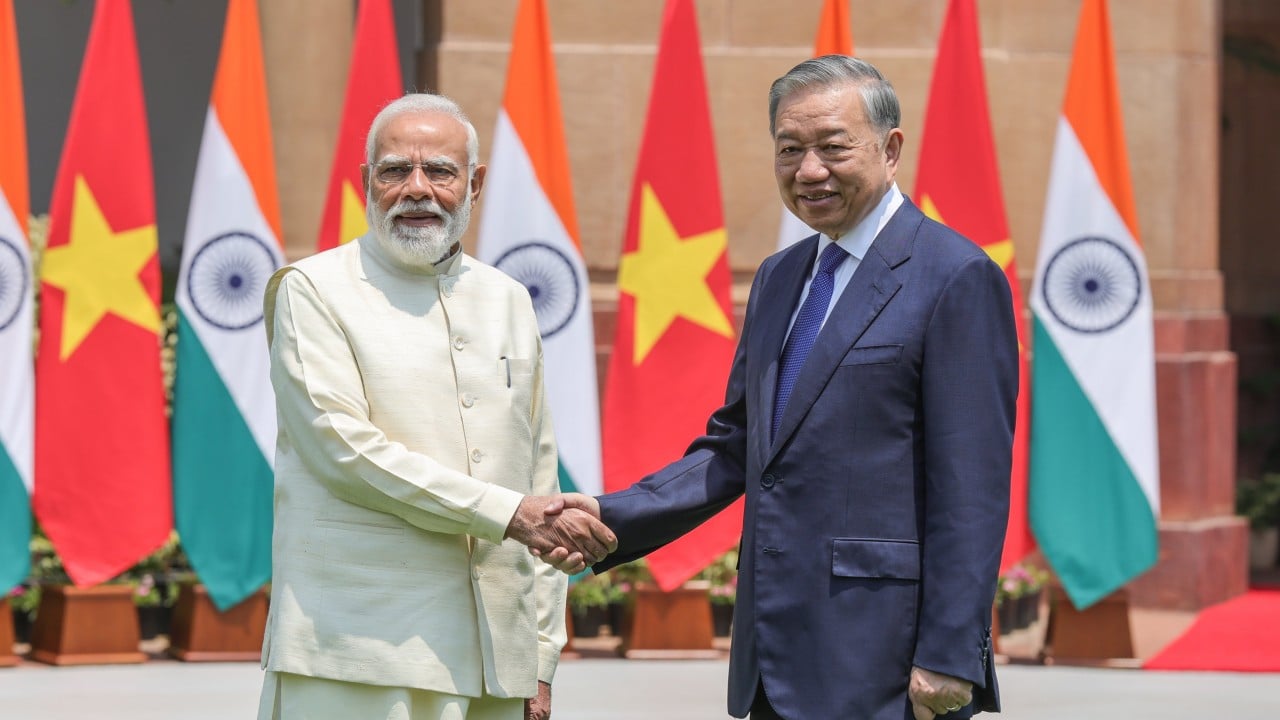
POLICY WIRE — New Delhi, India — The ghosts of Cold War non-alignment are stirring again, not in sepia-toned photographs, but in the vibrant, contentious geopolitics of the Indo-Pacific. At its core, the recent state visit by Vietnamese President To Lam to India wasn’t just a routine diplomatic exchange; it was a potent, if tacit, declaration of strategic intent from two nations acutely aware of the perils of singular superpower patronage. This isn’t about choosing sides, as New Delhi’s strategists would often reiterate; it’s about broadening options, about creating a tapestry of alliances so intricate that no single thread, however mighty, can dictate the entire pattern.
Lam’s three-day sojourn in Delhi, his inaugural trip since assuming the presidency, wasn’t merely coincidental with India’s own assertive ‘Act East’ policy. No, it signified a mutual, pressing imperative to diversify strategic partnerships — a hedge, as it were, against the gravitational pull of larger, more domineering powers. Both Hanoi and New Delhi have, at different junctures, felt the distinct squeeze of such dependencies, whether economic or military. And they’re now, demonstrably, recalibrating.
Behind the headlines of trade agreements and cultural exchanges lies a far more consequential undercurrent: a shared apprehension regarding Beijing’s burgeoning regional heft. Vietnam, particularly, has felt the sharp end of this dynamic in the South China Sea (which it calls the East Sea), where maritime disputes frequently simmer, occasionally boiling over. “We’ve learned, quite painfully, that an overreliance on any single dominant power creates vulnerabilities — particularly when it concerns our sovereign waters and resource rights,” a senior Vietnamese Foreign Ministry official, speaking on background, shot back when pressed on the visit’s strategic implications. “Diversification isn’t a luxury; it’s a survival mechanism.”
But this isn’t just about China. It’s also about a more equitable distribution of global influence. India, under Prime Minister Narendra Modi, has consistently championed a multipolar world order, viewing its expansive diplomatic outreach as an essential counterweight to hegemonic tendencies. “India’s vision isn’t about choosing sides; it’s about expanding the options for all partners who seek a truly multipolar future,” affirmed External Affairs Minister S. Jaishankar in a recent press conference, his voice resonating with an unshakeable conviction. “Our collaborations, whether with Vietnam or others, delineate this commitment to strategic autonomy and mutual prosperity.” Such pronouncements, while aimed primarily at Beijing, also subtly underscore New Delhi’s burgeoning diplomatic muscle — a development keenly observed, and perhaps nervously measured, in capitals from Islamabad to Dhaka. For instance, Modi’s ‘New India’ blueprint extends far beyond domestic reforms, projecting a vision of India as a critical fulcrum in global affairs.
This bilateral embrace isn’t merely political theater; it’s underpinned by burgeoning economic ties. Bilateral trade between India and Vietnam, for example, reached approximately $15.05 billion in 2022-23, according to India’s Ministry of Commerce and Industry. That’s a substantive figure, yet it pales in comparison to Vietnam’s trade with China, illustrating just how much room there’s for growth — and for further strategic rebalancing. Still, the trajectory is clear, pointing towards deepening economic interdependence that provides both nations with more leverage on the global stage. And, let’s be honest, it provides India with another avenue to project influence into Southeast Asia, a region where China has long held sway.
So, what does Pakistan — or indeed, the broader Muslim world in South Asia — make of this burgeoning Delhi-Hanoi axis? Pakistan, itself no stranger to navigating the complex currents of superpower rivalries, watches India’s expanding diplomatic footprint with a blend of strategic interest and traditional apprehension. Any move by India to strengthen its position in the Indo-Pacific is viewed through the lens of regional power dynamics, potentially affecting its own geopolitical calculus, especially regarding its long-standing alliance with Beijing. The nuanced dance of smaller and mid-sized powers seeking to escape the shadow of giants isn’t unique to Vietnam or India; it’s a playbook many nations, including those in the Muslim world, have historically followed — and are perhaps still perfecting today.
What This Means
The India-Vietnam rapprochement represents more than just a strengthening of bilateral ties; it signifies a pivotal, if gradual, shift in the Indo-Pacific’s geopolitical architecture. Economically, we’ll likely see increased investment and trade diversification, particularly in sectors like energy, defense, and technology, providing crucial alternatives to existing supply chains dominated by specific powers. Politically, it champions the concept of strategic autonomy, offering a template for other nations seeking to maintain independence without overtly antagonizing major global players. It’s a tacit, yet forceful, pushback against a unipolar or even bipolar regional order, favoring instead a web of partnerships where mutual interests, not unilateral directives, dictate policy. This dynamic could encourage other nations in Southeast Asia to deepen ties with India, further complicating China’s regional dominance and potentially leading to a more stable, albeit complex, balance of power. It’s a pragmatic, shrewd play, isn’t it? One that underscores the enduring human desire for self-determination — even amidst the crushing weight of global geopolitics.