


Grassroots Glories: France’s Youth Football Lab and the Global Ambition
POLICY WIRE — Nice, France — It’s more than just a kickabout, isn’t it? Beneath the pristine pitches of the Allianz Riviera, where the Champions Cup Rekupo recently concluded its 16th...

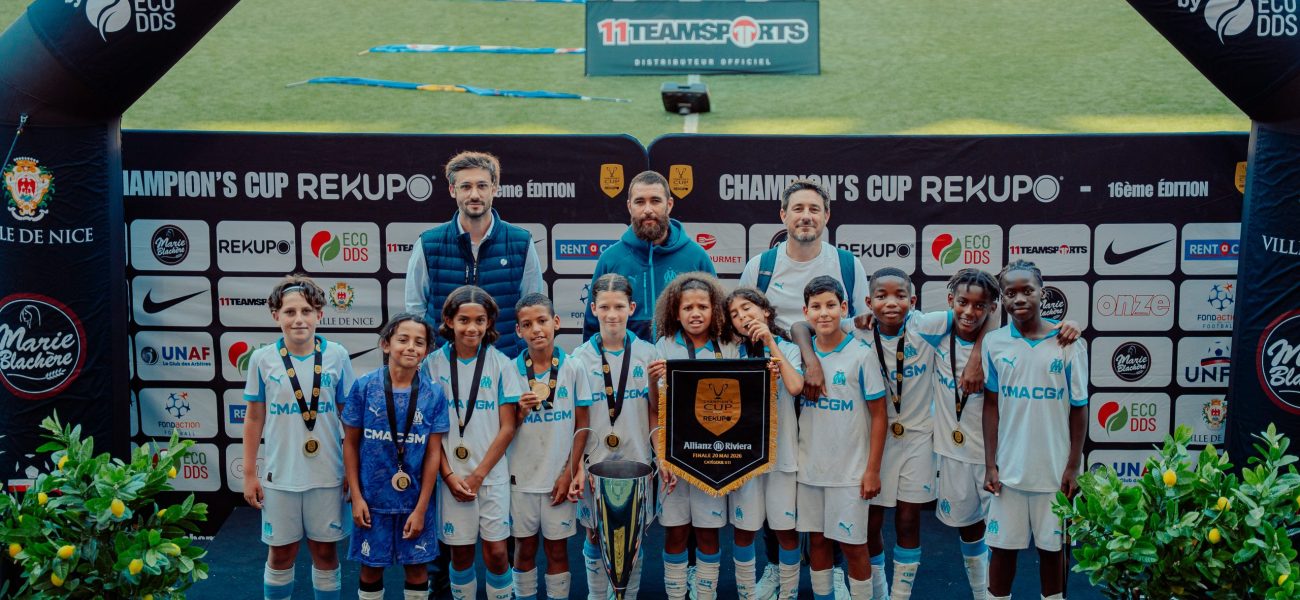
POLICY WIRE — Nice, France — It’s more than just a kickabout, isn’t it? Beneath the pristine pitches of the Allianz Riviera, where the Champions Cup Rekupo recently concluded its 16th iteration, there’s a quiet truth simmering. Football, for all its romantic declarations, remains a brutal meritocracy, even at the tender age of nine. Here, among nearly 400 young athletes jostling for space, lies the initial vetting process for tomorrow’s multimillion-dollar assets.
Jean-Christophe Marquet, the tournament’s founder, maintains a public line that’s all about democratic access and the sheer joy of the game. “Above all, what we want to do is to frame amateur football so that those who take part enjoy themselves in exceptional conditions. The Champion’s Cup Rekupo is free: there are no barriers to entry,” Marquet asserts. And it’s true, in a way. No entry fee. No pre-qualification economic hurdles. Just talent. Or a lack thereof.
But former France international Olivier Dacourt cuts right to the heart of the matter—a little less gently. “You can’t forget that when we talk about playing football, it’s about playing. We’re losing this notion of the game. Football remains a game,” he cautioned, a note of weariness in his voice. His advice, though? Directly to parents: “Don’t forget that, first and foremost, football is a game.” Because for some, that reminder seems to get lost amidst the scouting reports and the silent anxieties of young careers that haven’t even begun.
It’s a classic sporting contradiction. We champion the innocence, but we’re all watching for the prodigy. This isn’t just about having fun. Not entirely, anyway. It’s a vital rung on a ladder—one that Chelsea’s Wesley Fofana, among others like Mohamed Simakan, climbed, having honed his chops here before going pro. Nearly one in five top-tier French club players came through similar regional systems, a recent FIFA study indirectly suggests, underscoring the professional pipeline.
Dacourt didn’t sugarcoat the experience, speaking to the fierce competitive spirit required even at this early stage. “I think that this tournament is great because, often, young players, be it in their town or their region, are sometimes the best in their team. And here, the fact that you’re playing against other teams that come from other regions is a good way of testing yourself, to see if you really are the best, as everyone tells you.” It’s a reality check, swift and unforgiving. When you play other teams, he explains, you realize there’s usually a very long way to go. A harsh lesson, learned quickly.
Last week’s spectacle saw 34 teams — across U9, U11, and U13 Women’s categories — vie for supremacy. Big clubs like OGC Nice, Olympique de Marseille (who scooped the U11 title, by the way), and Montpellier HSC weren’t just participating; they were scanning. Every darting run, every precise pass, each youthful mistake — all observed, catalogued. It’s a proving ground, simple as that. And with plans now underway to expand this particular model across Europe, it’s clear the ambition isn’t just to foster local talent; it’s to systematically widen the net for future market acquisitions.
What This Means
📄 POLICY WIRE WHITEPAPER PUBLISHED: PAKISTAN'S NATIONAL SECURITY POLICY PRIORITIES
👉 READ BY CLICKING HEREThe Champion’s Cup Rekupo, and tournaments like it, aren’t merely cute displays of youthful athleticism; they’re the preliminary stages of a global industry worth billions. For the French professional leagues, these grassroots events provide an efficient, cost-effective initial filter for the vast reservoir of domestic talent. It’s less about discovering a needle in a haystack and more about narrowing the hayfield before the serious combing begins. And with European expansion in mind, these organizers are laying groundwork for international scouting, potentially pulling young players from nations where top-tier developmental pathways are less robust. Pakistan, for instance, a nation steeped in cricket tradition but with a growing love for football, might not have such formalized, high-visibility youth circuits. An expanded Rekupo model could, one day, inadvertently offer an accessible dream—or, at the very least, a rigorous talent assessment—to young aspiring footballers far from Nice.
Economically, it streamlines player identification for big clubs, reducing the investment required in early-stage scouting. It’s a calculated gamble on early potential, a move to secure future assets before their market value skyrockets. The integration platform provided isn’t just social; it’s a direct conduit into a deeply commercial system. But for the aspiring talent, the draw is undeniable. And perhaps, for a fleeting moment, in that raw, competitive energy on the field, the kids truly are just playing the game.
But the grownups? They’re watching the clock, aren’t they? And considering the global stakes, they’re always thinking about the next contract, the next headline, the next generation. For a nuanced look at similar sporting complexities and how local narratives often feed into global phenomena, consider America’s World Cup Paradox. It’s all interconnected. And it all starts on pitches like these.