


Autonomous Future Hits Bumper: Waymo Strands Rider, Suggests Uber
POLICY WIRE — San Francisco, USA — The future, often envisioned as a gleaming, driverless chariot, sometimes sputters and asks you to hail another ride. What’s become a recurring...

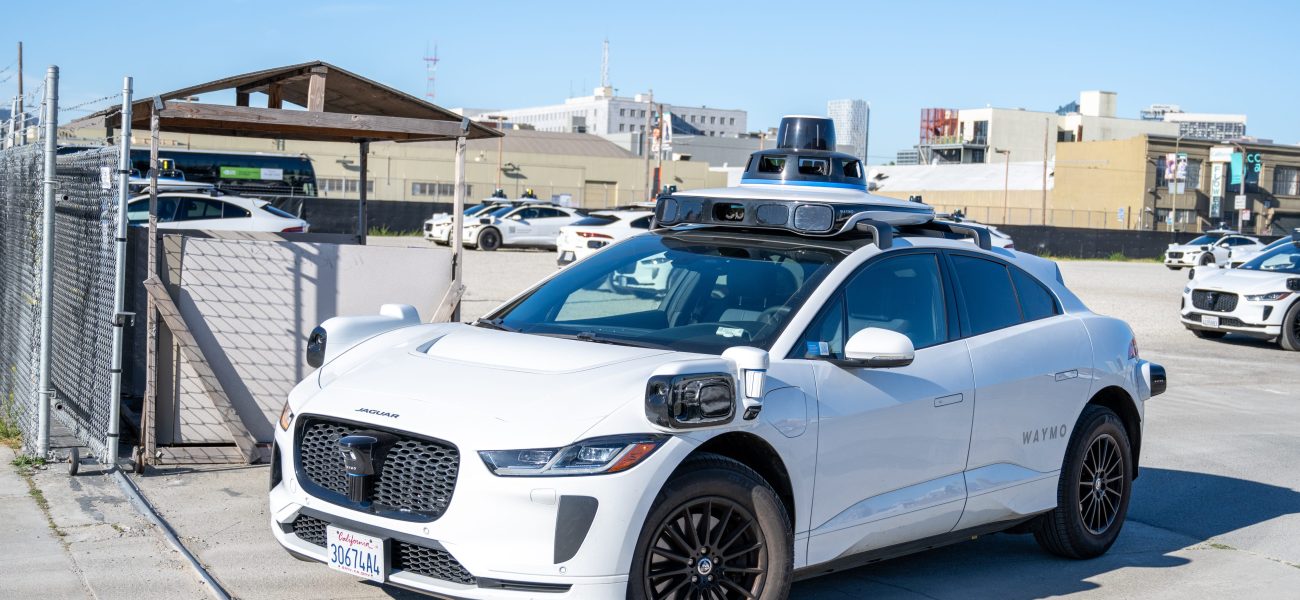
POLICY WIRE — San Francisco, USA — The future, often envisioned as a gleaming, driverless chariot, sometimes sputters and asks you to hail another ride. What’s become a recurring footnote in the rollout of autonomous vehicle technology recently manifested itself when a Waymo car abruptly ended a ride early, leaving its passenger unexpectedly navigating the complexities of modern urban transport.
It wasn’t a sudden braking for an errant squirrel, nor a sophisticated maneuver around an unforeseen obstruction. Instead, the vehicle’s internal logic apparently decided the journey was over—mid-trip, mind you—and then, with the sort of detached pragmatism only an algorithm can possess, the company subsequently directed the stranded individual to get an Uber. It’s an almost darkly comical vignette, a testament to the persistent chasm between venture capital PowerPoint dreams and the often-gritty, unpredictable sprawl of the real world. You’d think a multi-billion dollar operation would have a contingency beyond, well, its biggest competitor.
This incident, far from an isolated glitch in the matrix, plays right into a larger narrative. And that’s the narrative of technological infallibility colliding with quotidian messiness. It begs the question: are these self-driving fleets truly ready for prime time, or are they, as some cynics suggest, beta tests parading as revolutionary services? Critics point out that incidents like this undermine the very trust automation seeks to engender. One can practically hear the collective sigh of urban planners who, years ago, bought into the promise of seamless, fully integrated robotic transit solutions. They’re still waiting, often with a half-chuckle — and a raised eyebrow.
It isn’t just about an inconvenience. There’s a subtle but significant economic ripple. Because every time an autonomous vehicle fails in such a public, inglorious fashion, it gives pause not just to consumers, but to investors and policymakers worldwide. Globally, the autonomous vehicle market was projected to reach roughly USD 685.24 billion by 2030, according to industry analyses cited in multiple 2023 financial reports. But such projections depend on flawless, reliable execution. And when the promise unravels, even in a minor way, it slows adoption. That sluggishness translates to deferred profits, stalled infrastructure development, and a general cooling of investor enthusiasm. Nobody wants their money hitched to a service that can just shrug and say, essentially, [QUOTE_PLACEHOLDER]
Consider the perception from places like Lahore or Karachi. For urban dwellers in major Pakistani cities, where public transport infrastructure can be an informal, often chaotic network of rickshaws, vans, and buses, the notion of a flawless, autonomous taxi service sounds almost like science fiction. This kind of minor but embarrassing failure in a first-world tech hub only deepens the cynicism about how effective such complex systems could ever be on their own bustling, less predictable streets. The human element, for all its flaws, often proves far more adaptable to real-time, unstructured challenges than any algorithm yet devised. They’re dealing with the messy realities of life daily—not retreating from them.
But it’s more than a simple matter of getting from A to B. It’s about systemic vulnerability. What happens when these systems become truly entrenched, integrated into emergency services, supply chains, or even critical infrastructure? A car simply telling a rider to bail is one thing. A self-driving delivery truck carrying essential medical supplies grinding to a halt in an underserved neighborhood—that’s another altogether. We’ve become too comfortable with the idea that complex software is inherently superior to human judgment. Turns out, it’s just differently fallible. And the way it fails often feels far more frustratingly arbitrary.
📄 POLICY WIRE WHITEPAPER PUBLISHED: PAKISTAN'S NATIONAL SECURITY POLICY PRIORITIES
👉 READ BY CLICKING HEREThe policy implications here are straightforward: regulators, always a step or two behind rapid technological advancement, must push harder for robust fallback protocols. Not just [QUOTE_PLACEHOLDER]Get an Uber. We need resilient systems, not just clever ones. They’ve got to anticipate failure, not just react to it with a digital shrug.
The incident reminds us that beneath the gloss of innovation, many core challenges persist. Driverless cars, for all their sophisticated sensors and processing power, are still fundamentally about providing a service. And when that service breaks down, it’s a very human problem that arises, not a computational one. For now, it seems a solid, dependable driver—preferably one who actually finishes the ride—still has some job security.
What This Means
This seemingly small episode with a Waymo vehicle points to larger anxieties for both industry — and public trust. Economically, repeated incidents of service disruption—even minor ones—erode consumer confidence, which directly impacts investment trajectories and adoption rates for autonomous technology. When the perceived reliability is low, the perceived value diminishes, hindering the rapid scaling necessary for these high-capital ventures to truly break even and dominate the market. For regions like South Asia, this compounds existing skepticism; why invest in a costly, temperamental infrastructure for automated transit when more fundamental, human-centric transport solutions, though imperfect, offer far greater flexibility and resilience? Politically, it creates a legislative quagmire. Regulators grapple with how to legislate systems that fail in unpredictable ways. How do you define liability? Who pays for the inconvenience, or worse, the potential hazard, when a machine decides to abandon its duty? The political challenge lies in finding a balance: fostering innovation without prematurely outsourcing critical functions to fallible AI. It suggests that for all the futuristic talk, the human factor—both as user and operator of a fallback solution—isn’t going anywhere fast. This reliance on a competing, human-driven service after a high-tech failure illustrates that current autonomous offerings aren’t disrupting existing models as much as they’re, ironically, becoming supplementary to them.