

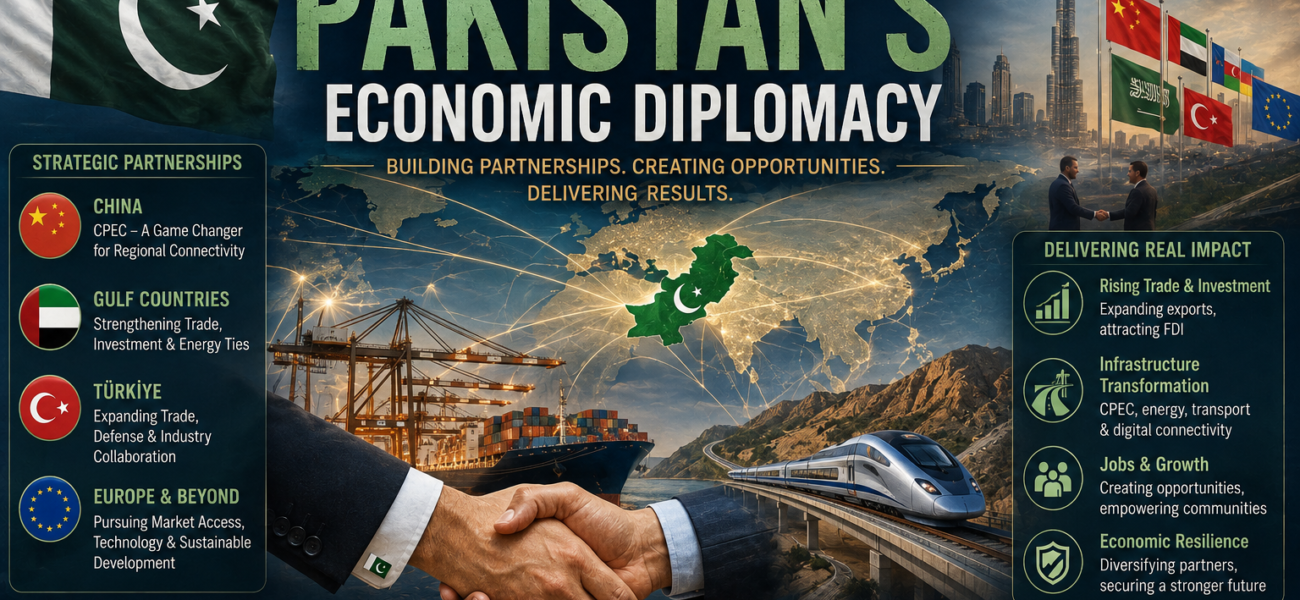
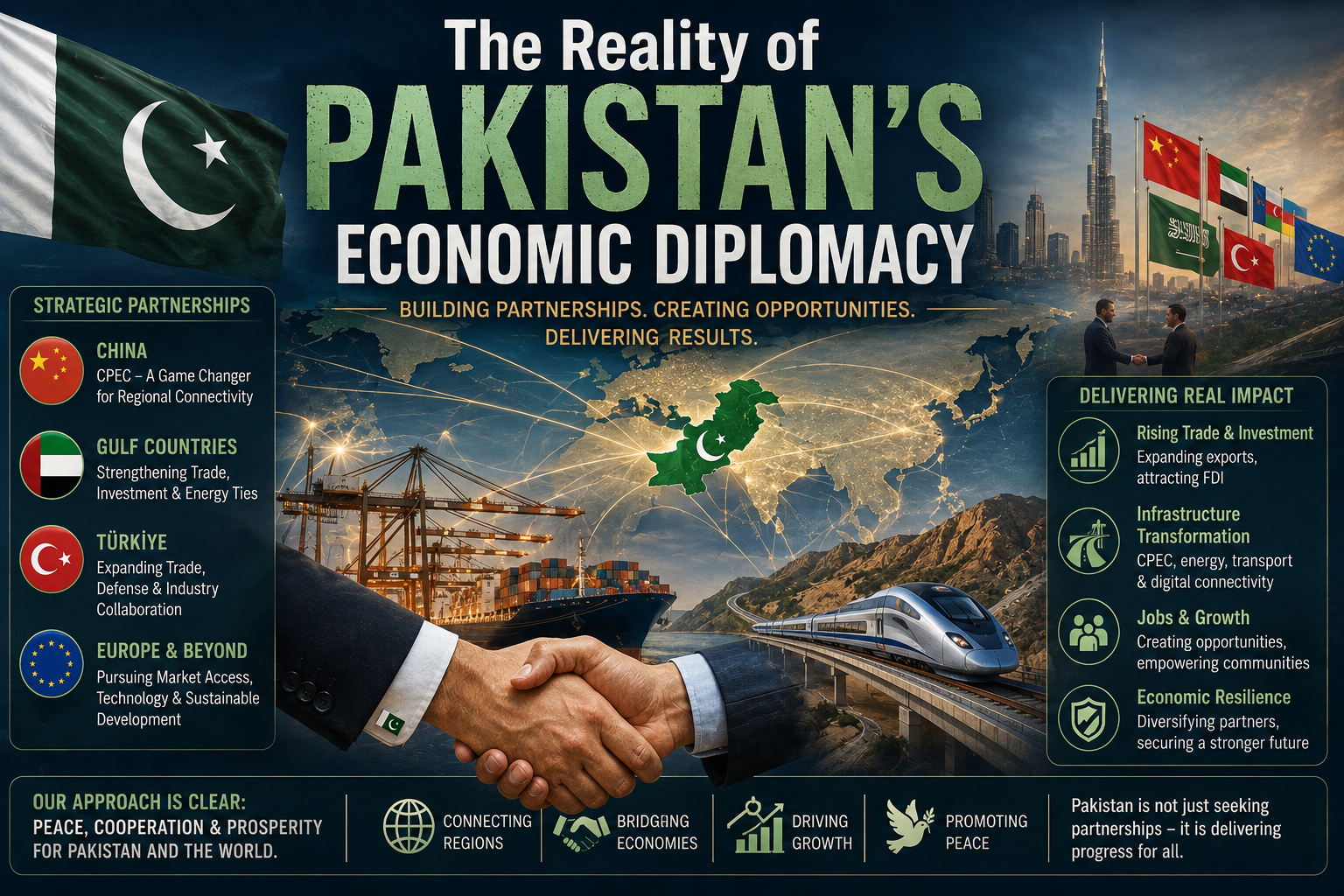
The Reality of Pakistan’s Economic Diplomacy
Pakistani and Iranian trade ministers reaffirmed their commitment Tuesday to strengthening bilateral economic relations and reaching a shared target of $10 billion in annual trade, according to a...

Pakistani and Iranian trade ministers reaffirmed their commitment Tuesday to strengthening bilateral economic relations and reaching a shared target of $10 billion in annual trade, according to a statement from Pakistan’s Ministry of Commerce.
The affirmation came at the 10th Pakistan-Iran Joint Trade Committee meeting in Islamabad, co-chaired by Commerce Minister Jam Kamal Khan and Iran’s Minister for Industry, Mine and Trade Mohammad Atabak. Khan said reaching the target requires sustained collaboration, stronger institutional linkages and closer engagement between the public and private sectors. He pointed to opportunities across trade, industry, manufacturing, energy, agriculture, minerals, pharmaceuticals, textiles, automotive parts, sports goods and surgical instruments.
Khan also pressed for faster movement on the long-delayed Pakistan-Iran Free Trade Agreement, alongside new investment channels, joint ventures and stronger business-to-business contacts. Atabak called Pakistan a long-term strategic trading partner and said Iran wants deeper logistics cooperation through the ports of Karachi and Gwadar, along with progress on electricity trade and regional connectivity.
The $10 billion figure is a stretch by recent standards. Two-way trade between the neighbors has for years fallen short of what their 900-kilometer shared border and complementary economies would suggest, slowed by U.S. sanctions on Iran, banking restrictions and unfinished border infrastructure. That both governments keep returning to the table, and keep raising the number they say is reachable, says something about where Islamabad’s economic diplomacy is heading.
For Pakistan, the direction matters as much as the sanctions arithmetic does. Iran’s interest in routing cargo through Karachi and Gwadar would give both ports more traffic and add momentum to Gwadar’s development as a regional logistics hub. Formalizing the joint border markets Khan referenced could pull a large slice of the informal trade that already crosses the Balochistan-Sistan frontier into the documented economy, widening the tax base. Iranian electricity exports, discussed for years but rarely delivered at scale, would offer a cheap supplement to the national grid in the south and southwest.
Pakistani officials have also framed the Iran talks as a hedge against overreliance on any single trade corridor. A finalized free trade agreement would give Pakistani exporters in textiles, surgical instruments and pharmaceuticals a tariff advantage in a market of more than 90 million people that Indian and Turkish competitors have been slower to enter, largely because of the same sanctions exposure Pakistan is now navigating around.
The Iran meeting is not an isolated gesture. It lands alongside a string of trade and investment agreements Pakistan has signed or advanced over the past year, each aimed at a different partner but pointed in the same direction: diversifying who Pakistan trades with and what it trades in, rather than leaning on any one relationship.
Saudi Arabia has been the most active of those partners. A Strategic Mutual Defense Agreement signed in Riyadh in September 2025 was followed by an economic framework prioritizing energy, industry and mining, and by February officials from both commerce ministries were discussing joint ventures in Central Asia, Africa and Southeast Asia. Saudi Arabia’s earlier commitment to a $10 billion refinery at Gwadar, to be built by Aramco, remains the largest single investment tied to the port. A Joint Business Council meeting in Islamabad this year added fresh agreements on motorways, real estate and mineral projects.
China’s role through the China-Pakistan Economic Corridor continues to anchor Gwadar’s longer-term case even as newer partners build on top of it. Washington has moved in a similar direction and proposed $10 billion U.S. facility and a sovereign rating upgrade to B from S&P Global earlier this year reflected an American government willing to treat Pakistan as a partner worth backing.
Taken together, the pattern looks deliberate rather than accidental. Pakistan sits at a genuine crossroads between the Gulf, Iran, China and Central Asia, and its economic team has spent the past year trying to convert that geography into leverage by courting Gulf capital for infrastructure and mining, keeping the Iran channel open for energy and border trade, and deepening financial ties with Washington. No single one of these tracks would move Pakistan’s trade numbers by much on its own. Run in parallel, they give Islamabad more leverage across every relationship at once, a stronger position than relying on any single partner.
A decade ago, Pakistan’s Iran trade ambitions stood largely on their own. Today they sit alongside a defense and investment pact with Saudi Arabia, an active CPEC relationship with China and a warmer financial relationship with the United States. Whether the Iran trade target is met by any particular year matters less than whether Pakistan can keep enough of these parallel tracks building momentum at once. On that broader measure, the government’s economic diplomacy over the past year has more to show for itself than the Iran communique alone suggests.
Author