
Grand Marshal’s March: NYPD’s Parade Stance Stirs Deeper Divides
POLICY WIRE — New York City, USA — When New York City’s powerbrokers hit the streets, it’s rarely just about the celebration itself. It’s often a masterclass in calculated optics, a...

POLICY WIRE — New York City, USA — When New York City’s powerbrokers hit the streets, it’s rarely just about the celebration itself. It’s often a masterclass in calculated optics, a performance for the gallery, or, sometimes, a defiant middle finger to dissenting factions. So it was this past week, as an annual march through Manhattan saw an absence speak just as loudly, if not louder, than any blaring brass band.
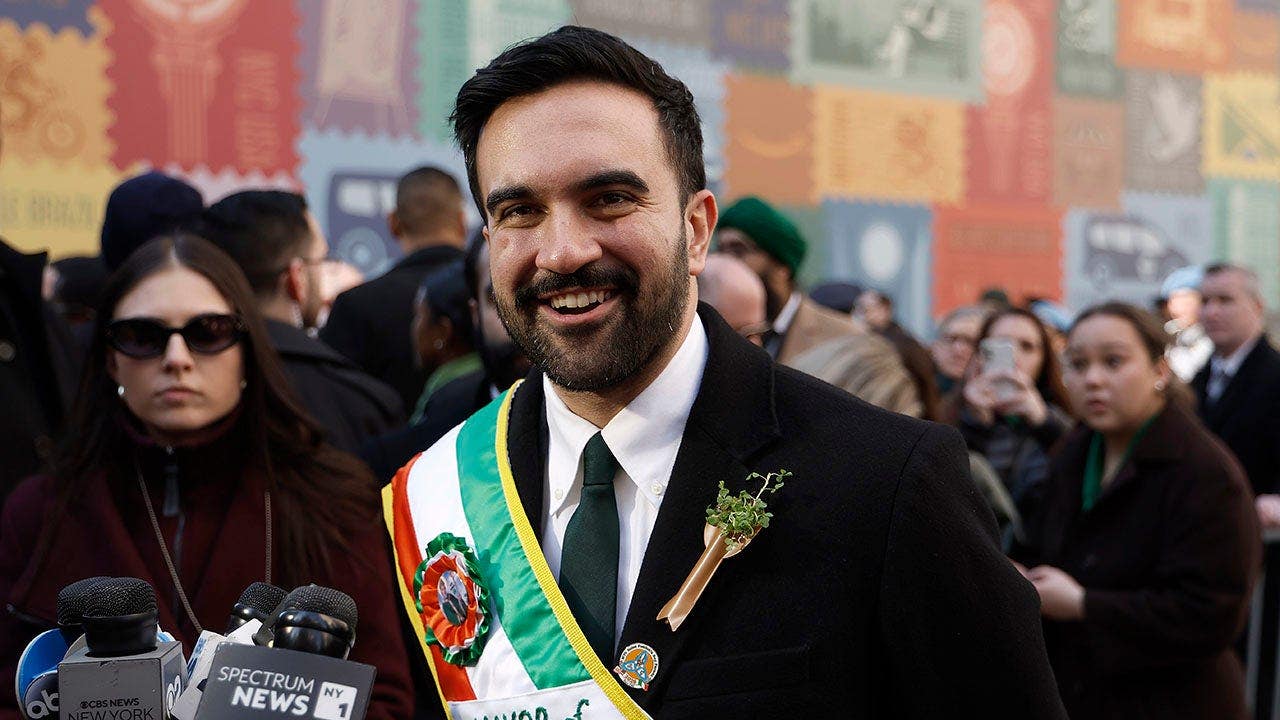
It wasn’t the floats or the fanfare that captured the city’s twitchy attention, but the conspicuous divide etched into the parade’s leadership. The head of New York’s sprawling police department, its commissioner, wasn’t merely attending—he was at the front, grand marshal sash and all. He did it with a verve that seemed intent on sending a message, a kind of declaration that [QUOTE_PLACEHOLDER] for what was an Israel Day Parade. It felt less like community building — and more like planting a flag, squarely.
But the political chess played out more acutely in the empty spot where Council Member Shahana Mamdani might’ve stood. Her decision to deliberately eschew the festivities broke ranks, a clean cut from what’s often expected, particularly from city officials in a diverse metropolis like New York. She simply wasn’t there. And for many, that silence, that purposeful non-participation, articulated a deeper truth about the fractures running through this city, and indeed, across the globe, regarding Middle Eastern affairs.
It’s not just a local spat; this stuff ripples. Think about it: a top cop, the very face of law and order in a city home to one of the largest and most varied Muslim populations outside the Muslim-majority world, stepping up as grand marshal for an event that carries such potent, divisive geopolitical connotations right now. That kind of alignment can—and does—reverberate through immigrant communities, particularly those from South Asia and the broader Muslim world, including Pakistan. It doesn’t just alienate; it questions loyalty, or at least how loyalty is perceived, to various diasporas who hold complex views on Israel and Palestine.
This isn’t about mere attendance; it’s about legitimization. It’s about perception. And it’s a perception that the NYPD, often scrutinized for its engagement with these very communities, might not have fully considered. According to a recent analysis by the Pew Research Center, roughly 70% of Muslim Americans express dissatisfaction with U.S. foreign policy in the Middle East, a sentiment that tends to become more acute during periods of heightened conflict. This creates a challenging backdrop for public figures making overtly supportive statements or gestures toward one side of a conflict.
Mamdani, whose constituency often includes a significant slice of those very communities, had her reasons. You don’t just ‘break tradition’ lightly, especially in politics. That takes backbone, or at least a strong reading of one’s own base. Because this isn’t some niche issue; it’s about how global conflicts land in local neighborhoods, changing street-level politics faster than most establishment figures can keep up. Her refusal was a clear statement that [QUOTE_PLACEHOLDER], — and she simply wasn’t having it.
This wasn’t a snap decision; it was a calibrated move in an increasingly volatile political landscape. It highlights the often-impossible tightrope walk elected officials must undertake—balancing loyalty to their constituents, their personal convictions, and the broader expectations of civic leadership. But in a city that prides itself on being a mosaic, moments like these underscore how fragile that mosaic can become when global conflicts ignite domestic tensions. And sometimes, showing up, or not showing up, means everything.
But it’s not like the commissioner is doing this on a whim. There’s a powerful lobby. There are deeply ingrained political ties. His embrace of the event as grand marshal, openly stating [QUOTE_PLACEHOLDER], was a message to certain constituencies that their support was valued, their position understood. It’s part of the give-and-take, the unspoken contracts of municipal governance. These parades aren’t just cultural celebrations; they’re public squares for political allegiance, for making points without saying much.
The city’s internal political structure—often a chaotic, intricate web of allegiances and rivalries—gets further complicated by these displays. How will this play out in budget hearings? In community policing initiatives? Because every action, every appearance, carries weight. What’s seen as a gesture of support by some, quickly becomes a slap in the face for others. This kind of friction isn’t new, mind you. Cities like New York are melting pots, yes, but those pots often boil.
The lesson here isn’t just about parades or politics. It’s about how local leaders become unwilling (or sometimes very willing) participants in global narratives. Beijing’s Digital Hand might operate on a grand scale, but these local dramas, these gestures and counter-gestures, are the ground level where that larger political currency is spent or earned. Eight hundred miles for a no-show might describe bureaucratic absurdity, but in New York, sometimes you don’t even have to leave your district to register a powerful, pointed absence.
What This Means
This episode is less about the parade itself and more about the intensifying polarization within major American cities, exacerbated by international conflicts. For the NYPD, the commissioner’s high-profile role could deepen skepticism among some minority communities, particularly those with strong ties to Palestine or the broader Muslim world. This may complicate community policing efforts and trust-building initiatives at a time when local law enforcement agencies are already grappling with complex societal demands and accusations of bias.
Council Member Mamdani’s deliberate absence signals a growing trend of elected officials taking clear, principled stances, even if unpopular with establishment circles. This could embolden other progressive or minority representatives to challenge traditional political gestures, leading to further fragmentation within urban political machines. Economically, this heightened tension isn’t good for business confidence or community harmony, as it translates into an environment ripe for further protest and social unrest, potentially impacting everything from tourism to local investment.
Globally, these local-level dynamics influence the perception of U.S. foreign policy abroad. Nations in South Asia — and the Muslim world, like Pakistan, watch these internal U.S. shifts closely. They see whether America truly embraces its multicultural rhetoric or if political leaders are perceived as selectively aligning with specific narratives, thereby impacting diplomatic relationships and soft power projection. It’s a thorny situation, one that won’t likely find easy resolution anytime soon.