

Big Ten’s Quiet Coup: An Old Buckeye Hand Returns to Guide the Next Guard
POLICY WIRE — COLUMBUS, Ohio — Forget the roaring crowds and the confetti canons for a moment. Step back from the gleaming hardwood — and the million-dollar marketing blitzes. The real action in...

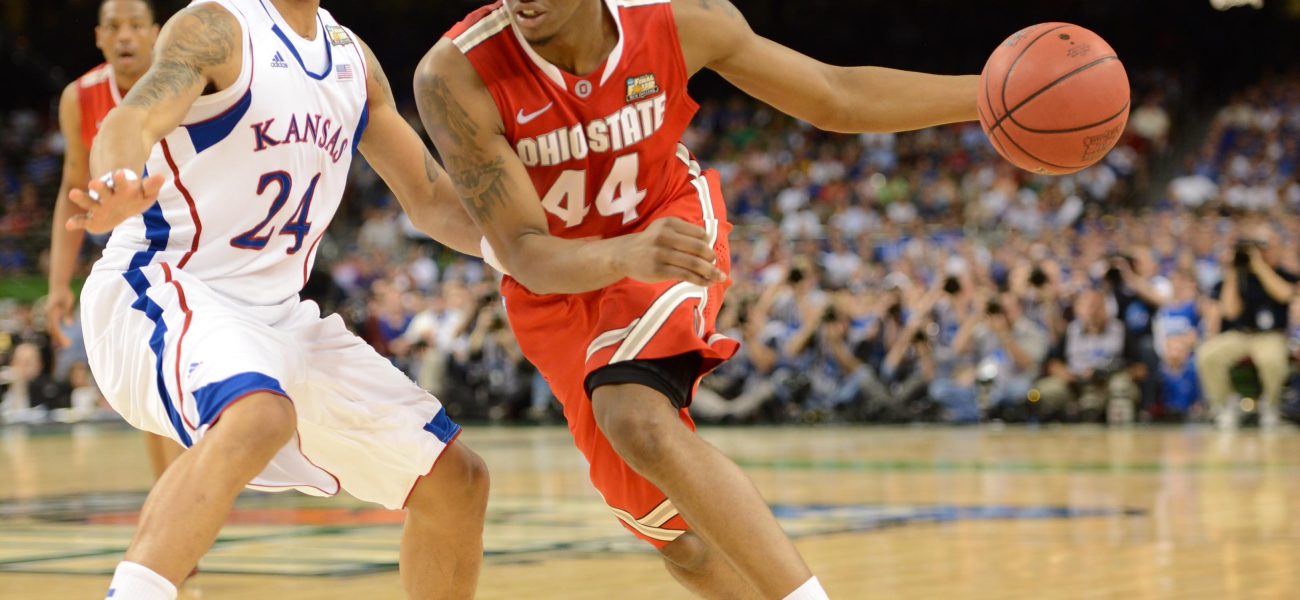
POLICY WIRE — COLUMBUS, Ohio — Forget the roaring crowds and the confetti canons for a moment. Step back from the gleaming hardwood — and the million-dollar marketing blitzes. The real action in big-time collegiate athletics often unfolds in the quieter maneuvers, the subtle shifts in institutional strategy that betray deeper currents. That’s precisely what’s happening at Ohio State University, where William Buford, a name etched into Buckeye lore, isn’t just making a feel-good homecoming; he’s re-entering the fold as a ‘Program Assistant,’ a title that carries more weight, economically and politically, than it lets on.
It’s not just sentiment, is it? These high-stakes athletic departments—they’re complex enterprises, juggernauts with budgets that rival small nations, or at least major corporations. They don’t make hires for nostalgia’s sake alone. They invest. And putting a known quantity, a former star player with deep connections and understanding of the program’s unique pressures, into a role that influences new talent? That’s a masterstroke of human capital management, a move to cement brand identity for the next generation.
Because the modern college sports landscape, with its NIL deals and transfer portal chaos, demands a different kind of anchor. Teams can’t just rely on raw talent anymore. They need culture, a through-line, something to tether fleeting players to enduring institutional values. And who better than a veteran, a former top scorer who faced down giants, to articulate that legacy?
Buford, who last laced up for the Buckeyes in 2012 before a professional career overseas and in the G-League, certainly gets it. When asked about his new gig, he offered a pithy summation for Policy Wire, “This isn’t just a homecoming; it’s an investment in the next generation of Buckeyes. You learn a lot from the grind—the travel, the pressures, the sheer tenacity needed. It’s my turn to pass that on, to make sure these young guys understand what wearing this scarlet and gray truly means.” He’s not just a mentor; he’s a living artifact, a testament to what the program expects and what it can deliver.
This subtle, yet impactful, re-integration of a favored son isn’t unique to Ohio State, mind you. But it’s indicative of a broader trend across premier collegiate athletics. Programs are quietly shoring up their ranks with familiar faces, leveraging alumni appeal not just for fundraising galas, but for on-the-ground, strategic contributions. Ohio State men’s basketball, helmed by head coach Jake Diebler, seems particularly keen on this strategy. Diebler recently formalized his entire coaching staff for the upcoming season, consolidating a team with plenty of Ohio ties and — you guessed it — historical Buckeye connections.
“William brings an institutional memory and a competitive spirit that money simply can’t buy,” Diebler observed during a brief exchange. “It’s about culture, not just coaching schemes. His presence communicates volumes to our recruits, our current players, — and our boosters. He’s proof of concept, living — and breathing.” It’s a deft nod to the soft power alumni wield. And this power translates into cold, hard cash. According to a recent report by Sports Business Journal, the Big Ten Conference alone generated over $1.1 billion in revenue during the 2022-2023 fiscal year, much of it inextricably linked to deeply ingrained fan engagement and—yes—brand loyalty fostered over decades.
Look at it another way: this isn’t merely about basketball; it’s about statecraft, miniature versions anyway. Think of how nations, like say, Pakistan, leverage its beloved cricketing heroes, such as Imran Khan before his political turn, as powerful figures who bridge national identity and global appeal. They’re symbols, yes, but also strategic assets in the broader narrative. Or, take the subtle, long-term investments in ‘soft power’ made by entities seeking to enhance their international profile, an area of expertise for Middle Eastern sovereign wealth funds, where major sporting events become geopolitical chess pieces. The local equivalent? Bringing back William Buford.
His return alongside other former Buckeye Dave Richardson, who will focus on strength and conditioning, signals a deliberate focus on fortifying the program’s foundation from within. It’s an astute acknowledgment that, while the glitz and glamour of modern recruiting grab headlines, true success — the kind that wins championships and sells merchandise — is built on continuity, experience, and an unwavering, almost tribal, dedication to the emblem on the jersey. The college sports industry might be increasingly transient, but the brands—the venerable names like Ohio State—understand the value of deep roots. They’re investing in human continuity, betting it pays off dividends in loyalty — and on-court success. Because the economic ripples of sports run far wider than just the players themselves.
What This Means
Politically, Buford’s appointment underscores the increasing influence of athletic department alumni networks. It’s less about simple networking now, — and more about strategic resource allocation. Placing trusted former players in advisory or program development roles streamlines decision-making, shores up the coach’s internal political capital, and provides a visible bridge to the program’s celebrated past—which, let’s be honest, makes booster relations smoother. For recruits, seeing a successful former star in a mentorship capacity offers tangible proof of the program’s ability to develop players, beyond just glitzy facilities.
Economically, this move represents a shrewd long-term investment in brand equity. In a volatile landscape driven by NIL valuations and unpredictable player transfers, retaining and integrating alumni talent like Buford stabilizes the brand’s narrative. It reinforces the idea that Ohio State isn’t just a stepping stone, but a career-long affiliation. This ‘brand-as-family’ messaging can significantly influence donor loyalty, ticket sales, and even attract future NIL partnerships by presenting a cohesive, enduring identity rather than a collection of fleeting transactions. It’s not cheap, bringing back experienced personnel, but the indirect returns—in public relations, fan engagement, and recruiting leverage—are likely considered a bargain.