


Europe’s Uneasy Frontiers: Brussels Nudges Germany on Shifting Schengen Sands
POLICY WIRE — Brussels, Belgium — It’s a bit like watching a family argument simmer down, only to flare right back up. Just when you thought Europe had put away the heavy gates and stern faces that...

POLICY WIRE — Brussels, Belgium — It’s a bit like watching a family argument simmer down, only to flare right back up. Just when you thought Europe had put away the heavy gates and stern faces that once marked its internal divides, along comes a fresh demand from Brussels for Germany to, well, stop acting like the borders never truly vanished. The European Commission is politely—but firmly—insisting Berlin ditch its post-crisis internal controls, chipping away at the very ideal of Schengen. They don’t want niceties; they want gates down.
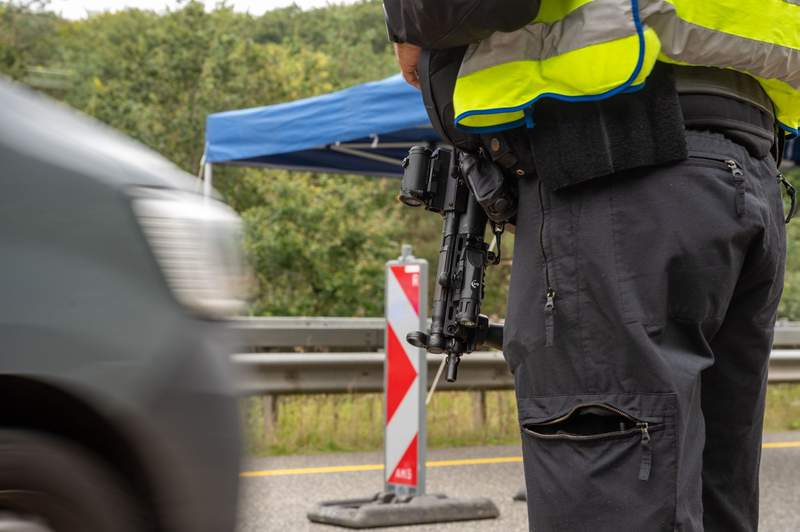
For years, Germany, bless its bureaucratic heart, has maintained these internal checks along its borders with Austria, Czech Republic, and Poland. Their reason? An official, albeit sometimes weary, nod to stemming irregular migration — and combating transnational crime. You know, the usual bogeymen that let politicians tighten things up. But for the Eurocrats in the EU capital, these persistent checks aren’t just inconvenient; they’re an uncomfortable breach of sacred Union scripture.
But let’s be real, this isn’t some fresh offense. Germany, along with a few other Schengen stalwarts, invoked Article 29 of the Schengen Borders Code years ago, extending checks in response to the massive influx of migrants back in 2015. They’ve cited renewed threats, be it terrorism or those pesky undocumented arrivals, ever since. It’s an easy, low-effort political play, often resonating with domestic electorates wary of what they don’t see or control. And because it does, governments keep doing it.
“The foundational principle of open internal borders isn’t some optional extra we tack on during good times,” stated Ylva Johansson, the European Commissioner for Home Affairs, in an unusually sharp press conference, not mincing her words. “It’s the skeletal structure of our single market, the lifeblood of our citizens’ freedom. Prolonged, arbitrary measures undermine not just our legal framework, but the very trust underpinning European solidarity. We’re asking for compliance, not a debate.” It was a direct hit, no question about it.
Conversely, a senior German Interior Ministry official, who asked not to be named directly but we’ll call him Hans Schneider, chuckled wearily over the phone. “Brussels can draft its pronouncements from the comfort of their oak-paneled offices, but it’s our police officers on the ground managing real challenges, real human stories, real risks. We’re not playing make-believe with border controls; we’re responding to facts. The rhetoric of ‘openness’ doesn’t always square with operational reality when you’ve got significant flows, for instance, passing through the Western Balkans from far-flung regions.” He’s got a point there, even if it chafes the Commission.
The Commission’s push comes at a tricky time. Across Europe, debates rage over migration. You’ve got Italy grappling with Mediterranean crossings, Poland and Hungary playing hardball on refugee quotas, and now this rather un-European scene of actual passport checks between neighbors. The symbolism is thick enough to cut with a knife. For a continent trying to project unity and strength—especially when geopolitical tremors echo from Ukraine to the Middle East—these visible fractures don’t exactly inspire confidence.
Consider the implications stretching beyond the EU’s immediate confines. Nations like Pakistan, navigating complex relationships with the West, observe these European machinations keenly. The discourse around internal EU borders, and the arguments justifying them (often linked to migration routes through Turkey, the Balkans, or the Mediterranean), invariably frames the wider narrative of Fortress Europe. And it impacts things like aid conversations, or even how those states deal with their own migratory pressures. It’s a nuanced perception battle. When Europe clamps down internally, it broadcasts a distinct message externally, and it’s not always one of inclusive stability.
The financial toll of these stops — and starts? Not small, folks. A 2016 study by the European Parliament pegged the direct costs of even temporary reintroductions of border controls within the Schengen area at somewhere between €5 billion and €18 billion per year due to logistical headaches, increased freight times, and tourism disruption. Imagine what that does to an economy still sputtering after recent global hiccups. That’s real money, not just theoretical discomfort.
What Brussels wants, ultimately, is a more coordinated, collective response to cross-border issues, rather than each member state pulling its own particular lever. They suggest beefing up the European Border and Coast Guard Agency, Frontex, and ensuring robust external border checks. It’s about channeling the perceived threats to the external perimeter, leaving the internal free flow. Sounds neat on paper, doesn’t it?
What This Means
This latest tussle over German border checks isn’t just bureaucratic nitpicking; it’s a barometer of Europe’s deepest anxieties. Politically, it signals a quiet but determined reassertion of authority by the Commission against member states’ sovereign impulses, particularly on issues touching national security and identity. If Germany continues to push back, it weakens the Commission’s hand and emboldens other nations—like those within the Visegrad Four—who’d happily reassert border control as a default national prerogative. It speaks volumes about the constant push-pull between the grand ideals of a united Europe and the very messy realities of nation-state interests.
Economically, the message is equally clear: friction costs money. Any continued internal impediments—like a permanent border post causing an unexpected traffic jam or slowing the smooth movement of goods—adds drag to the EU’s massive single market. Imagine businesses having to recalculate logistics because Truck A gets stopped an hour here, an hour there. It erodes confidence in the EU’s core promise of seamless trade. That lack of seamlessness creates invisible walls that inhibit economic dynamism — and competitiveness. In a global economy where every millisecond counts, unnecessary delays can turn into hundreds of millions in lost productivity, just like a minor injury can hobble an entire team, as seen in the brutal calculus of sports performance. The bigger picture here is the slow erosion of a common European identity and the implicit promise to its citizens and businesses. The European project lives and dies by its ability to deliver tangible benefits—like effortless movement—that surpass nationalistic urges. When those benefits are seen as compromised, trust dwindles, fostering an environment where more profound crises, say like the brutal calculus of crisis elsewhere, find fertile ground to take root.