



Global Cage Match: PFL Scrambles for Talent, Ex-UFC Star Basharat Joins the Fray
POLICY WIRE — Washington, D.C. — In the bare-knuckle brawl for combat sports supremacy, where promotional banners often matter as much as championship belts, the Professional Fighters League (PFL)...

POLICY WIRE — Washington, D.C. — In the bare-knuckle brawl for combat sports supremacy, where promotional banners often matter as much as championship belts, the Professional Fighters League (PFL) continues to make its audacious plays. Forget the notion of linear career paths for a moment. This ain’t your grandad’s boxing circuit. Instead, what we’re seeing is a highly fluid, competitive landscape—a veritable free-agent frenzy that tells you more about market dynamics than martial arts technique.
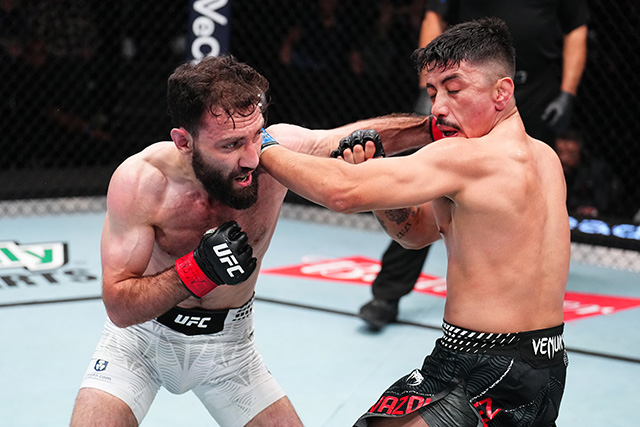
Consider it less a mere athlete signing and more a strategic land grab in the sprawling, monetized empire of mixed martial arts. The latest salvo? The PFL’s move to bag a fresh cohort of talent—a sizable intake designed to swell its ranks and, critically, dilute the competitive edge of rivals. They’ve inked eighteen athletes, spanning nine weight classes and touching down from a rather impressive fourteen countries. But among the hopefuls and the hot prospects, one name in particular echoes with the clang of experience: Javid Basharat. [QUOTE_PLACEHOLDER]
Basharat, affectionately known as The Snow Leopard, isn’t some fresh-faced amateur. No, he’s a genuine UFC veteran. He’s tasted the Octagon’s distinct brand of pressure, having compiled a record of 4-2 with one no contest over the course of seven appearances. He earned his way there, too, snatching a UFC contract on Dana White’s Contender Series. His last cage dance was at UFC Fight Night 266 on Feb. 7, when he took a unanimous verdict over Gianni Vazquez. He knows the fight game. He’s been in the grind. His presence brings a certain gravitas—a proven quantity in a roster full of unknowns and untested potential.
And it’s not just Basharat. Daniel Marcos, another familiar face from the UFC circuit whose signing had already made waves, is also part of this substantial talent infusion. It signals PFL’s aggressive intent, doesn’t it? They’re not just scouting; they’re poaching. They’re investing. Because the game is changing. These fighters, some seasoned, some still sharpening their teeth, hail from every corner, each carrying a story and a following. They’ve brought aboard Leon Hill at welterweight, Lucero Acosta in flyweight, Moustapha Diakhate at light heavyweight. It’s a true global collection, this lot.
But back to Basharat. For an organization like PFL—always angling for that broader, more diverse appeal—fighters like The Snow Leopard are gold. And it’s not just about his record. He’s from Afghanistan. He represents a significant connection to a region—the broader Muslim world, including Pakistan and South Asia—where martial arts hold immense cultural significance and an almost spiritual appeal. Fighters from these areas carry the aspirations of entire communities, creating deep, loyal fan bases. His journey, from a region often defined by conflict, to the bright lights of professional combat, is a compelling narrative, especially for international broadcasters and marketers. It adds a layer of depth — and resonance, a sense of national pride in the octagon. It just does.
PFL CEO John Martin offered the usual corporate rhetoric, a declaration of competitive zeal, when talking about the new arrivals: «At PFL, we’re constantly growing and evolving our roster to ensure it remains one of the best and most competitive in the world». He further added, «With 18 new fighters announced today with some really hot prospects, we know the MMA industry will recognize our intent of continuing to scout, build, and match elite fighters in the cage and see who’s the best in the world».
What This Means
This aggressive roster expansion isn’t merely about adding warm bodies to fight cards; it’s an economic strategy veiled in sporting competition. The global combat sports market, valued at approximately $2.6 billion in 2022 by industry reports, thrives on compelling narratives and superstar power. By bringing in a mix of proven UFC talent and emerging prospects from fourteen different nations, the PFL is effectively hedging its bets across multiple geopolitical and demographic fronts. It’s a shrewd business move. They’re broadening their viewer base—not just geographically, but also appealing to diverse cultural identities. But don’t mistake this for charity. It’s about market share, pure — and simple. These diverse signings build invaluable connections to international media markets and sponsorships, creating new revenue streams that bypass traditional strongholds. it creates a pipeline, a deep talent pool, giving them leverage in future negotiations. Because in the long run, consistent talent acquisition is cheaper than bidding wars for individual, established stars. It just makes good business sense, even if it does sound like another grab for territory.