


Giza’s Grand Gambit: Heavyweight Bout an Egyptian Play for Global Soft Power
POLICY WIRE — Cairo, Egypt — Some spectacles aren’t just spectacles; they’re carefully orchestrated statements. While much of the boxing world’s chatter revolves around whether a...

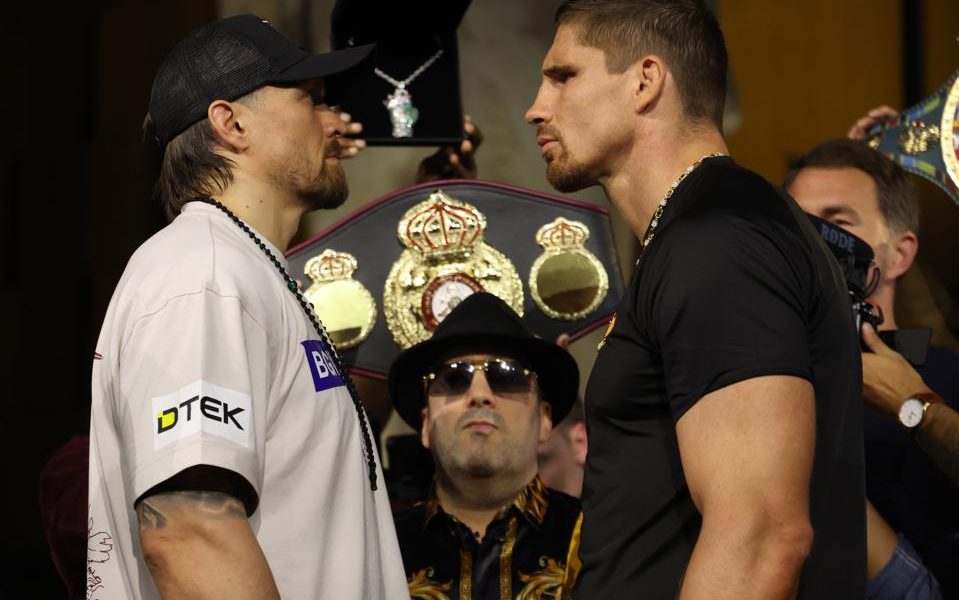
POLICY WIRE — Cairo, Egypt — Some spectacles aren’t just spectacles; they’re carefully orchestrated statements. While much of the boxing world’s chatter revolves around whether a decorated kickboxer, Rico Verhoeven, has any real business sharing a ring with undisputed heavyweight champion Oleksandr Usyk, the deeper play unfurling beneath the colossal shadow of the Giza Necropolis tells a far more compelling story. This wasn’t merely a fight night; it was Egypt’s latest, glittering assertion on the global stage—a grand, audacious gamble cloaked in the pageantry of pugilism.
It’s a peculiar marriage, history and haymakers, but Cairo’s hardly new to the art of leveraging its unparalleled ancient legacy for modern-day ends. This particular matchup, set for May 23, 2026, against the backdrop of the Pyramids, felt less like a sporting event and more like an opulent advertisement, paid for, naturally, by pay-per-view receipts. For a country that saw its tourism revenues bounce back to an estimated an estimated $12.2 billion in 2023, according to figures from the Egyptian Ministry of Tourism, hosting such a high-profile, visually stunning event makes a certain kind of hard-nosed commercial sense. It’s about more than just filling hotels; it’s about reshaping international perception.
And because, frankly, these sorts of events have become the go-to for nations seeking to burnish their global image, Egypt’s move echoes a regional trend. You’ve seen it in Saudi Arabia’s sprawling entertainment ventures, in the UAE’s ceaseless architectural marvels, even in countries like Pakistan, grappling with their own narrative on the world stage. Cairo’s flexing its muscles now, using Usyk — and Verhoeven as unlikely emissaries for Brand Egypt. It’s shrewd, if a bit brazen, a merging of an archaic arena with entirely contemporary capitalist ambition.
“We’re not just showcasing our magnificent past,” said Dr. Hana Salah, a spokesperson for the Egyptian Ministry of Antiquities and Tourism, her voice likely sweetened for international ears. “We’re presenting Egypt as a modern, capable nation, perfectly positioned for global tourism — and grand events. Our history provides the stage, yes, but it’s our future that’s on display.” Her words carry weight; there’s an almost tangible eagerness from officialdom to shed an older, often stereotyped image.
But how do you manage the optics of an ancient wonder playing second fiddle to two sweaty men trading blows? Very carefully, it seems. The broadcast angles, the light show illuminating millennia-old stone, it’s all meticulously crafted. But sometimes the market has other ideas about what makes a good show. “These cross-over fights—they’re what moves the needle right now,” a prominent European boxing promoter, who asked not to be named discussing client strategy, confessed recently. “Nobody cares about traditional match-ups anymore, not if they don’t have that extra ‘oomph.’ And nothing says ‘oomph’ like the Pyramids. It’s box office, plain and simple.” It’s a sad indictment, perhaps, of sporting integrity, but an undeniable reality for those counting the cash. The bout, set to be broadcast globally on DAZN, with a $59.99 pay-per-view price tag in the U.S. alone, certainly ain’t hurting the coffers.
Usyk, entering with a pristine 24-0 record — and 15 KOs, was, let’s be real, expected to carve through Verhoeven. His WBC belt was the only one on the line in this ‘voluntary defense,’ and it felt less about a genuine test and more about Usyk being a grand showman, lending his formidable talent to the theater of it all. Verhoeven, on the other hand, a celebrated GLORY kickboxing king, boasted a meager 1-0 professional boxing record. It’s the classic ‘spectacle versus sport’ debate, playing out with more gravitas because of the venue, though the outcome seemed to most pretty much settled before the first bell.
📄 POLICY WIRE WHITEPAPER PUBLISHED: PAKISTAN'S NATIONAL SECURITY POLICY PRIORITIES
👉 READ BY CLICKING HEREMany a critic has argued these ‘event’ fights, especially when the competitive element seems compromised, ultimately do a disservice to the sport. But they can’t deny the raw draw. For fans across Pakistan, India, — and the wider Muslim world, the event also resonated. It’s a bold assertion of regional capacity, a reminder that monumental international events needn’t be confined to the usual Western capitals. This type of spectacle, often criticized as ‘sportswashing’ in other contexts, here might be seen by many within the region simply as proof of economic muscle and cultural prowess.
What This Means
The Usyk-Verhoeven clash wasn’t just a sporting contest; it was a potent symbol of Egypt’s economic and geopolitical ambitions. Hosting such an event isn’t cheap, nor is it logistically simple, especially given the sensitive nature of the historical site. Cairo’s willingness to commit resources speaks volumes about its broader strategy to diversify its economy beyond traditional tourism and the Suez Canal. It’s a calculated move to capture eyeballs and investment, projecting an image of stability and openness that often competes with the harsh realities of domestic politics or regional instability.
This grand sporting gesture also acts as a subtle challenge, or at least a counterpart, to the similar ‘event economics’ strategy seen in Gulf nations like Saudi Arabia and Qatar. Egypt, with its unmatched historical weight, is asserting its own unique brand of soft power. The message is clear: ‘We have the heritage, we have the ambition, and we can deliver a global spectacle like no other.’ Whether such events truly translate into sustained economic growth or lasting international goodwill remains to be seen. But they sure make a splash. And in today’s crowded media landscape, a splash is often the first step in painting a new picture for the world to behold. It’s an expensive canvas, this grand desert stage, but Egypt seems hell-bent on making its masterpiece.