


Fire, Fury, and Forgery: Edgewood’s Identity Erupts Amidst EMS Debacle
POLICY WIRE — Edgewood, N.M. — It’s often the small tremors that precede seismic shifts in politics, and in Edgewood, New Mexico, a seemingly prosaic dispute over emergency services has cracked open...

POLICY WIRE — Edgewood, N.M. — It’s often the small tremors that precede seismic shifts in politics, and in Edgewood, New Mexico, a seemingly prosaic dispute over emergency services has cracked open the very foundation of local governance. This isn’t just about fire trucks and paramedics; it’s about betrayal, trust, and who truly runs the show when lives are on the line. Things got messy, real fast.
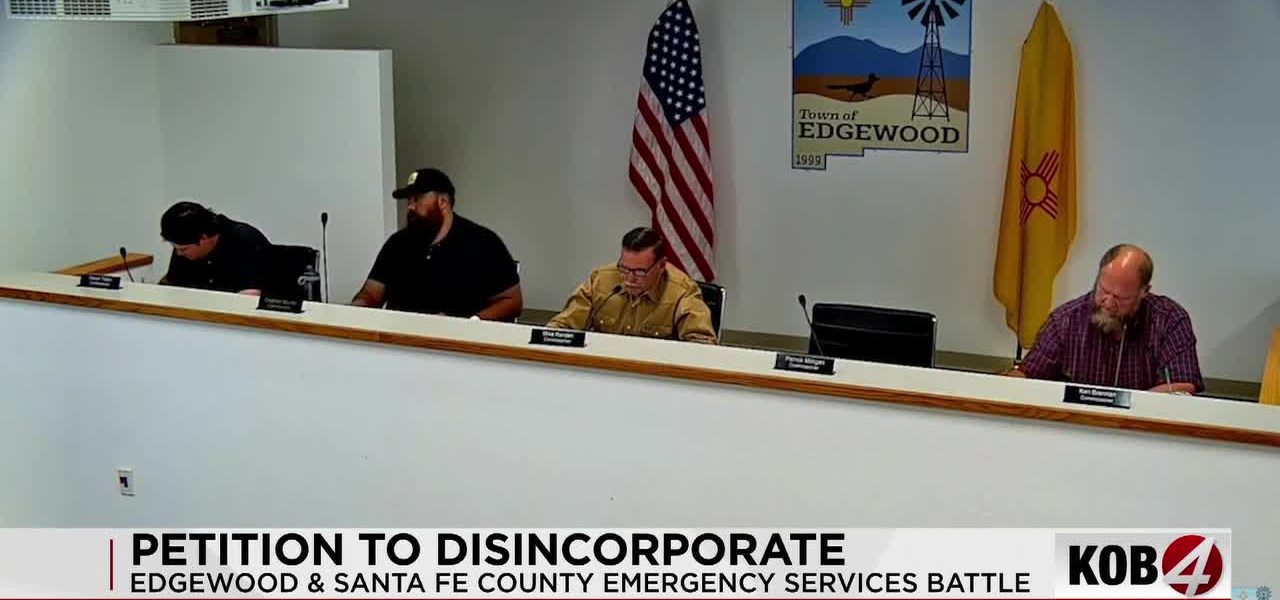
The whole brouhaha began—or, more accurately, exploded—when word got out about a signed agreement for fire and EMS services between Edgewood and Santa Fe County. Negotiations had wrapped, pens had scrawled their marks, — and everyone figured the critical lifeline was secured. But then county leaders reportedly discovered something gnawing: someone had fiddled with the document after the handshake, altering its very terms. A unilateral change to a bilateral agreement? That’s not just poor etiquette; it’s practically a declaration of war in the nuanced world of inter-governmental pacts. One imagines it wasn’t an intern’s innocent typo, either.
And because these things always spark outrage, an immediate, impassioned petition began making the rounds. Its objective? Dissolving the town entirely, ceding Edgewood’s municipal existence back to the embrace of Santa Fe County. Residents, already fed up with perceived local blunders, saw this alleged alteration as the ultimate slight, a final straw dipped in bureaucratic chicanery.
“Look, our primary goal’s always been to ensure public safety for every resident, regardless of municipal lines. When trust breaks down like this, it complicates everything. We’re ready to serve, but they need to get their house in order,” stated Marcus Rodriguez, Santa Fe County Manager, his voice echoing a practiced frustration with fractured partnerships. “It’s a fundamental issue of governance, isn’t it? Just ask any mayor in Karachi dealing with local infrastructure. It’s about reliability.”
For longtime resident Liz Pinkerton, the alleged skullduggery wasn’t just upsetting—it confirmed every suspicion. “I rather depend on Santa Fe County than our commissioners,” Pinkerton said, barely concealing her contempt. “I hope we can disincorporate the town — and get rid of our commissioners. Then Santa Fe County, who has always done a wonderful job, can come in — and take over. Well, they’re in charge of the services now, but as of July 1, they won’t be. It’s ridiculous.” Pinkerton didn’t mince words. “They’re not doing anything for the town, they’ve their own agendas. And they’re pursuing their own agendas and not what’s good for the town.” Strong words for a quiet desert community, but feelings run deep when emergency response hangs in the balance.
Disincorporation isn’t some Sunday morning book club discussion. It’s a drastic maneuver, effectively erasing Edgewood from the map as an independent entity. According to New Mexico statute, it takes support from just one-fourth of the town’s registered voters to kickstart this intricate, bureaucratic unraveling. It’s a low bar for such a significant shift, especially considering the stakes for local identity.
📄 POLICY WIRE WHITEPAPER PUBLISHED: PAKISTAN'S NATIONAL SECURITY POLICY PRIORITIES
👉 READ BY CLICKING HEREBut not everyone’s jumping on the county-takeover bandwagon. Some folks actually prefer things as they’re. Marcus Thorne, a resident of 22 years, isn’t keen on relinquishing local control. “I am not comfortable with us becoming a part of Santa Fe County again. I think the lifestyle of Edgewood, I think the community should remain like it’s,” Thorne insisted. “I’ve lived here for 22 years, I like the community. I’ve seen it grow, I’ve seen it change our local government, — and I think all for the better. So I like things the way they’re.” And there it’s: the deep-seated tension between perceived competence and cherished autonomy. The local control argument — the fickle hand of policy itself — always makes its presence known, no matter how dire the circumstances.
“This talk of disincorporation, it’s just knee-jerk. We’re trying to work through a very difficult situation. Emotions are running high,” countered Eleanor Vance, an Edgewood Town Commissioner, trying to soothe ruffled feathers. “We value our independence; it defines Edgewood. To hand that over to Santa Fe County just isn’t something we take lightly.” Her stance, predictably, champions the continued existence of the town. But one wonders: at what cost?
All this municipal drama funnels toward one particular day: June 16. That’s when Edgewood town commissioners are set to convene for a special meeting. Their task? Vote on the very fire — and EMS agreement that lit this whole powder keg. One vote will decide if Edgewood moves forward, attempts to patch things up, or faces an uncertain path toward civic obliteration. Because ultimately, for any community—whether a New Mexico town or a district within Lahore—the expectation of basic services delivered with integrity remains paramount. Disappointing that trust can dismantle much more than a contract.
What This Means
This isn’t just local gossip; it’s a policy nightmare for Edgewood. If the town disincorporates, it would effectively cede direct administrative control to Santa Fe County, potentially streamlining services but at the expense of local representation and self-determination. Economically, residents might see shifts in property taxes and local fees, but the long-term impact on Edgewood’s ability to attract development or chart its own course could be significant. But what’s truly startling is the alleged forgery—an act that points to a severe breach of trust and potentially, official misconduct. This kind of brazenness cripples governance, not just in small towns, but anywhere; it makes you think about broader implications for trust in civic bodies, whether they’re operating in New Mexico or navigating the delicate balance of provincial politics in, say, Balochistan. It erodes public confidence, a far more dangerous fire than any EMS could put out. The commissioner’s vote is less about an agreement now and more a referendum on the town’s integrity—and indeed, its very right to exist.