


Gaza’s Tragedy: A Human Catastrophe Unfolding
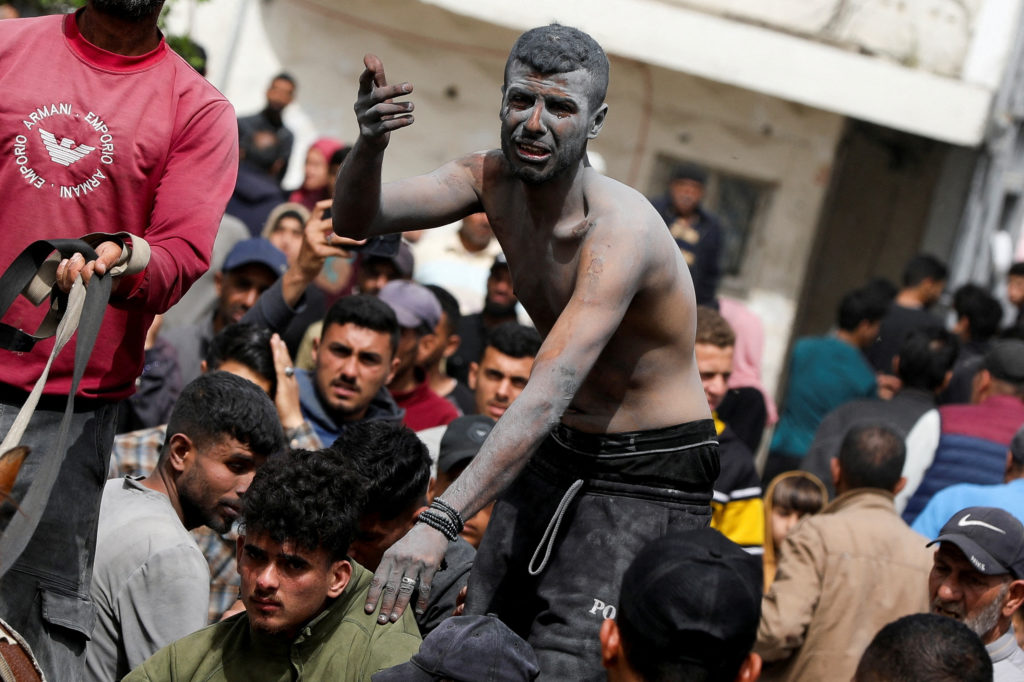
The ongoing war in Gaza has become one of the most heartbreaking human catastrophes in recent history. In the latest wave of violence, at least 35 people have been killed in Israeli attacks since...

The ongoing war in Gaza has become one of the most heartbreaking human catastrophes in recent history. In the latest wave of violence, at least 35 people have been killed in Israeli attacks since early Wednesday, according to medical sources speaking to Al Jazeera. These strikes are not isolated incidents. They form part of a broader, relentless military campaign that has left deep scars on a population already reeling from immense suffering. Despite multiple calls for ceasefires and humanitarian relief, the situation continues to deteriorate, with the human cost rising every day.
The statistics coming out of Gaza are staggering. Since Israel launched its military offensive 18 months ago, the Gaza Health Ministry reports that at least 51,025 Palestinians have been confirmed dead and 116,432 wounded. However, the numbers may be even more tragic. The Gaza Government Media Office has placed the death toll at over 61,700, suggesting that thousands still trapped under the rubble are presumed dead. These figures do not just represent numbers; they represent families destroyed, futures lost, and generations shattered.
To understand the depth of the crisis, one must also consider the scale of displacement. The United Nations has reported that around 500,000 people have been newly displaced or uprooted again since March 18, when Israel broke the ceasefire with Hamas. For many in Gaza, this is not the first time they have been forced to leave their homes. It is, tragically, a repeated cycle of displacement, trauma, and uncertainty. With each new attack, neighborhoods vanish, schools turn into shelters, and lives are uprooted without warning. For a region already suffering from years of siege, blockade, and poverty, this renewed wave of destruction is devastating.
Adding to the gravity of the situation is Israel’s decision to restrict humanitarian aid. Israeli Defence Minister Israel Katz openly stated that blocking humanitarian assistance is a deliberate “tool” to pressure Hamas. While this may be seen as a military strategy, it raises serious ethical and legal questions under international humanitarian law. Using food, water, and medicine as bargaining chips in a conflict zone is deeply troubling. It punishes not militants, but civilians-children, women, the elderly, and the sick—who have no part in the decisions made by armed groups.
The right to life is a fundamental human right. It is not a privilege that can be revoked during war; it is a non-negotiable principle of human dignity. As Israeli Defence Minister pointed out, Palestinians are being used as a means to target Hamas, but this does not justify the collective punishment of an entire population. International law clearly prohibits such actions. The Geneva Conventions state that civilians must be protected in times of war, and that collective punishment is a war crime. Yet, in Gaza, these protections seem to be disappearing under the weight of continuous bombardment and siege.
The October 7, 2023 attacks by Hamas in which 1,139 people in Israel were killed and more than 200 taken captive were indeed tragic and condemnable. Every civilian life lost, regardless of nationality, is a tragedy. But the response to that attack has spiraled into something far more destructive. Retaliation must be proportionate and targeted. What is unfolding in Gaza appears more like wholesale devastation than a focused military operation. When entire apartment blocks are flattened, when hospitals are turned to rubble, and when aid convoys are blocked, the line between military objectives and humanitarian catastrophe becomes dangerously blurred.
It is also important to note that humanitarian organizations have repeatedly warned of famine in Gaza. With borders sealed and aid convoys halted, essentials like food, clean water, and medical supplies are running dangerously low. The World Food Programme and other agencies have called the situation “catastrophic,” warning that nearly the entire population is at risk of starvation. Mothers are feeding their children scraps, doctors are operating without anesthesia, and families are forced to drink unsafe water. Such conditions are unacceptable in any part of the world, let alone in a region that remains under close international observation.
The international community, including global powers and human rights organizations, has a responsibility to act. Silence in the face of such brutality only encourages further disregard for human rights. The people of Gaza are not statistics. They are teachers, students, doctors, shopkeepers-ordinary people caught in the crossfire of a conflict they did not choose. Their suffering should not be politicized or ignored. It must be acknowledged, and more importantly, alleviated.
📄 POLICY WIRE WHITEPAPER PUBLISHED: PAKISTAN'S NATIONAL SECURITY POLICY PRIORITIES
👉 READ BY CLICKING HEREFurthermore, the psychological trauma inflicted on children in Gaza will last long after the last bomb drops. According to Save the Children, more than 90% of children in Gaza already show signs of severe emotional distress. These children have grown up knowing nothing but war, destruction, and fear. A generation raised in ruins will find it difficult to rebuild not just their homes, but their trust in the world. This is not just a failure of diplomacy or military policy-it is a failure of humanity.
What is happening in Gaza today must be viewed through the lens of morality, not just military strategy. No government should use starvation, displacement, and indiscriminate bombing as tools of war. Every nation has the right to defend itself, but no state has the right to erase entire neighborhoods under the pretext of defense. The distinction between defense and destruction must be upheld, or else the entire framework of international law collapses.
In conclusion, the war in Gaza is not just a political crisis; it is a human catastrophe. While political actors may frame the conflict in terms of security and strategy, the reality on the ground tells a different story-one of unbearable human loss, systemic devastation, and the erosion of basic rights. The world must move beyond statements and strongly urge all parties to uphold the principles of humanity, proportionality, and accountability. Peace cannot be built on the ruins of an entire population. It begins with the recognition of every human life as sacred-regardless of borders, politics, or religion.
Author