


Hindi and Tamil Nadu: A Modern Echo of the Pre-Partition Language Controversy
In recent years, the language dispute between the Indian central government and Tamil Nadu has escalated into a significant political issue, with accusations from the southern state that Prime...

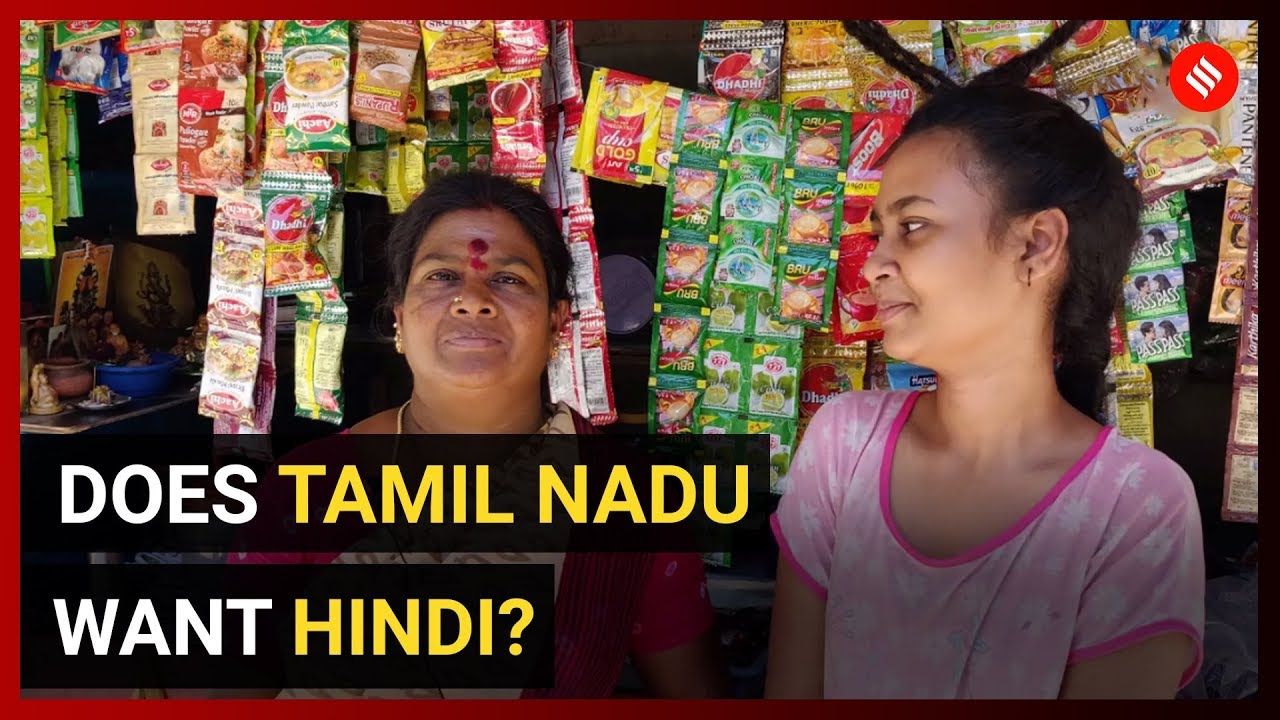
In recent years, the language dispute between the Indian central government and Tamil Nadu has escalated into a significant political issue, with accusations from the southern state that Prime Minister Narendra Modi’s government is attempting to impose Hindi on the region. This conflict has drawn comparisons to the pre-partition Urdu-Hindi controversy, where the tension was not over language itself but rather a deeper political struggle. The ongoing battle over Hindi imposition is far from just about language; it is a reflection of a broader political strategy that risks dividing Indian society along regional and linguistic lines, potentially creating a fracture similar to the one seen before India’s partition.
Prime Minister Modi’s comments at a rally in Tamil Nadu have stoked tensions, with the leader mocking state ministers for their alleged hypocrisy in promoting Tamil pride while communicating in English. His comments come amidst growing accusations that his government is attempting to enforce the three-language formula in Tamil Nadu, a formula that mandates Hindi, along with the regional language and English, as compulsory subjects in schools. Tamil Nadu has long resisted this policy, and the current government under Chief Minister MK Stalin claims that the Modi administration is using this issue as a political tool to suppress regional autonomy. The situation is not merely about the imposition of a language; it is, more fundamentally, about power dynamics and the central government’s control over regional affairs.
At the heart of the dispute is India’s National Education Policy (NEP), which was revised in 2020. While the NEP aimed to introduce flexibility in language choices, allowing states to select their preferred third language, Tamil Nadu has argued that the imposition of Hindi remains a covert agenda. The state’s history with the Hindi language has been fraught with tensions, dating back to the 1930s when the Congress-led government under British colonial rule attempted to make Hindi mandatory in schools. This sparked widespread protests, resulting in the British reversing their decision. In independent India, similar protests erupted, particularly in 1965, when the Tamil population again resisted the push to make Hindi mandatory.
The contention is not merely linguistic but political. Tamil Nadu, a state that has long held onto its Dravidian identity, sees Hindi imposition as a tool for the central government to weaken regional identities and consolidate power under a singular, homogenous Indian identity. This scenario mirrors the historical struggles surrounding Urdu and Hindi before partition, where the debate was framed not as a conflict over language but as a battle between political ideologies, with the Muslim community in India being targeted by those who sought to impose Hindi as a symbol of Hindu nationalism. The situation in Tamil Nadu is eerily reminiscent of these past struggles, where language becomes a proxy for political control.
The Modi government’s approach to Hindi promotion, including the creation of a dedicated Hindi Division in the Ministry of External Affairs and the recruitment of Hindi teachers in non-Hindi speaking states, is seen by many critics as a deliberate attempt to impose cultural homogeneity. The government has emphasized the importance of Hindi as a national language and as a unifying force, arguing that it serves as a link between the diverse linguistic communities in India. However, this vision is contested by Tamil Nadu, which asserts that the promotion of Hindi undermines regional languages and cultural diversity.
Tamil Nadu’s insistence on a two-language formula, with Tamil and English as the medium of instruction, has been a cornerstone of its identity. The state has long prided itself on its unique linguistic and cultural heritage, with Tamil being one of the oldest living languages in the world. The state’s resistance to the three-language formula, despite federal pressure, underscores its commitment to preserving its distinct identity. The political and historical significance of this resistance cannot be overstated, as it is rooted in a broader struggle for regional autonomy and the protection of Tamil culture against what is perceived as the encroachment of northern, Hindi-speaking dominance.
The Modi government’s stance has led to increasing tensions, with accusations that it is withholding educational funds from Tamil Nadu to coerce compliance with the NEP. Tamil Nadu has argued that the state’s educational success-evidenced by its literacy rate, which is higher than the national average-should not be undermined by federal policies that it believes are driven by political motives rather than educational priorities. The threat of withheld funds, worth $232 million, is seen as an attempt to force Tamil Nadu into adopting the three-language policy, with Hindi as one of the languages, thereby sidelining Tamil.
The dispute over Hindi imposition in Tamil Nadu is a reflection of a broader trend under Modi’s government, which has increasingly emphasized Hindi as a symbol of national unity. While this may seem like a benign policy to promote a common language for communication, it carries with it the risk of alienating millions of Indians who do not speak Hindi. Just as the Urdu-Hindi controversy of pre-partition India was not truly about the languages themselves but about political power and the marginalization of Muslims, the current debate in Tamil Nadu is not solely about language but about the centralization of power and the diminishing of regional autonomy.
📄 POLICY WIRE WHITEPAPER PUBLISHED: PAKISTAN'S NATIONAL SECURITY POLICY PRIORITIES
👉 READ BY CLICKING HEREThe imposition of Hindi as a unifying force in India raises serious concerns about the country’s future. If this trend continues, it could lead to further alienation of regional communities, reinforcing divisions and creating tensions that could escalate into larger conflicts. Just as the intolerance towards Muslims in pre-partition India led to the eventual division of the country, the current intolerance towards non-Hindi-speaking regions could result in the further fragmentation of Indian society along linguistic and regional lines.
In conclusion, the dispute between the Modi government and Tamil Nadu is far more than a simple linguistic issue; it is a reflection of a deeper political battle. The imposition of Hindi, under the guise of promoting national unity, is a strategy that risks undermining the rich linguistic and cultural diversity that defines India. If the government continues on this path, it could repeat the mistakes of the past, leading to further divisions within the country. Language, in this context, is not just a means of communication but a tool of political power, and the consequences of its misuse could be far-reaching.
Author