


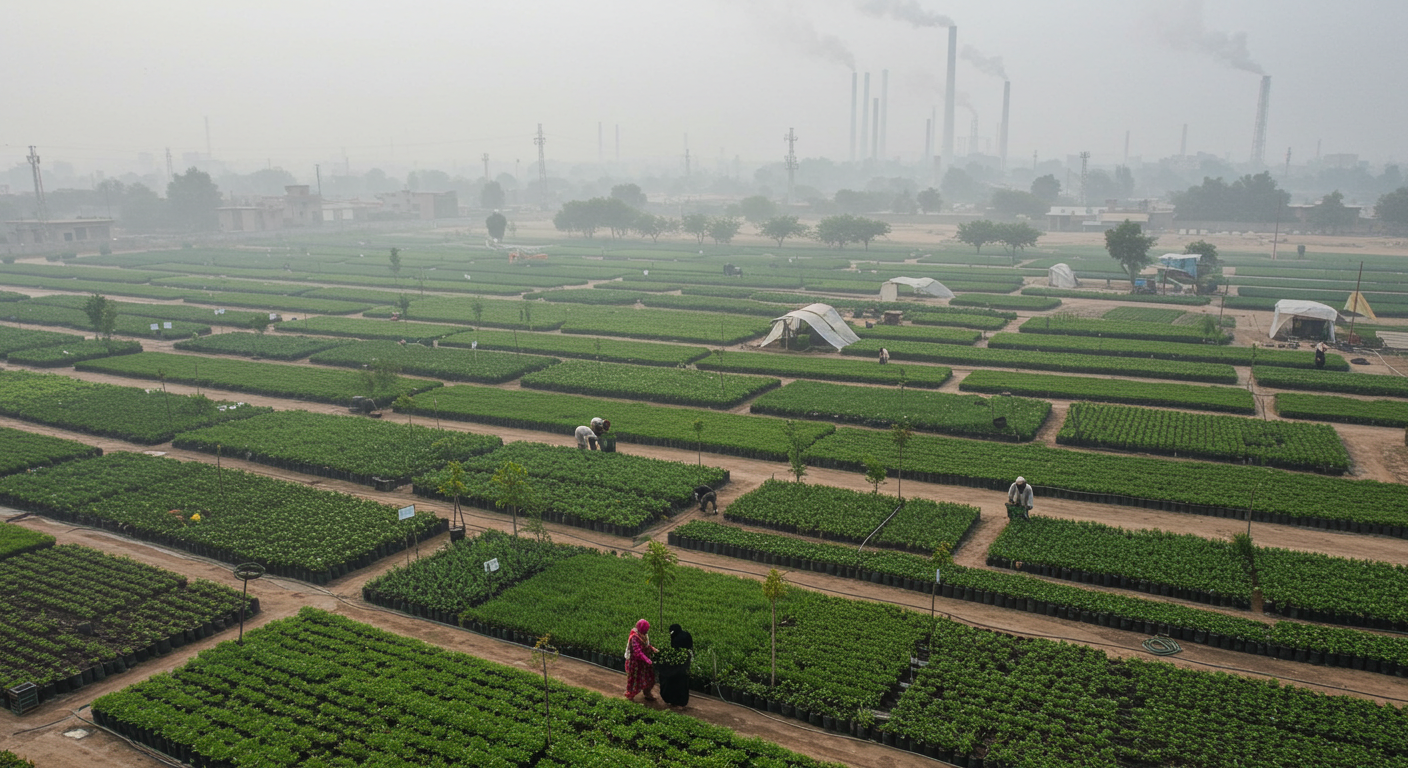
From Smog to Sanctuary: Pakistan’s Largest Nursery Takes Root
Pakistan’s introduction of its largest nursery in Islamabad is a courageous move towards addressing one of the nation’s biggest issues, environmental degradation. Spanning 50 acres and...

Pakistan’s introduction of its largest nursery in Islamabad is a courageous move towards addressing one of the nation’s biggest issues, environmental degradation. Spanning 50 acres and intended to accommodate over one million plants, this effort is not an ostensible green blanket but a concerted push against smog, the revival of urban ecosystems, and a healthier future for millions. For a nation that consistently ranks low in the world on air quality, according to the World Health Organization, such initiatives are no longer a choice, but a necessity for survival.
Each winter, Lahore, Faisalabad, and even Islamabad itself get enveloped in lethal smog due to car emissions, industrial production, burning agricultural waste, and poor weather conditions. Flight operations are suspended, schools are shut, and hospitals get filled with patients with respiratory diseases. Scientists have been warning for long that unless drastic measures are taken, the crisis will deepen as climate change deepens. Against this somber backdrop, the setting up of a nursery with the capacity to produce one million plants is an intentional policy move towards nature-based solutions, universally acknowledged as the most cost-effective means of fighting pollution and climatic risks.
What makes this project unique is the incorporation of contemporary horticulture methods with environmental foresight. Controlled ventilation greenhouses will provide optimal growth of the plants throughout the year, and a rainwater harvesting pond will be a sustainable source for irrigation purposes in a country that is experiencing severe water stress. These innovations reflect an openness to incorporating science and technology in environmental management instead of depending on the annual plantation drives.
No less significant is international cooperation behind the initiative. Azerbaijan’s horticulture professionals are helping Pakistan establish the nursery, showing how ecological problems are transboundary. Smog wafting over Lahore does not abate at Wagah, and receding Himalayan glaciers pose a threat to millions in South Asia, not an isolated nation. Accessing outside expertise demonstrates that Pakistan is willing to adopt international best practices while adapting them to homegrown realities.
The project is also directly engaging the citizen. In the current monsoon season, 25,000 plants have been given away for free, and it has motivated people to green their own surrounding areas. The nursery has a training institute that will produce trained horticulturists, so there will be long-term capacity to roll out similar programs across the country. Greenery enhances mental health, urban looks, and relief in fast-growing concrete cities, a social good as important as the environmental one.
Most significantly, perhaps, this nursery contradicts the narrative of defeat that typically accompanies Pakistan’s environmental history. Too frequently, news cycles highlight floods, droughts, or smog crises in defining a helpless country as passive victim to climate change. This project, as with the previous Billion Tree Tsunami that won global accolades, positions Pakistan as an active nation moving forward to ensure its environmental future.
Committing 50 acres in the federal capital to greenery also carries a political message: economic development and urbanization do not have to be at the expense of public health and environmental equilibrium. With smog now becoming associated with economic loss via healthcare expenditure, disruption of trade, and decreasing labor productivity, such projects are not merely environmental ethics but economic pragmatism as well.
The Islamabad model nursery is thus more than a plantation plot; it is an investment in public health, climate resilience, and urban endurance. It shows that combating smog and encouraging vegetation needs more than brief campaign seasons, it needs institutional resolve, scientific research, and civic engagement. In establishing this nursery, Pakistan is exercising its right to healthier air, greener cities, and a green future for generations to be.
Author