


From Diamond Dust to Diplomatic Gains: USC’s Unexpected Rise Echoes Institutional Shifts
POLICY WIRE — Los Angeles, CA — For over a decade and a half, the storied diamond fields of Southern California saw the once-proud USC baseball program mired in what can only be described as athletic...

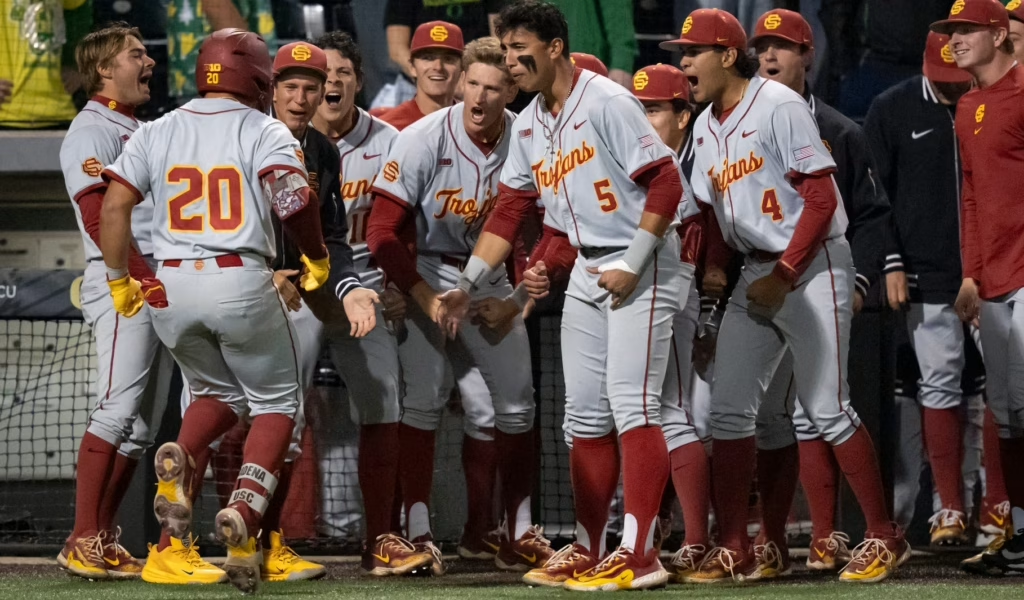
POLICY WIRE — Los Angeles, CA — For over a decade and a half, the storied diamond fields of Southern California saw the once-proud USC baseball program mired in what can only be described as athletic purgatory. Then, quietly, unceremoniously, a collegiate baseball team did something remarkable. They punched their ticket to the Super Regionals—a feat not seen since 2005. But this isn’t just a tale of balls and strikes; it’s a fascinating study in the subtle yet profound ripple effects of institutional resurgence, reaching far beyond the sports pages.
It began not with a splashy signing, but with a grind. A methodical, often thankless task of rebuilding. Texas A&M, the 11th national seed, wasn’t supposed to fall, not like this. Not to a USC squad that had to fight its way out of the loser’s bracket after a stumble against Texas State. Yet, they did. They piled on 59 runs across five brutal games, culminating in a decisive 7-1 triumph over the Aggies. A statement win, if ever there was one. But statements, as policy wonks know, are rarely just about the immediate context.
Head Coach Andy Stankiewicz, a man whose tenure feels less like coaching and more like an archaeological dig to unearth lost glory, didn’t mince words. “I think this year getting to a super is special,” Stankiewicz offered, his voice laced with the weariness and satisfaction of a man who’s seen the depths. “This is a special place. USC, I’m telling you, it’s different. We want to put a nice name back on USC baseball. That’s been part of the plan since we got here. We knew it was going to take time.” And time, it seems, has started to yield dividends, even for the most patient of investors.
His words betray a truth: universities like USC aren’t just academic centers; they’re brand powerhouses, and their athletic departments, even the less celebrated ones, feed that beast. The echo of past national championships, however distant, still resonated, creating a peculiar sort of pressure. But now, it’s a different kind of pressure—the kind that brings fresh visibility.
Consider the broader context: the sheer scale of the operation, the financial engines humming beneath the surface of seemingly amateur competition. University athletic programs, even those without an NFL pipeline, generate substantial revenue and, perhaps more significantly, priceless public relations capital. Data from the National Collegiate Athletic Association (NCAA) indicates that, even before accounting for major TV deals, university athletic departments collectively reported over $18.9 billion in annual revenue in the last pre-pandemic fiscal year. That’s a lot of spare change floating around, all tied to institutional reputation.
And where does this particular surge play out beyond the collegiate brackets? Well, for a global institution like USC—an entity whose alumni dot every continent and whose reach extends far beyond Pacific shores—even a baseball team’s unexpected triumph can ripple. Alumni in places like Karachi, London, or Beijing, watching their alma mater claw its way back, might find a renewed sense of pride. And pride, dear reader, often translates into donations, international student enrollment, — and diplomatic goodwill. It’s not just a game; it’s a form of soft power. “We’re not just building athletes; we’re reinforcing the institution’s global narrative of excellence and perseverance,” commented Dr. Amina Sharif, an executive within USC’s international relations office. “Every win, even a regional title in baseball, contributes to that broader, often intangible, sense of achievement that resonates with our partners and former students abroad.”
But Stankiewicz reminded us of the tangible, personal element too. “We had our fans, our parents right here,” he noted, pointing to the outnumbered but spirited section cheering them on in enemy territory. “They’re outnumbered. They try like crazy to cheer. This is a cool moment for them too.” Because, really, isn’t that what it all comes down to for the actual participants? Those few moments of communal joy, the hard-fought victory? Yes, it’s.
What This Means
This Cinderella run by USC baseball is less about a single athletic season and more about the ongoing narrative of institutional recalibration within the hyper-competitive landscape of American higher education. The Trojans, long associated with Hollywood glamour and athletic dynasties (often tinged with scandal), suffered a perception problem, especially in sports that weren’t football. Reclaiming legitimacy in a sport like baseball—a quintessentially American pastime with deep roots—serves as a potent symbol of a university re-centering itself.
Economically, it’s not going to generate millions overnight like a national football championship would, but it feeds a crucial feedback loop. Increased positive visibility fosters alumni engagement, which boosts fundraising campaigns, which in turn strengthens academic and athletic programs. It’s an almost imperceptible nudge to the institutional value proposition. Politically, while this isn’t a foreign policy declaration, the narrative of a prominent American university—especially one so globally connected—overcoming adversity to achieve success has a quiet, reinforcing effect on the ‘American dream’ ethos that still attracts talent and investment from abroad. This resonates particularly with audiences in South Asia, where the pursuit of higher education in the West remains a potent symbol of upward mobility. It speaks to a certain grit—a trait highly valued across the Muslim world—to persist and succeed against long odds, and perhaps even for new leadership to guide the next generation. it burnishes the USC brand just as college athletics enters an era of unprecedented transformation with NIL deals and conference realignments; every positive story helps shore up the foundation. It’s about building a better reputation, one win at a time, for an enterprise that always felt destined for better things.