


Old-World Charm, New-World Cash: France’s Enduring Grip on American Aspiration
POLICY WIRE — New York, USA — It turns out empires of influence don’t always collapse with a bang. Sometimes, they simply endure, shimmering — and expensive. While the United States gears up for its...

POLICY WIRE — New York, USA — It turns out empires of influence don’t always collapse with a bang. Sometimes, they simply endure, shimmering — and expensive. While the United States gears up for its quarter-millennium mark, eyes aren’t solely on home-grown pride. Instead, there’s a particular, persistent affection—an old flame, really—that keeps pulling American wallets and hearts across the Atlantic. France, of all places, maintains its cultural — and economic hold, long past the fireworks of Lafayette.
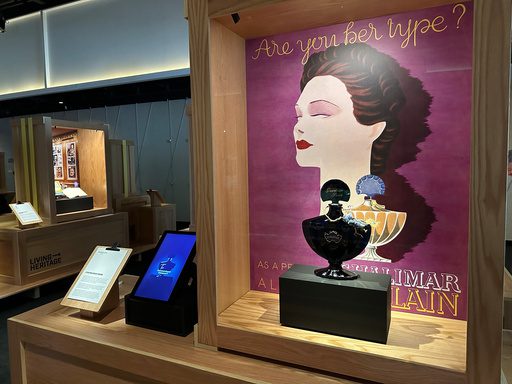
Consider the ‘Hidden Treasures’ exhibit currently making a splash in Manhattan. It isn’t just about pretty trinkets; it’s a masterclass in sustained soft power. Curated by the Comité Colbert—a cartel, if you will, of French luxury powerhouses—the show gathers a truly stunning collection. You’ve got Jacqueline Kennedy’s Givenchy coat, sleek — and timeless. And then there’s the Cartier lunar module replica, a flashy nod to Cold War ambitions. Each piece tells a story, not just of French artistry, but of how America, despite its bluster, keeps reaching for that elusive French something.
It’s not just about fashion, though fashion’s always front — and center, isn’t it? Madonna’s eye-catching Jean Paul Gaultier dress, from a 1992 runway, proves French flair isn’t confined to grand dames. It’s an embrace across generations, transcending presidents — and pop stars alike. French houses like Dior and Louis Vuitton don’t just stage shows anymore; they’re expanding their entire footprints right here. They’re building out into new markets, far from just the usual coastal haunts or glitzy Las Vegas. Hermès even opened in Nashville last year. Makes you wonder about who they’re pitching to.
But this isn’t some fresh phenomenon. It’s historical, baked into the country’s founding narrative. The underlying ambitions that shape nations, it seems, haven’t changed much. France was already a “dominant” culture when the U.S. was a fledgling experiment. Think Benjamin Franklin, not yet a face on a hundred-dollar bill, commissioning the Libertas Americana medal from a Paris mint in 1782 to commemorate French support during the Revolution. Or the Statue of Liberty, an 1886 gift, standing tall as an unmistakable French import. The exhibit features items shipped in crates, a deliberate symbolic gesture to remind folks of those transatlantic voyages. It’s almost too neat, really, this packaging of history as retail therapy.
Because ultimately, this enduring relationship isn’t purely sentimental. There’s cold, hard cash at stake. “Luxury,” as James Burroughs, professor of commerce at the University of Virginia’s McIntire School, said, “is always about status and signaling.” And American consumers, it turns out, have quite a bit of status to signal.
The Comité Colbert’s CEO, Bénédicte Épinay, summed it up perfectly: [QUOTE_PLACEHOLDER] It’s a deep link starting at the 18th century and still alive. She’s not wrong, you know? They’ve also widened their product lines, offering more options “very relevant to the mass American consumer,” as New York University’s Thomaï Serdari observed. They want to get beyond just the one-percenters. It’s about accessibility to aspiration, however contradictory that sounds.
And it’s a global game. Much like rising economies across South Asia, including Pakistan’s burgeoning urban middle class, start eyeing their own symbols of status, the sheer scale of the American market remains an undeniable prize. You’re seeing similar trends in places where newly affluent consumers are beginning to explore international brands. Those companies aren’t missing a trick, expanding their reach to cities far beyond their historical hubs.
Sure, geopolitics can mess with the gravy train. There were whispers—loud whispers—about tariffs that could disrupt European trade. Last year, the European Commission had agreed to a deal with then-President Donald Trump for a 15% tariff on certain goods. That could’ve stung. But politics, Épinay insists, it’s up — and down. Tariffs, at least for now, are in the past. What matters is that cultural link, alive — and kicking, and bringing in billions. Hélène Poulit-Duquesne, Boucheron’s CEO and soon-to-be president of Comité Colbert, plans to open a fourth Boucheron store in the U.S. by year’s end. That’s confidence, baby. Big confidence.
What This Means
This enduring French romance isn’t merely a quaint historical footnote. It’s a pragmatic assertion of soft power, one that deftly sidesteps geopolitical friction while cementing economic dominance. While nations grapple with trade wars and political spats, French luxury, curated and presented, continues to quietly, but forcefully, colonize American desire. It reflects a deeper pattern: nations, young or old, often seek validation or aspirational identity through the cultural artifacts of others, especially those perceived as having an older, more refined heritage. For France, it means a stable, high-margin export market that buffers economic uncertainty and provides a steady flow of influence. For America, it represents an appetite for old-world sophistication that, surprisingly, thrives even as the nation loudly proclaims its self-sufficiency. It’s a profitable paradox, demonstrating that culture, even if it’s designer culture, is often the most resilient form of diplomacy.