


Dhaka’s Quiet Calamity: Measles Resurgence Tests Public Health Will
POLICY WIRE — Dhaka, Bangladesh — The silent terror of an old enemy, one thought largely vanquished by concerted global efforts, has quietly settled back upon the congested landscape of Bangladesh....

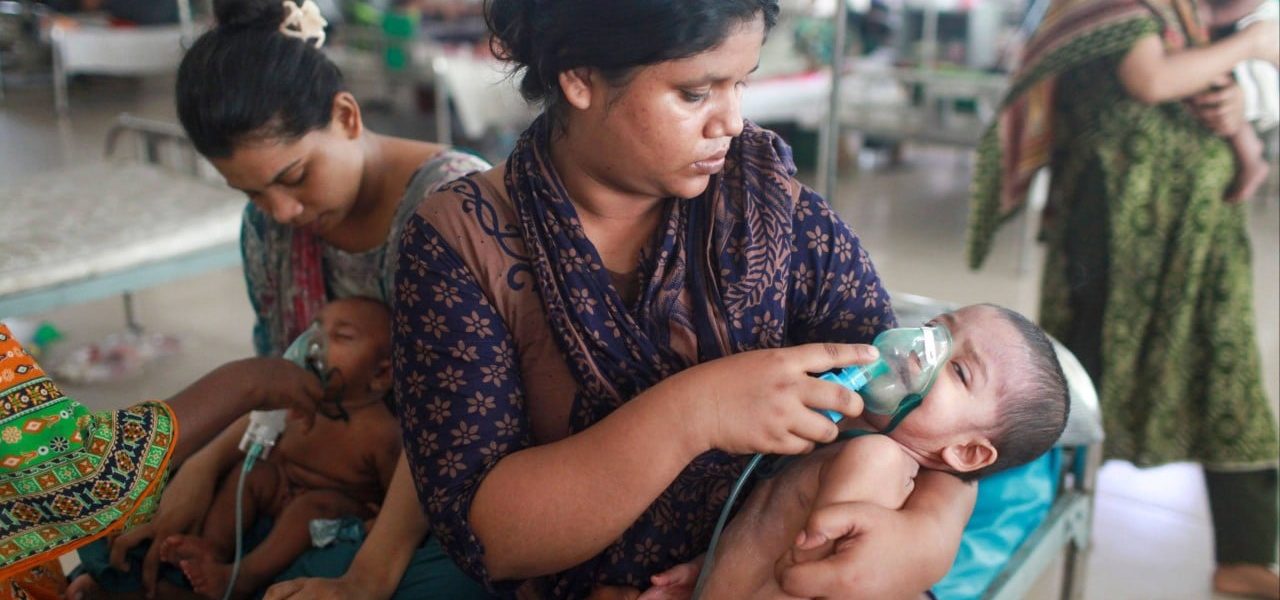
POLICY WIRE — Dhaka, Bangladesh — The silent terror of an old enemy, one thought largely vanquished by concerted global efforts, has quietly settled back upon the congested landscape of Bangladesh. We’re talking measles, a disease often dismissed in developed nations as a childhood nuisance, but here, it’s proving far more insidious. For many, it’s a death sentence, particularly for the most vulnerable among a populace that frequently finds itself navigating one humanitarian crisis after another.
You see, this isn’t just about kids getting spots. No, this outbreak — an ugly rerun of a history no one wanted to see repeat — isn’t simply another line item in the annual public health ledger. It’s, according to reliable media reports, one of its deadliest health crises in decades. One almost thinks the virus itself has developed a sophisticated sense of irony, striking hardest where defenses are thinnest. Since mid-March alone, the numbers are grim: over 60,000 suspected cases of measles, and nearly 600 people have died from the disease. [QUOTE_PLACEHOLDER]
Experts are already shouting from the rooftops (or at least, from the quiet dignity of their research papers), saying that a continued lack of concerted efforts to ramp up vaccinations and beef up national immunisation across the country could very easily lead to a further spike in cases. It’s not rocket science, this. But implementing widespread, sustained health campaigns in a country with myriad geographical and logistical challenges? That’s where the rubber meets the road, — and sometimes, the road just isn’t there.
And it’s no shocker where the impact lands heaviest. The outbreak has been particularly severe among malnourished children and communities with limited access to even basic medical care. Imagine a family, barely scrounging for their next meal, now battling a highly contagious virus that targets the weakest among them. It’s a bitter truth: poverty doesn’t just deprive; it predisposes. These communities, often located in hard-to-reach areas, bear the disproportionate burden of illnesses that richer nations (or even richer sections within Bangladesh) now consider an anachronism.
But why now? Why this grim déjà vu? Part of it’s the grinding attrition of poverty, yes. But also, it’s the quiet erosion of public trust in official health messaging, coupled with what some consider governmental apathy in addressing vaccine hesitancy in certain pockets. Travel patterns, too, don’t help things—disease respects no borders, no immigration laws, certainly no customs checks. A movement of people means movement of pathogens. Just look at the broader South Asian context: countries like Pakistan have grappled with their own cycles of vaccine hesitancy, sometimes fueled by conspiracy theories and religious misinterpretations. This regional commonality isn’t accidental; it’s systemic, and it’s a problem that often transcends specific national policies. It’s a shared vulnerability, really.
The international community’s engagement often ebbs and flows with the most recent crisis, sometimes leaving persistent, structural issues like widespread immunisation to falter during periods of perceived calm. But complacency, as Bangladesh is currently discovering, is a luxury no nation, particularly one densely populated and economically challenged, can afford. It isn’t just a failure of health policy; it’s a failure of foresight.
📄 POLICY WIRE WHITEPAPER PUBLISHED: PAKISTAN'S NATIONAL SECURITY POLICY PRIORITIES
👉 READ BY CLICKING HEREBecause here’s the thing: it’s not just a medical problem. This current scramble to contain the measles isn’t just about jabs — and isolation wards. No, it’s also about fragile healthcare systems—those stretched thin during previous health scares (and there have been many), now creaking under renewed pressure. It’s about an economy already fighting for buoyancy, now faced with potential productivity losses from a sick workforce and sick children. It’s about a humanitarian commitment, or lack thereof, to ensure every child gets a shot at life—literally.
What This Means
This measles resurgence in Bangladesh is less an isolated health event and more a flashing red light for regional governance and international aid paradigms. Politically, it lays bare the continued gaps in Dhaka’s public health infrastructure and resource allocation, forcing a confrontation with entrenched issues of access and equity. It’s an inconvenient truth for a government eager to showcase developmental gains, highlighting that economic growth doesn’t automatically translate to robust healthcare safety nets for everyone, everywhere. And honestly, it puts a big spotlight on the ‘development paradox’ that haunts much of the Global South—impressive economic statistics sometimes mask grim realities on the ground.
Economically, the indirect costs will stack up quickly. Beyond the immediate strain on healthcare budgets, there’s the lost productivity from sick adults caring for sick children, and educational setbacks for those children who survive but are left with compromised health. for a country deeply intertwined with its neighbors, an unchecked health crisis in Bangladesh always carries regional implications, impacting cross-border trade, tourism (if any), and diplomatic relationships through the prism of health security. But what happens if vaccine programs—which are often a collaboration with global bodies like UNICEF and WHO—stumble due to local resistance or logistical bottlenecks? It becomes a stark reminder that while technology might have given us vaccines, the implementation remains a deeply political, economic, and cultural tightrope walk across the Muslim world and beyond.