


Blasting in Albuquerque: A Chronicle of Perpetual Urban Reshaping
POLICY WIRE — ALBUQUERQUE, N.M. — It isn’t always the grand political pronouncements or the shifting sands of global diplomacy that dictate the daily rhythm of life. Sometimes, it’s the...

POLICY WIRE — ALBUQUERQUE, N.M. — It isn’t always the grand political pronouncements or the shifting sands of global diplomacy that dictate the daily rhythm of life. Sometimes, it’s the insistent rumble of dynamite—the literal ground shifting beneath your tires. Out here in Albuquerque’s burgeoning west side, folks are about to get another dose of that particular reality, but the constant construction and rock blasting are far more than just a momentary annoyance. They’re a gritty, grinding manifestation of urban metabolism, an unceasing effort to accommodate growth, even when it feels like a cosmic joke on rush hour commuters.
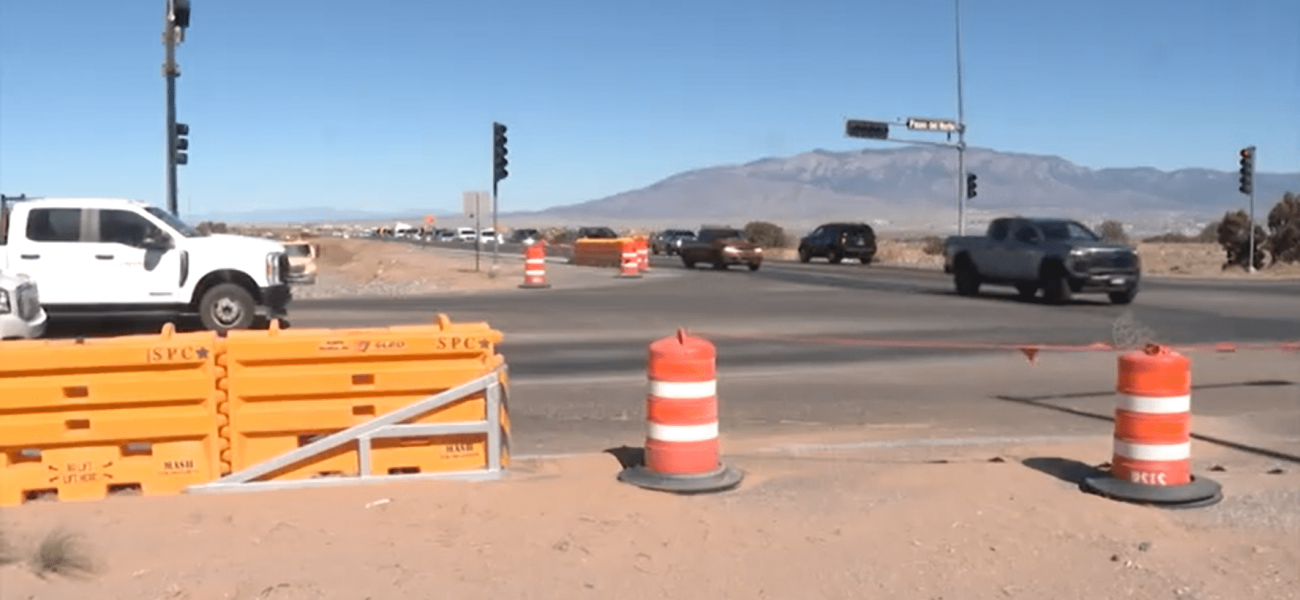
Beginning at noon on Thursday — and stretching all the way to 5 p.m. on Friday, the critical artery of Paseo del Norte—between Universe and Unser—will simply cease to be an option. Think about that for a second. An entire major thoroughfare, shuttered. Not for a presidential motorcade, not for some flashy celebrity event, but for the messy business of moving earth. It’s what we sign up for when a city keeps getting bigger, I guess.
The why is pretty straightforward, or at least that’s what the working stiffs out there tell us. [QUOTE_PLACEHOLDER] Just another day at the office when your office happens to be a perpetually fractured stretch of desert turned freeway. We heard [QUOTE_PLACEHOLDER] which felt more like a perennial reminder than a specific alert. And they’re not kidding, because this particular geological aggression is [QUOTE_PLACEHOLDER] So, drivers, don’t get too comfortable; this is just another chapter in the city’s seemingly endless book of concrete, rebar, and explosions.
For those navigating this concrete labyrinth, a suggested detour does exist, which is pretty sporting of them, all things considered. Eastbound traffic, in case you were wondering (and you definitely should be if you’re out that way), will need to [QUOTE_PLACEHOLDER] It’s less a detour, more a scenic tour of neighborhood streets you probably didn’t know existed. Good luck with that—they don’t call it the Wild West for nothing.
But this isn’t just a local spat with a freeway. This relentless quest for more infrastructure—wider roads, better drainage, bigger everything—mirrors struggles across the globe. Take a place like Karachi, Pakistan. A metropolis exploding at the seams, its population swelling, infrastructure buckling under pressure. The sheer scale of challenges in managing urban sprawl there, or in Lahore, makes Albuquerque’s current predicament feel, well, manageable. Both regions face unique geological hurdles—here it’s brittle desert rock, there it’s often soft riverine soil or the seismic instability of a tectonically active zone. The tools, the grit, the disruption—it’s a shared global experience of human impact on the planet, just packaged differently.
And you’ve gotta wonder about the impact, too, on all those nearby residences — and businesses. Back in April, the city stated, somewhat dryly, that [QUOTE_PLACEHOLDER] Because, you know, wouldn’t want a coffee cup to wobble off a desk unexpectedly. It’s a polite nod to public safety amidst the organized chaos. But it doesn’t change the underlying truth: expansion demands concessions, from property owners, from the landscape, and especially from commuters’ dwindling patience. A recent study by the American Road & Transportation Builders Association indicated that approximately 46% of all major urban roads in the United States are in poor or mediocre condition, demanding exactly this kind of constant, disruptive overhaul.
📄 POLICY WIRE WHITEPAPER PUBLISHED: PAKISTAN'S NATIONAL SECURITY POLICY PRIORITIES
👉 READ BY CLICKING HEREWhat This Means
This Albuquerque road closure, — and the ongoing saga of its expansion, isn’t an isolated incident. It’s a microcosm of a larger political — and economic calculus playing out across developed and developing nations alike. For policymakers, it’s a zero-sum game: keep growth going and face citizen complaints about inconvenience, or halt development and risk economic stagnation. This particular project, focused on storm drainage, reveals a growing awareness of climate resilience within infrastructure planning. As weather patterns become more unpredictable—and, let’s be honest, more violent—cities are forced to prioritize foundational utilities in ways they might not have decades ago.
But the broader implication, especially when we consider its echoes in rapidly industrializing economies like those found in parts of the Muslim world, is the inherent conflict between urban progress and quotidian peace. Construction represents investment, jobs, future prosperity—but it’s a prosperity often paved with current aggravation. From a geopolitical standpoint, the capacity for a nation to undertake and complete complex infrastructure projects, despite internal friction, is often seen as a measure of its stability and efficacy. It reflects a state’s ability to exert control over its territory — and its long-term vision for its citizens. It’s a never-ending cycle, this construction, much like the eternal ebb and flow of global power dynamics, albeit on a far more granular scale, affecting folks trying to get to work on time.
For more on the relentless pace of urban evolution and its often-noisy realities, consider our look at Albuquerque’s Daily Grind: Rock Blasting and the Echoes of Urban Growth. Sometimes, you see, the local headlines speak volumes about the world writ large, if you know how to read between the traffic cones.