

Finland’s Stubb Sparks Europe’s Uncomfortable Russia Reckoning
POLICY WIRE — Helsinki, Finland — Europe’s meticulously constructed wall of diplomatic isolation against Moscow just got a hairline crack. And it’s come from an unexpected quarter....

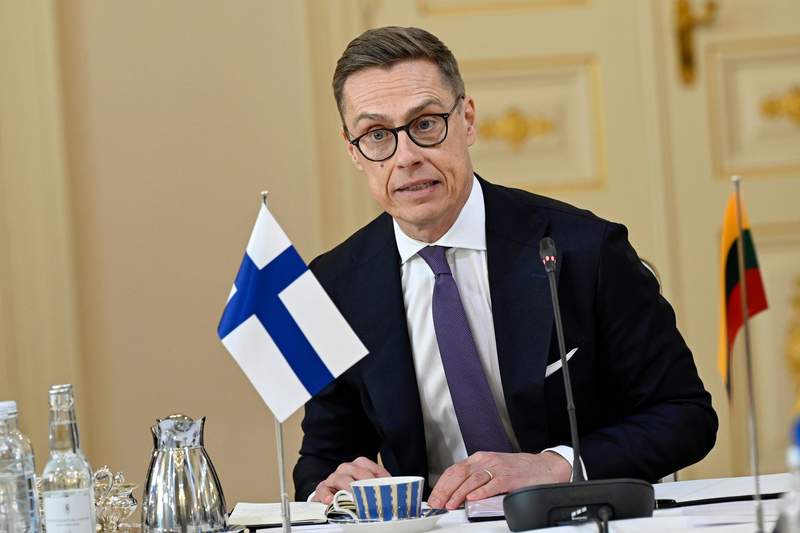
POLICY WIRE — Helsinki, Finland — Europe’s meticulously constructed wall of diplomatic isolation against Moscow just got a hairline crack. And it’s come from an unexpected quarter. Finland, a nation with 830 miles of shared border and centuries of fraught history with Russia, now through the voice of its President, Alexander Stubb, is suggesting it’s high time for the EU to – get this – actually talk to the Kremlin.
It’s a declaration that ripples through Brussels, through Warsaw, right down to Kyiv, where the notion of engagement often feels like a betrayal. For years, the narrative’s been clear: isolate, sanction, resist. But Stubb, no softie on Russian aggression by any stretch, laid it out with blunt realism. We’ve beefed up our defenses, sure. We’ve solidified unity against the aggression. Yet, he cautions, “Pretending Russia simply vanishes just because we wish it so isn’t policy; it’s fantasy. Engagement, however uncomfortable, must eventually figure into a long-term strategy for Europe’s security.” It’s less an olive branch and more a calculated risk.
And boy, does it stir the pot. This isn’t just a casual remark from some minor functionary; it’s coming from the leader of a newly minted NATO member, a nation that abandoned decades of neutrality directly because of Russia’s actions. It’s a bitter pill for many, especially those who’ve argued for an uncompromising stance since the 2014 annexation of Crimea, let alone the full-scale invasion two years ago.
Because let’s be frank, Europe’s relationship with Russia was, pre-invasion, deep — and complex. Former German Chancellor Gerhard Schröder’s persistent embrace of Kremlin ties is a potent, albeit largely discredited, example of that. But it wasn’t just him; energy dependency ran deep, — and trade flows were massive. Before the 2022 full-scale invasion, the EU actually was Russia’s largest trading partner, accounting for a significant 37.3% of its total trade in goods, according to Eurostat. That’s a brutal divorce, and it’s left scars on both sides.
But how do you even begin to unwind such a cataclysmic rift? Stubb’s comments hint at the exhaustion, or perhaps the dawning pragmatism, among some European strategists. You can’t just sanction a nuclear power out of existence, not permanently. But there’s a strong counter-current. “While diplomatic channels exist for pressing issues,” argued a senior Polish foreign ministry official, speaking on background, “legitimizing the Kremlin’s current regime through direct high-level talks risks undermining the very sanctions and solidarity we’ve fought so hard to build. It’s a dangerous flirtation with moral relativism that Kyiv surely wouldn’t welcome.”
It’s a thorny diplomatic puzzle. Do you negotiate from a position of strength, after years of trying to bleed the Russian war machine dry? Or do you hold out for regime change, a goal that appears increasingly remote? Many leaders are stuck in the middle, recognizing the long game without wanting to give an inch of moral ground.
What This Means
📄 POLICY WIRE WHITEPAPER PUBLISHED: PAKISTAN'S NATIONAL SECURITY POLICY PRIORITIES
👉 READ BY CLICKING HEREStubb’s overture isn’t a unilateral policy shift, not yet. But it definitely signals a burgeoning internal debate within the EU. The initial, unified response to Russia’s aggression has, understandably, begun to show strains as the war drags on and geopolitical priorities subtly shift. This isn’t just about Ukraine’s borders; it’s about the very future of European security and its relationship with its largest neighbor, a reality not lost on other major players across the globe.
For nations like Pakistan and others in the wider Muslim world, who’ve largely walked a tightrope, trying to balance relationships with both Western powers and Russia, this could be a subtle cue. Many in these regions maintain ties with Moscow due to historical alliances, arms deals, or energy needs—and they’ve keenly watched Europe’s often absolute condemnation. Any hint of pragmatic engagement from a nation like Finland might be interpreted as a potential thaw, suggesting Moscow isn’t permanently radioactive. It changes the perceived long-term calculus, implying that eventually, the West will, indeed, have to deal with Russia as a continuous, if inconvenient, geopolitical force. But it also risks undermining the resolute stance against aggression, something developing nations have often highlighted as a tenet of international law.
And let’s be real, the economic ramifications are immense. If formal high-level contact becomes acceptable, it opens pathways for more nuanced policy discussions on everything from energy to regional stability in Central Asia and the Middle East, areas where both Europe and Russia have vested interests. It’s not about forgiveness. It’s about a cold, hard assessment of what kind of relationship a future Europe can, or must, tolerate with a neighboring pariah. There’s no quick fix. But there’s a conversation. And Stubb’s just forced Europe to start having it.
Ultimately, this isn’t an immediate invitation to reset relations. No champagne toasts in Moscow for now, you know? But it’s an acknowledgment of an uncomfortable truth: Russia isn’t going anywhere. How Europe navigates that reality—how it defines coexistence without capitulation—that’s the brutal calculus ahead. It won’t be pretty. But it’s starting.