

Field Marshal Munir’s Washington Visit – Pakistan’s Recalibrated Global Standing
In a rare and deeply symbolic diplomatic movement, Field Marshal Syed Asim Munir’s visit to Washington is more than the resurgence of U.S.-Pakistan military talks. It is a strategic reset. His...

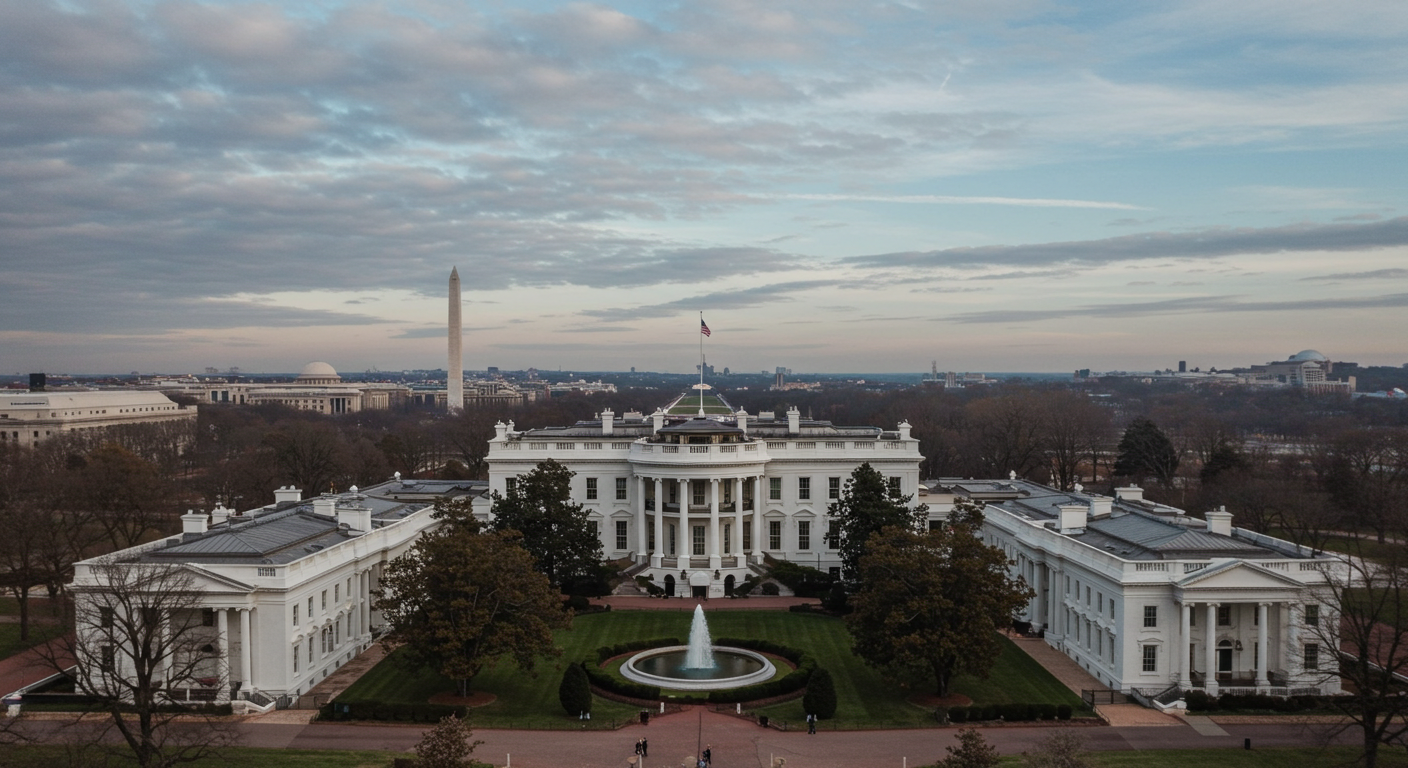
In a rare and deeply symbolic diplomatic movement, Field Marshal Syed Asim Munir’s visit to Washington is more than the resurgence of U.S.-Pakistan military talks. It is a strategic reset. His private lunch meeting with former U.S. President Donald Trump at the White House, without a civilian counterpart, has been termed in Islamabad as a diplomatic milestone. For Pakistan, it is a sign of the return of credibility at the international high table. For Washington, it indicates a reawakening to the centrality of Pakistan in the shifting South-Central Asia and Middle East nexus.
The summit followed in the immediate wake of growing regional volatility, the South Asian aerial combat threat that threatened to engulf Pakistan and India into full-scale war. Trump, in his statements, recognized Pakistan’s sophisticated perspective on the Middle East and went on to thank Prime Minister Modi and Field Marshal Munir for not letting happen what “could have been a nuclear war.” That recognition, while subtle, actually put Pakistan back into the regional stability matrix that Washington tended to let tip too far towards Delhi.
Perhaps the most substantive consequence of this visit was the escalation of U.S.-Pakistan counterterrorism partnership. In a breakthrough touted by CENTCOM, Pakistan facilitated the arrest and straightaway extradition of IS-K chief Mohammad Sharifullah, who was said to be the architect of the catastrophic Abbey Gate bombing amid the U.S. withdrawal from Afghanistan. The arrest, facilitated by Pakistani intelligence and combined field operations, has been presented in Washington as a significant counterterrorism victory. Pakistan has carried out dozens of anti-IS-K operations supported by U.S. intel along Afghanistan’s porous border, CENTCOM commander General Michael Kurilla said. The operations are vital for regional and American security.
This counterterrorism agreement is tactical in nature. No, it is strategic. It reactivates the U.S.-Pakistan security partnership architecture that had been nearly frozen in the past few years. It is proof of operational credibility for Pakistan, both as an instrument and as a soft power instrument to regain diplomatic capital. It is guarantee of ongoing reach in a part of the world where the American physical presence has dramatically dropped since 2021 for the United States.
Munir’s visit also served to confirm Pakistan’s pivot central position in the geopolitics of deterrence. Whereas India has just conducted high-level talks with U.S. Vice President JD Vance, Pakistan countered with its own military-diplomatic offensive. It was not led by rhetoric, but by actual security deliverables. The Field Marshal’s message of caution to India not to create a “new normal” of cross-border provocation came with authority, particularly in the wake of recent clashes and allegations surrounding the Pahalgam incident. His forthright declaration that Pakistan “would rather embrace martyrdom than accept dishonour” was not symbolic. It reaffirmed the logic of deterrence that sustains South Asia’s precarious balance.
The optics of the visit are their own story. At a diaspora event in Washington, Munir was received with rose petals. This was a sight of contrast to PTI-aligned demonstrators calling for political change outside. Even here, however, Munir’s messaging was finely tuned. He dodged political commentary, instead recognizing democratic dissent as necessary while urging national unity, strength, and economic revival. His declaration that emigration was a case of “brain gain” repositions the Pakistani diaspora as more than victims of instability and instead as agents of international contribution.
This is light years away from the era when Pakistan was treated as a reactive state, always playing defense in international circles and often defined by others’ definitions. Now, it is writing its own history. The Washington visit is a testament to the fact that Pakistan is being viewed, if not by the majority, then at least by powerful sections of the U.S. establishment, as a regional actor with agency. It is no longer just a state constantly under surveillance.
Outgoing Foreign Minister Bilawal Bhutto-Zardari appropriately described the visit as a “positive step” in bilateral relations. He once again assured that Pakistan wants peace but is resolute on issues of national interest, most especially on Kashmir and cross-border water concerns. It is in this layered diplomacy that the new Pakistani posture can be explained: resolute on red lines, adaptable in engagement, and active in pre-empting the needs of an increasingly changing international order.
The military-to-military dialogue restored to the U.S. is not only important within the counterterrorism space but also in demonstrating that Islamabad has secured diplomatic room to maneuver among the great powers. Beyond defense, the larger context of the visit, including meetings on crypto architectures, rare earth elements, and regional connectivity, indicates that Pakistan is attempting to ground its global identity within geoeconomics, rather than simply geostrategy.
📄 POLICY WIRE WHITEPAPER PUBLISHED: PAKISTAN'S NATIONAL SECURITY POLICY PRIORITIES
👉 READ BY CLICKING HEREFrom a theoretical lens, Islamabad’s approach mirrors what international relations scholars would call strategic hedging. It is engaging with multiple powers to ensure autonomy while mitigating vulnerabilities. This posture combines elements of defensive realism and pragmatic alignment without falling into ideological or bloc-based entrapments.
Forecast: What Could Follow
If the momentum created through this visit is maintained, the possible positive developments are numerous. To begin with, we can see the institutionalization of intelligence-sharing practices among Pakistan and U.S. CENTCOM, especially on IS-K and regional terror networks. This could then mature into a formalized joint counterterrorism task force, with linkages in operations and training.
Second, deeper security trust can open the door for focused economic cooperation in areas like digital finance, rare earth minerals, and energy infrastructure. All are areas of common interest that overlap with CPEC Phase II and U.S. efforts for alternatives to Chinese mineral supply chains.
Third, the visit can rekindle defense education exchanges, military-to-military exercises, and increased U.S. receptiveness to Pakistan’s strategic view of Kashmir and Afghanistan. Even limited congressional contact, if resumed, will normalize a relationship too long identified with past grievances.
Finally, the enhanced assertiveness of Pakistan can lead regional players such as Iran and Saudi Arabia to treat Islamabad more seriously as a stabilizing actor. This could be visible in institutions such as the OIC, SCO, or the new India-Middle East-Europe Corridor (IMEC), where Pakistan’s role is yet to be clearly determined.
The reset has started. In an unstable neighborhood with growing extremism, economic vulnerability, and geopolitical faultlines, Pakistan is now positioning itself not as a responsive state, but as a force-multiplier. It is a state capable of influencing events, rather than simply absorbing shocks. Now it is the task of Islamabad and its allies to translate this diplomatic momentum into a long-term, strategic realignment.
Author