


Fico’s Kremlin ‘Charm Offensive’ Sparks EU Furor; Berlin Warns of Fractured Front
POLICY WIRE — Berlin, Germany — It wasn’t the first, and it probably won’t be the last. But Slovak Prime Minister Robert Fico’s recent appearance at Moscow’s Victory Day...

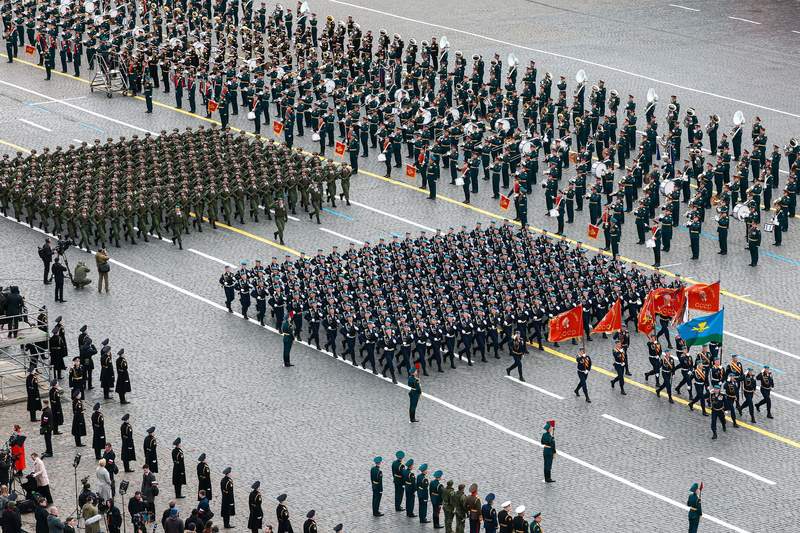
POLICY WIRE — Berlin, Germany — It wasn’t the first, and it probably won’t be the last. But Slovak Prime Minister Robert Fico’s recent appearance at Moscow’s Victory Day commemorations, a ceremony laden with an almost unbearable amount of geopolitical weight in this current climate, has ignited another firestorm within the already testy European Union. While most Western leaders—those not currently fighting for their lives—were pointedly absent, Fico chose to stand shoulder-to-shoulder, as it were, with Kremlin officials, projecting a sort of defiant pragmatism that’s increasingly grinding on Berlin’s nerves.
It’s less about a parade, really, — and more about the optics. It’s about who you’re seen with, especially when the cannons are still booming just down the road in Ukraine. Friedrich Merz, leader of Germany’s opposition Christian Democratic Union (CDU), didn’t mince words. He wasn’t having it. Merz, a figure accustomed to holding the line against what he views as diplomatic softness, quickly launched a blistering broadside. He gets it; Germany’s foreign policy establishment has worked for decades to present a united front against Russian aggression, and Fico’s jaunt plays right into Moscow’s narrative of European discord.
“Such actions simply chip away at the resolve we’ve painstakingly built,” Merz stated, his voice likely carrying a hint of steel. “Prime Minister Fico’s visit, particularly to a celebration that Russia now brazenly uses to justify its illegal aggression against a sovereign neighbor, is nothing short of a diplomatic slap in the face to our shared European values and the sacrifices being made for them. You simply don’t embolden an aggressor—it’s that plain, isn’t it?” He’s not wrong. It’s tough to preach unity when a fellow member state seems to be charting its own rather idiosyncratic course.
And Fico? Well, he sees things differently. He always does. His political playbook often involves a calculated pushback against the Brussels consensus, particularly when it touches on what he deems Slovakia’s ‘national interests.’ He’s a veteran of these skirmishes, having steered his country before with a populist, often Russia-friendly bent. He’ll tell you it’s about maintaining open communication channels, about understanding all perspectives, not about endorsement. “My visit served a sovereign Slovak agenda,” Fico, who likely doesn’t mind the attention, reportedly remarked to his domestic press corps. “We can’t let our entire foreign policy be dictated by a single narrative. Engagement, even with nations others find disagreeable, remains an instrument of diplomacy. And frankly, our citizens expect leadership that prioritizes stability for our own country, not just the emotional posturing of others.” He frames it as realism, you see.
But the realpolitik of it all often overlooks the symbolism. And symbols matter, particularly when nations like Pakistan or Indonesia are watching Europe’s coherence, or lack thereof. They’re navigating their own complex dance with global powers, often walking a tightrope between traditional Western alliances and burgeoning ties with Beijing or Moscow. Fico’s Moscow trip becomes another data point, another sign that Western solidarity isn’t the monolith it sometimes claims to be. It provides cover for nations trying to justify their own varied diplomatic approaches.
Consider the raw numbers, too. Even as the vast majority of European states slashed trade and investment with Russia following the 2022 invasion—collective EU imports from Russia dropped by approximately 75% in the first year alone—some individual member states have continued to navigate these relationships with noticeable, shall we say, flexibility. This particular diplomatic detour certainly won’t help the EU’s messaging on shared sanctions policy, that’s for sure. It muddies the waters something fierce, suggesting that a hard-line stance isn’t uniformly applied even within its own ranks. And who benefits from that ambiguity? Not Brussels. Definitely not Kyiv. And Moscow certainly isn’t complaining.
What This Means
Fico’s continued cultivation of ties with Moscow, particularly against the backdrop of Germany’s vocal objections, exposes the growing fault lines within the European Union’s united front against Russia. It’s not just a diplomatic kerfuffle; it’s a symptom of deeper ideological rifts that Brussels struggles to contain. Economically, such divergent policies could weaken the impact of collective sanctions, making it harder to exert pressure on Russia and prolonging economic uncertainties across the continent. Politically, it grants Moscow a rhetorical victory, allowing the Kremlin to point to cracks in what was once (or at least was intended to be) an unshakeable Western alliance. It emboldens other actors, both within the EU — and beyond, who might seek to undermine established norms or alliances.
It also presents a thorny problem for NATO. Slovakia, like Germany, is a member of the alliance. This kind of freelancing could potentially complicate intelligence sharing or coordinated defense postures down the line, casting a shadow of doubt on full commitment. Think about the messaging this sends to countries like Poland or the Baltic states, who view Russian aggression as an existential threat. And what about Washington? They’re certainly not pleased to see European partners, already squabbling over defense spending, now showing such open disagreement on fundamental geopolitical orientation. The situation illustrates how global statecraft requires fluidity, but too much, in disparate directions, just spells trouble.
Because ultimately, this isn’t just about one prime minister making a statement; it’s about the very fabric of European cohesion. When members begin to openly diverge on issues of war — and peace, the bloc’s overall credibility takes a hit. And that’s a hit no one in Brussels, save for a few, wants to stomach right now. It suggests that while the EU talks a big game about values and unity, some nations are quite happy to dance to their own drum—even if that drumbeat comes from the Kremlin.