


Fatal Georgia Roller Coaster Accident Sparks Renewed Debate Over Theme Park Safety Regulations
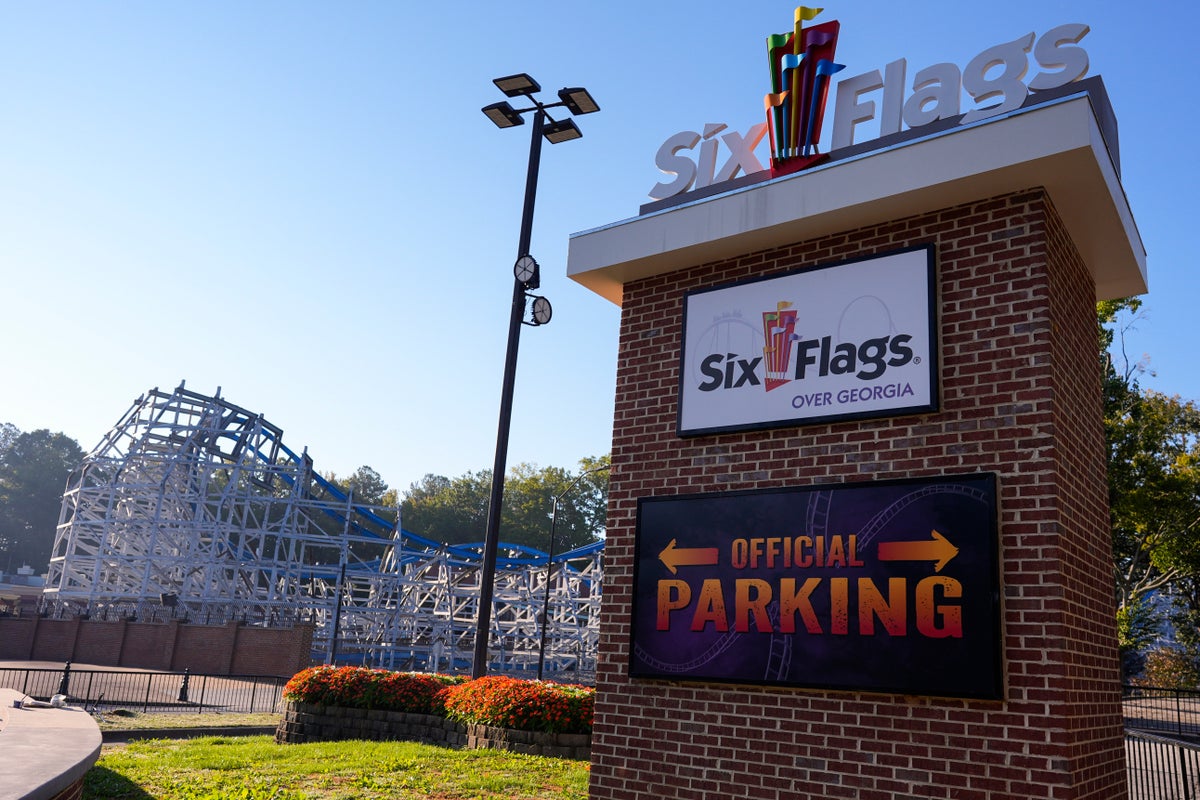
A fatal accident on the Goliath roller coaster at Six Flags Over Georgia has renewed national scrutiny surrounding amusement park safety regulations.

POLICY WIRE — Atlanta, United States — A tragic fatal incident on a Georgia roller coaster has reignited intense debate regarding amusement park safety as modern thrill rides continually push the boundaries of extreme speeds and steep drops.
Although deadly accidents on roller coasters remain exceptionally rare, authorities in Georgia have released limited details concerning Monday’s tragedy. Forty-two-year-old Hassan Jihad Ibn Kariem was ejected from his seat while riding the Goliath at Six Flags Over Georgia, striking other park guests before falling below the structure.
Operating at the venue for two decades, the Goliath utilizes a sheer 200-foot drop to achieve top speeds of 70 mph, focusing heavily on velocity and downhill plunges rather than turning riders upside down through traditional loops or corkscrews.
In the wake of the fatality, Six Flags temporarily shut down nine similar roller coasters across North America, explaining that the decision was made out of an abundance of caution. Meanwhile, the ride’s manufacturer, Bolliger & Mabillard, stated it is actively investigating the incident and will not comment further until gaining a clearer understanding of events.
Across the United States, roller coasters and attractions at major theme parks like Six Flags remain completely exempt from federal regulation, leaving oversight entirely up to individual state governments.
Critics argue that this loophole creates an inconsistent patchwork of laws, where certain states enforce rigorous standards while others maintain little to no regulatory oversight.
Massachusetts Sen. Ed Markey has repeatedly introduced legislation to close what he defines as a federal regulatory loophole that permits inspections of mobile carnival rides yet bars the Consumer Product Safety Commission from overseeing stationary park attractions.
Brian Avery, a University of Florida professor and amusement ride safety expert, also asserts that stricter national guidelines are essential to protect the public.
Who’s watching those in these organizations to ensure that they are adequately trained, that they are compliant, that they are monitoring these rides to the level in which the standards have established, Avery questioned.
Georgia’s Office of Insurance and Safety Fire Commissioner, which oversees annual inspections across the state, is currently conducting an in-depth and comprehensive review of the Six Flags incident, according to agency spokesperson Garrison Bennett.
Globally, theme park operators comply with ASTM guidelines established by industry specialists, which dictate everything from structural design to maximum passenger acceleration and G-forces.
Dennis Speigel, a theme park consultant and past president of the International Association of Amusement Parks and Attractions, explained that the sector relies on multiple layers of inspection driven by intense pressure from insurance carriers facing massive financial payouts if accidents occur.
With the checks and balances that are put in place, theme parks are really one of the safest places to be on the planet, Speigel noted during a phone interview on Tuesday.
According to trade organization data, the odds of suffering a severe injury on an amusement park ride in the U.S. stand at roughly 1 in 15.5 million.
Martin Lewinson, a roller coaster expert and professor at Farmingdale State College, stated that a mechanical failure on a coaster like the Goliath is difficult to fathom given its advanced engineering.
The attraction employs a pull-down lap restraint known as a clamshell, which operates via a ratchet mechanism that clicks securely over a rider’s hips and includes redundant safety disks in case a single component fails.
They’re dependable. They’re not so technically advanced that theme parks have difficulty with operations, Lewinson remarked.
Ride operator control panels also exhibit a green signal for every single seat prior to dispatching the train, meaning the ride theoretically cannot move unless every restraint is fully locked.
Even so, absolute safety can never be fully guaranteed within the industry.
In 2022, a 14-year-old Missouri boy fell to his death from an Orlando drop tower attraction when his harness failed to lock properly due to his physical size.
Additionally, a 52-year-old Dallas woman died in 2013 after slipping from her seat on the Texas Giant at Six Flags Over Texas, prompting the park to install updated restraint padding, seat belts, and sample entrance seats to assist visitors in checking their fit.
Nick Mendenhall, who has ridden the Goliath more than 12 times recently, noted that staff members consistently verify restraints on every single turn.
There are two employees, one on either side of the train, and with their hands they push down and they make sure it locks every time. I’ve never seen them not do it, Mendenhall said.
State-level oversight varies dramatically across the country, with California’s Department of Industrial Relations requiring state approval for new or modified rides through annual direct inspections or yearly owner reports.
Conversely, Florida exempts its largest theme parks, including Walt Disney World and Universal, from state safety inspections while keeping smaller carnivals under direct state supervision.
Major Florida operators manage their own safety protocols but must report any injury or death to the state, while Texas similarly relies on private inspectors hired directly by parks or their insurance providers.
In Arizona, home to Six Flags Hurricane Harbor Phoenix, no state agency regulates rides or conducts safety checks, relying instead on annual private inspections and local municipal enforcement.
Reporting by Policy-Wire (PW)