

Fatah’s ‘Sweeping Victory’: A Predictable Echo in the Labyrinth of Palestinian Politics
POLICY WIRE — Ramallah, West Bank — The applause was, for some, decidedly muted. A declaration of “sweeping victory” from Fatah, echoing through the corridors of Palestinian power,...

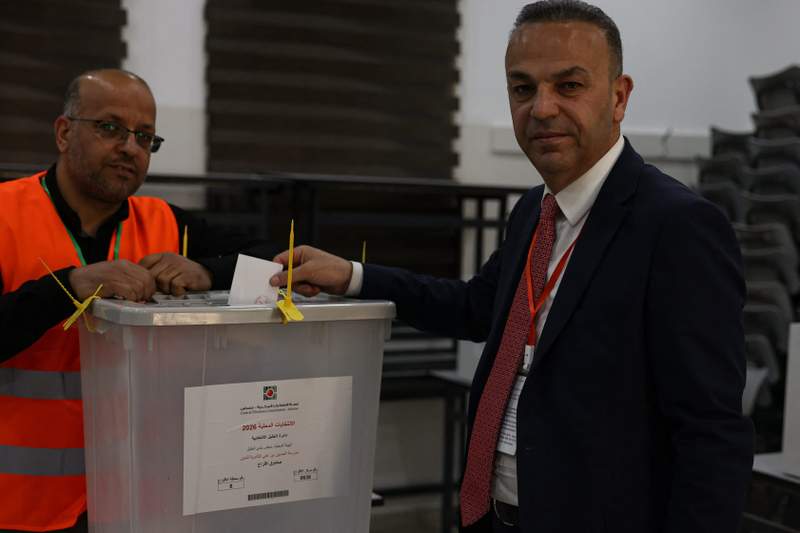
POLICY WIRE — Ramallah, West Bank — The applause was, for some, decidedly muted. A declaration of “sweeping victory” from Fatah, echoing through the corridors of Palestinian power, didn’t exactly reverberate with the thunderous approval one might expect from a truly transformative democratic exercise. Instead, it landed with the familiar thud of routine, a political fait accompli that, for many, simply underscores the enduring complexities of self-governance in a perpetually fraught region.
It’s a curious thing, this particular brand of triumph. Because while Fatah asserts its unquestionable mandate, observers — both domestic and international — were quick to enumerate the rather significant caveats appended to this electoral “success.” Call it democracy, if you must, but it certainly isn’t the sort that inspires widespread confidence in its equitable application. Still, the party leadership wasted no time in spinning the results.
“This overwhelming mandate, despite concerted efforts to undermine our democratic process, is a testament to the Palestinian people’s unwavering support for our leadership and our vision for a just future,” asserted Dr. Nabil Shaath, a senior Fatah official, echoing the party’s official line with practiced conviction. And so, the narrative was set: a victory, unequivocal — and deserved, against all odds.
But the ‘odds’ in question often refer to more than just political rivals. They include the fundamental elements of a truly free and fair election: transparent voter registration, independent oversight, and access for all qualified parties. Here’s where the story gets a bit more nuanced. According to preliminary figures from the Palestinian Central Elections Commission, turnout in the West Bank’s contested municipalities barely nudged past 40%, a figure many analysts contend reflects widespread apathy and disillusionment rather than vibrant democratic participation. Still, Fatah declared its triumph, dismissing the relatively low engagement as mere logistical hurdles.
And so, the predictable critiques flowed. “To declare a ‘sweeping victory’ when significant portions of the electorate remained disenfranchised, and transparent oversight was notably absent, feels less like a democratic triumph and more like a carefully managed coronation,” observed Dr. Mustafa Barghouti, a prominent Palestinian independent politician — and physician. He didn’t mince words, pointing to the absence of elections in Gaza and East Jerusalem as fundamental flaws that prevent any true claim to representational legitimacy across all Palestinian territories.
Behind the headlines, this electoral charade (for some, that’s precisely what it was) highlights a broader dilemma faced by many states in the Muslim world. From Pakistan’s often-disputed ballots to various North African nations grappling with nascent or struggling democratic institutions, incumbent powers frequently claim overwhelming mandates despite significant internal and external criticisms regarding the fairness and inclusivity of their electoral processes. It’s a pattern that erodes public trust, solidifying cynicism about the very possibility of genuine political change through established mechanisms.
At its core, these elections weren’t just about local councils; they were about projecting an image of stability and control, both internally and externally. But what kind of stability emerges from a process widely perceived as compromised? It’s not stability built on genuine popular consent, but rather on the maintenance of existing power structures. For the international community, this presents another uncomfortable tightrope walk: acknowledge the results to maintain engagement, or condemn them and risk further isolation of the Palestinian Authority. Neither option is particularly palatable.
What This Means
This latest electoral outcome, despite its theatrical declarations of victory, underscores a deepening democratic deficit within the Palestinian territories. Politically, it solidifies Fatah’s grip on the West Bank’s local apparatus, further sidelining opposition voices and cementing a single-party dominance that bodes ill for future power-sharing or reconciliation efforts with rivals like Hamas. It’s not just a victory; it’s a consolidation. Economically, a leadership perceived as lacking broad legitimacy struggles to enact significant reforms or attract the kind of sustained international investment necessary for long-term growth. Don’t underestimate the ripple effect.
But the implications extend beyond domestic politics. This episode further complicates the already remote prospects for a unified Palestinian political front, diminishing leverage in any future peace negotiations. Internationally, it allows critics to point to the internal democratic shortcomings, diverting attention from the external pressures and occupation that also define Palestinian reality. And for donor nations, it creates a tricky precedent, forcing them to reconcile their stated commitments to democratic principles with the pragmatic need for engagement with existing authorities. It’s a dance, — and everyone’s stepping on toes. Much like the lingering scars of a ceasefire’s unkept promise in other conflict zones, the unfulfilled promise of truly representative governance here threatens a deeper, more corrosive wound to the body politic.
Ultimately, Fatah’s “sweeping victory” feels less like an affirmation of public trust and more like an assertion of enduring power, navigating a landscape where the mechanics of democracy are often deployed as a tool for legitimacy, rather than as its foundation. And for the Palestinian people, another cycle concludes with questions of genuine representation left largely unanswered.