


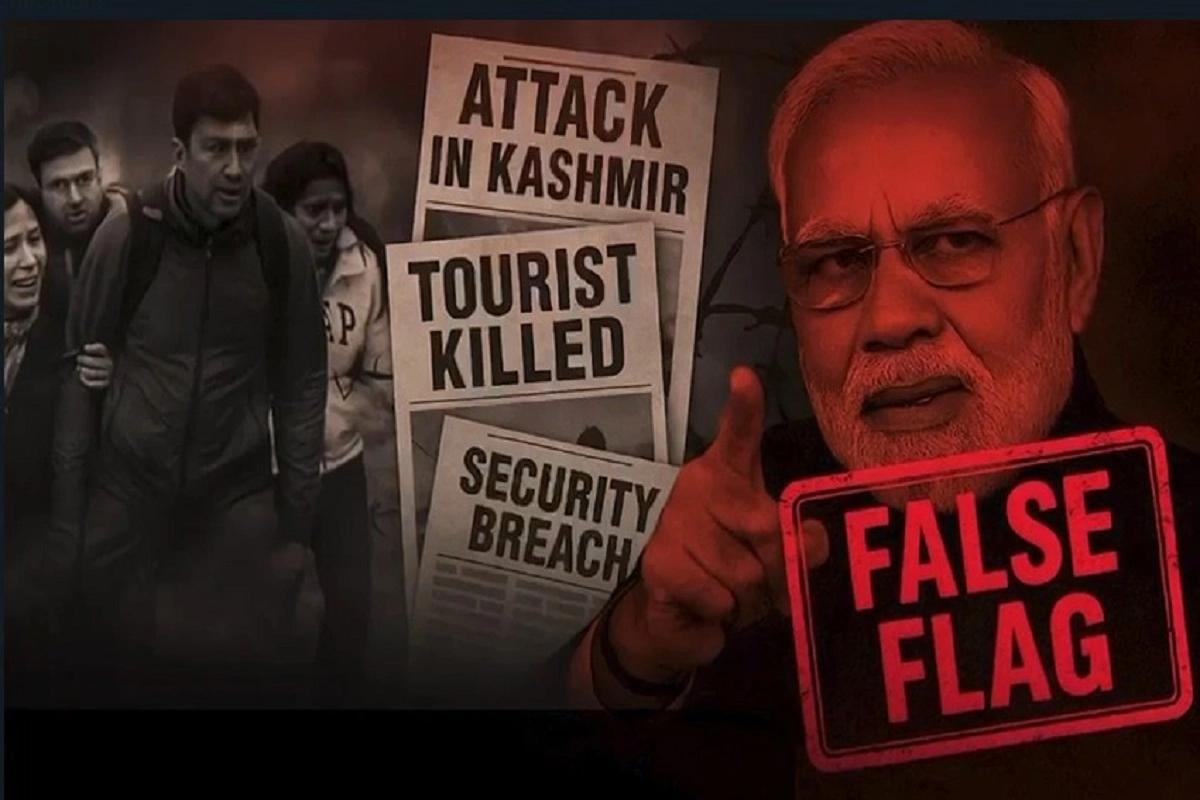

In recent weeks, the tragic incident in Pahalgam, Kashmir, has caught the attention of both regional and international observers. However, what stands out the most in the aftermath of the attack is the glaring inconsistencies in the narrative presented by the Indian government. As the dust settles, it becomes increasingly clear that the official storyline surrounding the event may not be as solid as it initially seemed. When we peel back the layers, an unsettling picture begins to emerge, one that suggests a carefully orchestrated operation designed to manipulate both the media and the masses. The question arises: was this a legitimate terror attack, or a false flag operation meant to provoke, distract, and manipulate?
The Strange Absence of Evidence
One of the most striking features of the Pahalgam incident is the absence of key pieces of evidence that typically accompany a major security breach in such a heavily monitored region. The Indian government has alleged that a terror attack took place, and within hours, the media was flooded with reports, highlighting the usual suspects: Pakistan-based militants. Yet, curiously, there has been no clear evidence to substantiate these claims. The authorities have failed to provide any photographic proof of the attack, no bodies, no credible eyewitness accounts, and no forensic evidence to back their allegations. What is even more perplexing is the absence of CCTV footage, satellite images, or any form of digital footprint that could be traced back to the alleged perpetrators.
The absence of these key elements raises critical questions: how does a “terrorist attack” unfold 90 kilometers from the Line of Control (LoC), one of the most heavily militarized borders in the world, without any breach of surveillance being detected? How do terrorists manage to infiltrate a region so tightly monitored without leaving any trace, even in this age of advanced technology? The silence surrounding these questions is deafening, and the lack of logistical explanations surrounding the supposed infiltration casts a long shadow over the official narrative.
A Scripted Reaction?
Even more troubling is the speed and synchronization with which the incident was handled by both the Indian government and its media apparatus. Within mere hours of the alleged attack, candles were lit, vigils were held, and media outlets across the country were abuzz with stories of mourning and national grief. This swift, almost preordained response raises a significant red flag. How does a nation collectively process grief and outrage before even confirming the basic facts of an event? It almost seems as if the script was written in advance, before the dust had even settled or the details had been confirmed.
This is not the first time that India has displayed such an uncanny level of preparedness in the aftermath of a major security event. The pattern, unfortunately, is disturbingly familiar. From the 2016 Pathankot attack to the 2019 Pulwama bombing, India has a troubling track record of incidents that appear to follow a similar script. The media, political figures, and the public are all quick to point fingers at Pakistan, even before any credible evidence has been presented. The entire narrative is so tightly controlled that it almost seems designed to deflect from internal issues or international criticism. Could this be another case where a fabricated crisis is used to shore up national unity or distract from domestic unrest?
The Politics Behind the Narrative
The timing of the Pahalgam incident also raises questions. Could it be that India is once again using the “terror attack” narrative to deflect attention from its internal political troubles or the growing unrest in Kashmir? The region has been witnessing increasing protests and discontentment, especially after the revocation of Article 370, which gave Kashmir special autonomy. The government’s handling of these protests, as well as its crackdown on political dissent, has drawn widespread criticism, both domestically and internationally. Perhaps, in this context, the Pahalgam incident serves a dual purpose: to shift the narrative away from growing unrest and to generate a sense of national unity through the narrative of external aggression.
Additionally, the international community has increasingly turned a critical eye toward India’s human rights record in Kashmir. The relentless suppression of dissent, arbitrary detentions, and the targeting of political leaders who oppose the government’s policies have not gone unnoticed. The Pahalgam incident could be seen as an attempt to generate a sense of victimhood, thereby shifting the focus away from these pressing issues and portraying India as a victim of cross-border terrorism. The well-orchestrated media blitz, which paints Pakistan as the perennial enemy, serves to cement this narrative on the global stage.
📄 POLICY WIRE WHITEPAPER PUBLISHED: PAKISTAN'S NATIONAL SECURITY POLICY PRIORITIES
👉 READ BY CLICKING HEREThe Lack of Transparency
In any legitimate terror attack, transparency is key. Victims are named, survivors speak out, and evidence is provided to support the claims of the government. Yet, in the case of the Pahalgam incident, India has taken a strikingly different approach. Independent journalists have faced significant restrictions in accessing the region, further complicating the ability to verify the government’s version of events. Why block the free flow of information if there is nothing to hide? The silence on the ground is palpable, and the lack of independent reporting leaves a gaping hole in the official narrative.
Moreover, satellite images or CCTV footage from the area could have gone a long way in substantiating the government’s claims. Yet, there has been a conspicuous lack of such evidence being made available to the public. In an era where cameras are everywhere and data is at our fingertips, why has there been no visual evidence to support the allegations? The answer, perhaps, lies in the fact that there is no real evidence to present. The absence of such evidence is not only puzzling but indicative of a narrative that is crumbling under scrutiny.
What Are They Hiding?
If the Pahalgam incident was indeed a legitimate attack, why all the secrecy? Why has the government failed to provide the transparency that is crucial in such cases? The inconsistencies and the lack of verifiable evidence strongly suggest that the attack may be a false flag operation, designed not to inform but to provoke. What is it that the Indian government is trying to hide? Is it the growing unrest in Kashmir? The increasing international condemnation of its human rights violations? The fact that domestic political turmoil is reaching a boiling point?
The answer may lie in the broader context of India’s geopolitical and domestic struggles. At home, the ruling government is facing growing opposition from various quarters, including civil society groups, political parties, and international human rights organizations. Abroad, India’s international standing is under increasing scrutiny due to its handling of Kashmir and the growing number of reports documenting human rights abuses. The Pahalgam incident, therefore, may be an attempt to divert attention from these issues, to rally the public behind a common cause, and to cast Pakistan as the perennial scapegoat.
Conclusion: The Narrative is Falling Apart
The Pahalgam incident has all the hallmarks of a carefully crafted false flag operation. With no evidence to support the claims, a swift media reaction, and a political backdrop of growing unrest, it is becoming increasingly clear that this was not a spontaneous act of terrorism but rather a manufactured crisis designed to provoke, distract, and manipulate. As the narrative begins to unravel, it raises important questions about the lengths to which governments are willing to go to shape public opinion and deflect from their own failings. The true story behind Pahalgam remains shrouded in mystery, but one thing is certain: the narrative was never meant to hold. It was meant to provoke, to manipulate, and to distract from the real issues at hand.
Author