


Europe’s Next-Gen Fighter: Macron Defies Doubts on Collaborative Air Power Future
POLICY WIRE — Paris, France — Another day, another multi-billion-euro European defense project grappling with the perennial ghosts of national interests, industrial squabbles, and eye-watering costs....

POLICY WIRE — Paris, France — Another day, another multi-billion-euro European defense project grappling with the perennial ghosts of national interests, industrial squabbles, and eye-watering costs. But this time? France’s own President Emmanuel Macron. Stepping directly into the fray, he’s fiercely swatting away assertions that the Future Combat Air System (FCAS) — a flagship Franco-German-Spanish endeavor to build Europe’s next-generation fighter jet — is teetering on the brink.
For years, whispers of trouble — the kind that cling like barnacles to any endeavor involving multiple governments and gargantuan budgets — have plagued the ambitious program, designed, mind you, to deliver a stealthy, networked combat system by 2040. Yet, in a recent address, Macron didn’t just swat away the whispers; he practically dared them to gain traction.
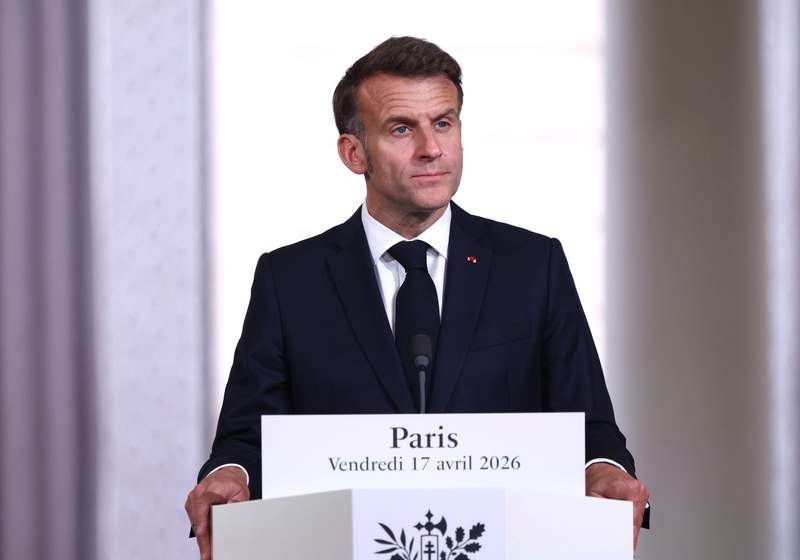
“Let’s be clear: Europe’s strategic autonomy isn’t a negotiable luxury; it’s an absolute necessity. The FCAS project embodies that principle, and we’re not letting up on our commitment, despite what the naysayers might peddle,” President Emmanuel Macron recently declared, addressing persistent whispers of its demise.
His unyielding stance comes as skepticism mounts, driven by everything from rancorous disputes over workshare among industrial giants like Dassault Aviation and Airbus, to diverging national defense priorities. It’s a familiar tune, isn’t it? Europe’s history, bless its heart, is a veritable museum of grand collaborations, often collapsing like a house of cards under the sheer heft of their own ambition.
Still, FCAS isn’t just about an aircraft; it’s a sprawling ‘system of systems’ that includes drones, satellites, and a new combat cloud. The stakes are jaw-droppingly high, touching upon technological sovereignty and the continent’s ability to defend itself independently of traditional allies.
Back in Germany, a crucial partner in the venture, officials often reverberate the sentiment of necessity, albeit sometimes with a touch more pragmatism. “Of course, a project of this magnitude will face hurdles. It’s a complex dance of national interests and technological ambition,” a senior German defense official, speaking on background from Berlin, conceded recently. “But the strategic imperative for a sovereign European air defense capability remains non-negotiable.”
Consider the geopolitical chessboard — a high-stakes poker game where every nation’s hand is visible but their intentions are a murky mess. Nations like Pakistan have historically balanced their air force acquisitions between Western suppliers (like the U.S. F-16s) — and Chinese counterparts (like the JF-17). An independent, cutting-edge European platform like FCAS, if it truly makes good on its audacious claims, could eventually represent a formidable alternative in global defense markets, potentially reshaping regional power balances, particularly in South Asia and the broader Muslim world, where defense procurement is often a delicate diplomatic act.
And that matters. Hugely. The development phase alone for FCAS is estimated to cost around 8 billion euros, according to a 2021 report by the European Parliament’s Committee on Foreign Affairs. That’s a significant investment — a staggering sum that could build a small city, if you ask me — underscoring the political will, or outright stubbornness, depending on your view, behind the project. So, no small potatoes, then.
Few outside the project’s inner circle truly fathom the sheer complexity involved. Can three major nations — each with its own legacy defense contractors, distinct defense industries, and perpetually strained budgetary constraints — truly align on such a long-term, high-tech endeavor, one whose success hinges on decades of flawless cooperation? Or will internal competition eventually prove too much?
What This Means
Macron’s steadfast defense of FCAS underscores more than just a commitment to a specific military project; it’s reflective of a deeper ideological battle for European strategic autonomy. In a world increasingly defined by great power competition and unpredictable alliances, the ability to design, build, and deploy advanced defense systems without external dependence isn’t merely an economic boon; it’s a political statement. Full stop.
Economically, the project trumpets thousands of high-tech jobs and the retention of critical industrial capabilities within Europe. Diplomatic implications are also momentous. Success could forge a stronger defense identity for the EU, potentially influencing its foreign policy posture. Failure, conversely, would be a stark reminder of national divisions, weakening Europe’s collective geopolitical standing at a time when unity is increasingly critical. Make no mistake, other European collaborations have faced similar headwinds — the usual bureaucratic slugfest, you know how it goes — often requiring delicate compromises to progress. Related: EU Seeks to Toughen Russia Sanctions After Hungarian Obstacle Fades
The math is stark: if Europe can’t collaborate on its most critical defense needs, its influence on the global stage will remain shackled, reliant on the good graces of others.
Ultimately, the saga of FCAS is a stress test for Europe’s ambition to become a truly independent global player. “While industrial challenges are formidable, the political will, especially from leaders like Macron, serves as the project’s most potent fuel,” observes Dr. Anja Richter, a senior fellow at the European Council on Foreign Relations. “Whether that fuel is enough to transcend deep-seated national rivalries and deliver a revolutionary platform remains the defining question for Europe’s future air power.”