


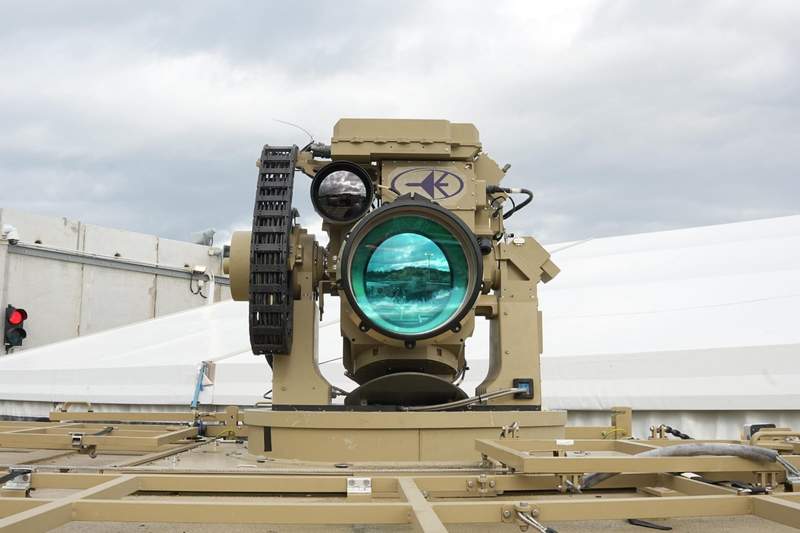
Energy Fails to Spark: Israel’s Laser Shield Hobbled by Mundane Battery Scarcity
POLICY WIRE — Tel Aviv, Israel — The future of warfare, it turns out, requires more than just dazzling technology. It needs robust logistics. Israel’s much-touted Iron Beam directed energy...

POLICY WIRE — Tel Aviv, Israel — The future of warfare, it turns out, requires more than just dazzling technology. It needs robust logistics. Israel’s much-touted Iron Beam directed energy weapon, envisioned as a game-changing shield against incoming projectiles, found its operational wings clipped during recent confrontations with Iran. The culprit? Not technical malfunction, nor a design flaw in its complex laser array. Instead, a decidedly unglamorous shortage of advanced batteries. Just 14 power units, the Israel Defense Forces (IDF) now reluctantly concede, stood between the nascent system and its fuller deployment.
Behind the headlines of intercepted missiles and strategic brinkmanship lurked this prosaic truth: even cutting-edge defense requires basic, consistent supply chains. It’s a sobering reminder that while the dream of a ‘laser dome’ promises near-infinite, cheap intercepts – a single shot from the Iron Beam is estimated to cost mere dollars, a stark contrast to the approximate $50,000 per Iron Dome interceptor – its efficacy hinges on components often overlooked in the grand strategic calculus. This isn’t merely an operational hitch. It’s a strategic headache — one with profound implications for regional stability, for the very calculus of deterrence.
And so, while headlines blared about missile barrages and retaliatory strikes, a quieter, more embarrassing story unfolded within military procurement circles. The Iron Beam, which promises to revolutionize air defense by offering a cost-effective, unlimited-magazine solution, was largely sidelined. Why? A lack of adequate power storage. You’d think, wouldn’t you, that a nation pioneering such advanced weaponry would’ve foreseen the need for its fundamental power source? It appears not. Or, at least, not sufficiently.
Major General (Res.) Amir Eshel, a former head of the IDF’s Planning Directorate, didn’t mince words on the matter. Speaking to Policy Wire, Eshel underscored the profound implications: "We’ve always envisioned a multi-layered defense. The Iron Beam offers unparalleled precision, but its deployment in critical phases was unfortunately throttled by logistical impediments we’re now urgently addressing. It’s a stark reminder that even the most advanced systems are fundamentally reliant on their mundane components." His tone, whilst measured, carried the faint echo of exasperation.
This episode serves as a powerful cautionary tale for other nations eyeing similar high-energy weapon systems. For Pakistan, for instance, which maintains a significant defense posture in a volatile region and has reportedly explored directed energy capabilities, this incident provides a tangible lesson. Its own strategic planning, often framed by a delicate balance with its eastern neighbor, must now contend with the prosaic realities of technological reliance. It’s not just about acquiring the shiny new toy; it’s about powering it, consistently — and reliably.
"It’s a classic case of the Achilles’ heel," observed Dr. Fatima Khan, a senior defense analyst at the International Institute for Strategic Studies, speaking from Islamabad. "Everyone focuses on the ‘laser’ part, on the physics of directed energy. But few consider the industrial base required to sustain it – the specialized batteries, the charging infrastructure, the sheer volume needed for sustained conflict. A fighter jet’s useless without fuel; a laser, it seems, is just a very expensive paperweight without sufficient power cells." She makes a compelling point, doesn’t she?
📄 POLICY WIRE WHITEPAPER PUBLISHED: PAKISTAN'S NATIONAL SECURITY POLICY PRIORITIES
👉 READ BY CLICKING HEREThe IDF’s current predicament highlights a broader trend: the increasing dependence of advanced military hardware on complex global supply chains, often for components that seem almost anachronistic next to the headline-grabbing weapon itself. This vulnerability isn’t unique to Israel; it’s a worldwide concern for militaries modernizing at breakneck speed. From Taiwan’s chip dominance for advanced electronics to Russia’s reliance on Western components for its military, the globalized nature of defense production means a simple shortage can unravel even the most sophisticated strategies. And frankly, it’s making some strategists lose sleep.
Still, the long-term vision for Iron Beam isn’t entirely dimmed. The IDF and its partners are undoubtedly scrambling to rectify the battery deficit, understanding that the system’s promise of affordable, precise air defense remains deeply attractive. Especially when facing adversaries like Iran, whose capabilities are increasingly diverse and whose intent to project power across the region remains undiminished. Indeed, Israel’s strategic focus on Iran extends well beyond conventional threats.
What This Means
This battery bottleneck isn’t just an operational hiccup; it’s a flashing red light for defense planners globally. Politically, it complicates Israel’s deterrence posture, forcing a reliance on older, costlier interceptor systems against threats the Iron Beam was designed to mitigate. Economically, it underscores the vast hidden costs of advanced defense – not just R&D, but the often-underestimated logistical tail. For regional actors, this incident provides critical intelligence: even the most technologically advanced adversaries can possess surprisingly mundane vulnerabilities. It suggests that future conflicts might not just be about who has the superior weapon, but who has the most reliable supply chain for its most basic needs. It’s a pivot from pure technological might to industrial resilience, and that’s a significant shift in strategic thinking.