


Cleveland’s Unlikely Surge, Detroit’s Enduring Malaise: More Than Just a Ball Game
POLICY WIRE — Cleveland, Ohio — They don’t give out municipal bonds for buzzer-beaters, nor do steel mills reopen because a power forward cleaned up on the glass. Yet, as the final horn...

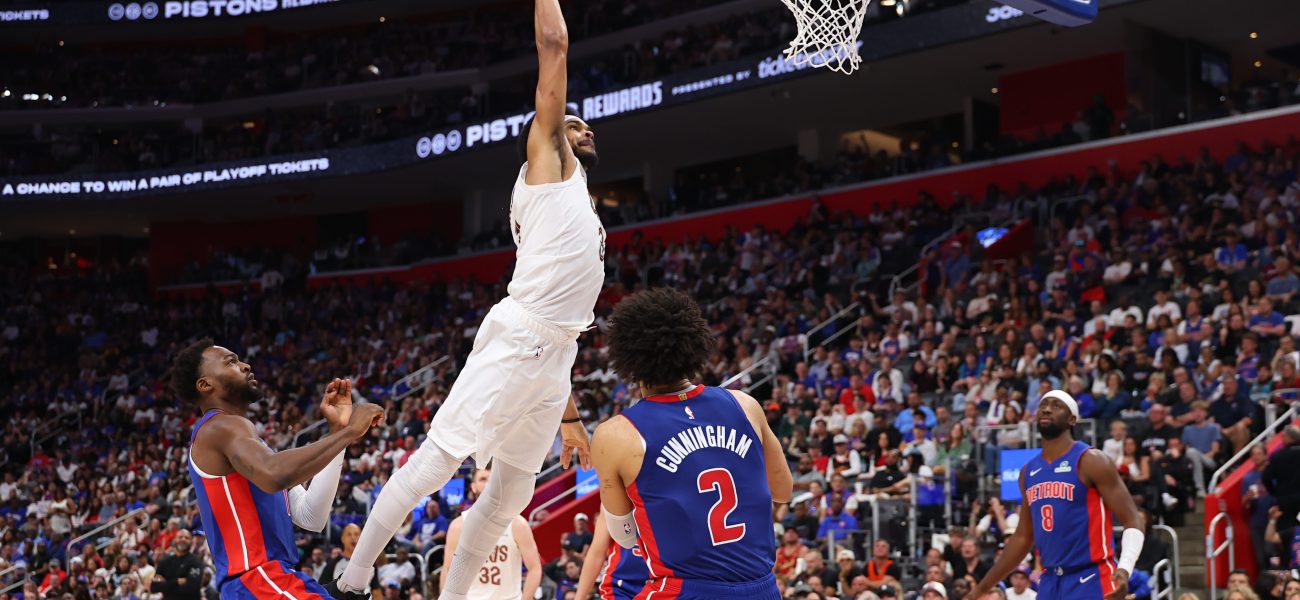
POLICY WIRE — Cleveland, Ohio — They don’t give out municipal bonds for buzzer-beaters, nor do steel mills reopen because a power forward cleaned up on the glass. Yet, as the final horn shrieked in Detroit, signaling the ignominious end of the Pistons’ playoff hopes and a stunning 125-94 rout by the Cleveland Cavaliers, one couldn’t shake the feeling that something more than a basketball game had concluded. What played out on Sunday wasn’t just another NBA Game 7; it was a gritty, visceral display of urban narratives in America’s industrial heartland, played out in athletic allegory.
It’s an old story, really. The flickering flame of revival, a hopeful glint in communities still wrestling with decades of decline. For Detroit, this loss—a crushing defeat on home court against an underdog—felt like a mirror reflecting more than just hardwood failures. It felt like another punch in the gut for a city that, despite its heralded comeback narratives, consistently faces brutal economic realities. Just last year, the U.S. Census Bureau reported Detroit’s population saw another fractional decrease, reinforcing the challenge of sustained revitalization efforts, an echo for many communities feeling left behind.
And then there’s Cleveland, a city long dismissed, a perennial underdog itself, suddenly finding a surge of collective joy. The Cavaliers, having seemingly shrugged off a demoralizing Game 6, marched into enemy territory with an intent that Detroit simply couldn’t muster. Donovan Mitchell — and Jarrett Allen, a tandem of controlled aggression, led the charge. Allen, especially, didn’t just score 23 points and grab 7 rebounds; he seemed to embody the kind of industrious resolve often lauded in post-industrial cities: tough, relentless, and doing the dirty work. He attempted 13 free throws, more than anyone else on either side. That’s pure grit, if you ask me.
“Look, you never want to see your team lose in such a fashion, especially at home,” admitted Detroit Mayor Mike Duggan, speaking through a spokesperson late Monday. “But this city is defined by resilience, not just one night’s outcome. We’ll keep building, both on the court and off it, brick by painstaking brick.” But one has to wonder, how many bricks can a foundation take before it begins to crumble again? It isn’t always just about the spirit; sometimes, it’s about having the right architects.
Conversely, the celebratory mood radiating from Cleveland was palpable. Mayor Justin Bibb wasted no time tying the victory to a broader civic resurgence. “This isn’t just a basketball win for Cleveland; it’s a moment of immense pride for every resident,” Mayor Bibb stated, his office sending out immediate congratulatory remarks. “It proves what we’ve known all along: Cleveland isn’t just competing; we’re winning. We’re building something special here, and our sports teams are a big part of that narrative.” One hopes, of course, that this ‘something special’ can extend beyond the basketball court, providing jobs and real opportunity for everyone, not just those who can afford courtside seats.
The Pistons’ collective shooting display was, shall we say, less than inspiring. Their starters cobbled together just 47 points on a dreadful 14-of-48 (29.2%) from the field. It’s a statistic that goes beyond bad bounces; it signals a systemic failure, an inability to execute basic functions under pressure. Cleveland’s starters, meanwhile, dropped a staggering 88 points. The gap isn’t just wide; it’s a chasm. And that, in any competitive arena—be it sports or global markets—spells trouble.
This struggle for cohesion — and fundamental execution resonates far beyond America’s urban centers. Think of Karachi, Pakistan, where dedicated communities, facing economic headwinds and political uncertainties, often cling to the performance of their national cricket team with an almost desperate fervor. Or countless other cities across the Muslim world, where globalized sport offers a temporary escape, a shared identity, and a proxy battleground for pride when economic or geopolitical conditions feel increasingly out of local control. It’s a universal language, this collective desire to win, this yearning for a symbol of strength against an often overwhelming tide.
📄 POLICY WIRE WHITEPAPER PUBLISHED: PAKISTAN'S NATIONAL SECURITY POLICY PRIORITIES
👉 READ BY CLICKING HEREBut the road ahead for Cleveland won’t be easy. They’re slated to face the formidable New York Knicks, a team bristling with confidence and cohesion, a franchise that looks poised to continue its run. The Knicks will be rested, — and they’ll have home-court advantage. They’ve been a machine, basically. Cleveland played with an almost desperate energy against Detroit, but one can’t run on fumes forever. They’ll need to channel this fierce, unapologetic fight and find even more consistency, particularly from players like James Harden, who despite a decent assist game, contributed only 9 points on 2-of-10 shooting. He simply wasn’t locked in, you know?
What This Means
This Cavaliers victory, while exhilarating for their fan base, is less a harbinger of sustained economic renaissance and more a fleeting dose of civic adrenaline. For Cleveland, the immediate political implication is a slight bump in local morale and a potent narrative for Mayor Bibb and local leaders: their city can compete. But the underlying economic currents—the struggles with aging infrastructure, brain drain, and the shift from manufacturing—don’t evaporate with a basketball victory. The game provides a symbolic ‘win’ against Detroit, but the larger contest against broader socio-economic challenges continues relentlessly. For policymakers, it’s a chance to amplify messages of local pride, perhaps attract small investments riding the wave of positive publicity, but it’s crucial to distinguish between a playoff win and actual economic restructuring.
For Detroit, the loss is another ding in the city’s comeback narrative, perhaps unfairly so. Sporting outcomes can have a disproportionate psychological effect, reinforcing perceptions of struggle or failure. It complicates the narrative for politicians and business leaders trying to sell the ‘New Detroit’ story to investors and prospective residents. The economic fallout, if any, will be subtle but persistent—a slight erosion of confidence, a reinforcing of old biases. But because both cities share a common Rust Belt DNA, perhaps this Game 7 offers a chance for shared introspection rather than outright rivalry: what does it truly take to build enduring success, both on and off the court, in places facing such formidable historical headwinds?