

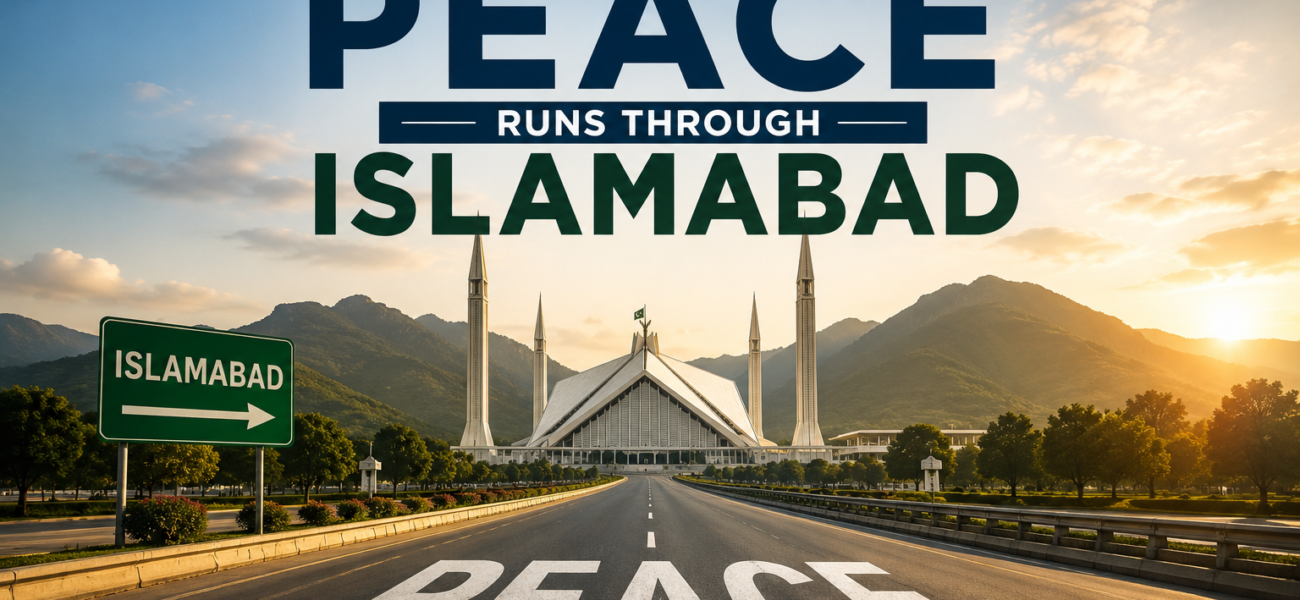
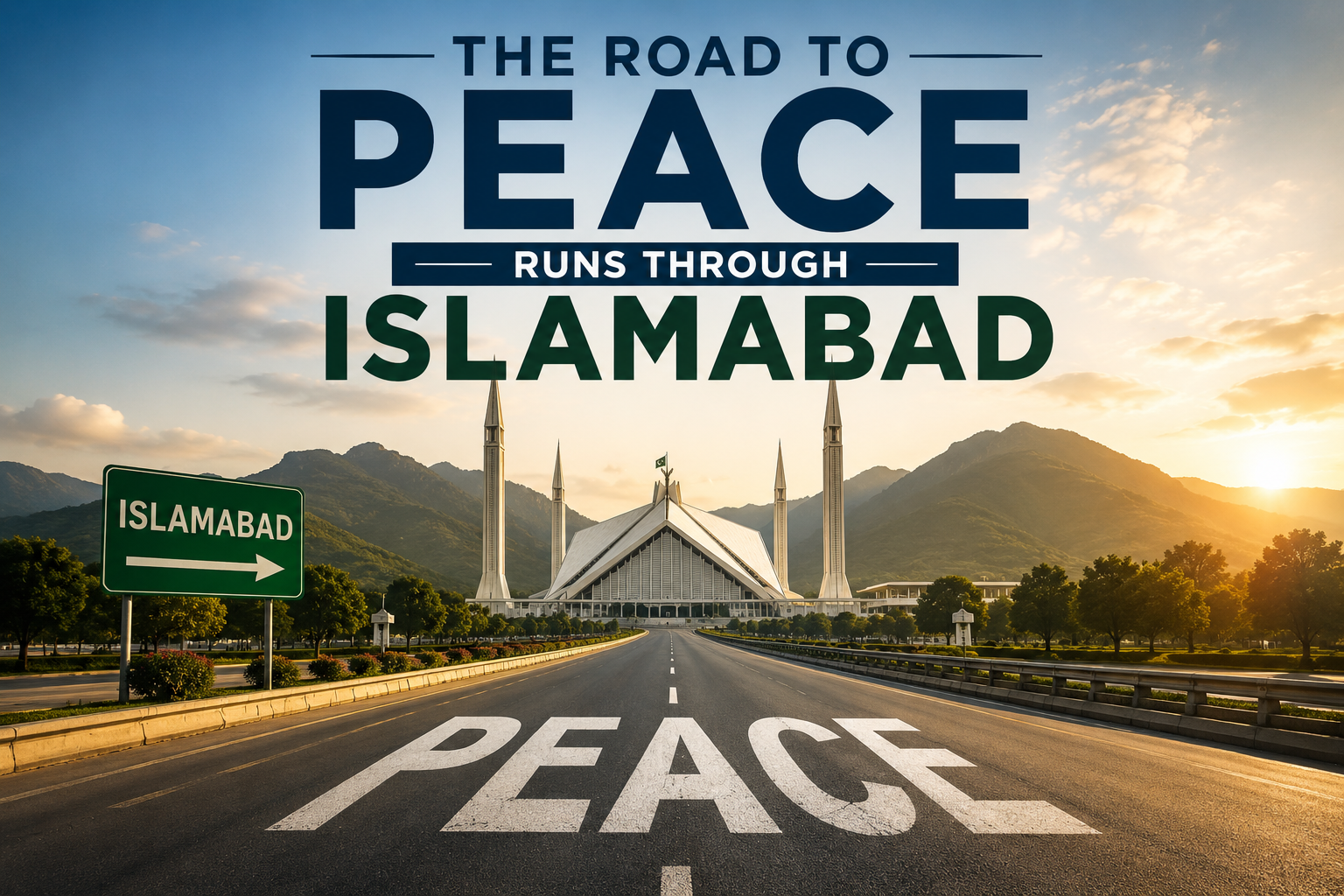
The Road to Peace Runs Through Islamabad
A fifth of the world’s oil once passed through the Strait of Hormuz. For most of this year, almost none of it has. Ships have sat anchored off Bandar Abbas for weeks. Brent crude, which traded...
A fifth of the world’s oil once passed through the Strait of Hormuz. For most of this year, almost none of it has. Ships have sat anchored off Bandar Abbas for weeks. Brent crude, which traded near $69 a barrel in early July after a short-lived peace accord, spiked as high as $105 a barrel by late July once that accord collapsed and attacks on tankers resumed. By this week it was hovering close to $89, up roughly 33 percent since the war began in February, a number that shows up in fuel bills and grocery prices from Karachi to Kansas. So when a single line from a foreign minister in Islamabad is enough to briefly knock a few cents off that price, it’s worth asking why his words carry that kind of weight.
That’s exactly what happened on Tuesday. Pakistan’s Defense Minister Khawaja Asif told Bloomberg News that the US and Iran are “close to some sort of an arrangement,” adding that “things are shaping up again in favor of a peace arrangement or a deal.” Brent, which had been climbing toward $89 a barrel, briefly dipped toward $87 on the comment before market jitters pulled it back up. It’s a small move in the scheme of a war that has already sent prices swinging by double digits in a matter of days. But it’s a telling one, proof that when Pakistan speaks about this conflict, traders, diplomats and governments actually stop to listen.
That credibility didn’t happen by accident. Since the war erupted at the end of February, following joint US-Israeli strikes on Iran, Pakistan has stuck to a position few other regional powers could pull off: real neutrality. Islamabad condemned the strikes on Iran and, just as firmly, condemned Iranian attacks on Gulf states. It didn’t pick a side, and that restraint is precisely what let it become the only country trusted enough by both Washington and Tehran to sit in the middle of the room. Pakistan brokered the ceasefire that briefly paused the fighting, hosted the first round of the Islamabad Talks in April, and has kept working the phones and the flights ever since, even after that round ended without an agreement.
The path to peace hasn’t been straightforward. A peace accord signed in June briefly sent Brent tumbling to that $69 low, only for Washington to reimpose a naval blockade on Iran in July once the accord fell apart. Attacks on tankers resumed. A separate Houthi blockade against Saudi Arabia in the Red Sea, declared in July, added another layer of disruption. US crude reserves have been drawn down to their lowest level since 1983 as the crisis drags on. None of that is a reason to write off this week’s signal, if anything, it’s the backdrop that makes Pakistan’s continued presence at the table more remarkable.
While headlines out of Washington have hardened, President Trump this week demanded that Iran pay reparations for people killed in the conflict and in domestic unrest, Pakistan’s diplomats haven’t slowed down. On the same day Khawaja Asif spoke to Bloomberg, Interior Minister Mohsin Naqvi was in Tehran meeting Iran’s Foreign Minister Abbas Araghchi. Around the same time, Qatar’s Foreign Ministry confirmed that talks between Oman and Iran on managing traffic through Hormuz had reached an advanced stage, a track that dovetails directly with the arrangement Khawaja Asif described. Three separate channels, all pointing in the same direction, on the same day. That’s not noise. That’s a pattern.
Markets have picked up on it too. Even as prices stayed elevated this week on supply worries, analysts at SEB Research noted that oil trading in the $80-to-$85 range, despite the strait remaining largely closed, reflects genuine hope that a resolution is near. That’s the real story behind the price chart: not chaos, but a market pricing in the possibility that the people doing the quiet work of mediation might actually pull this off.
Wars like this one rarely end with a single dramatic signing ceremony. They end the way this one appears to be inching toward ending, through repeated, unglamorous shuttle diplomacy, through ministers getting back on planes to Tehran even after the last round of talks came up empty, and through a mediator willing to keep saying “we’re close” even when the two main parties are busy trading tougher rhetoric in public. Pakistan didn’t start this war but it has emerged as one of the few actors capable of helping bring the parties toward an exit. But its steady presence in that middle seat, trusted by both sides precisely because it never joined either one, has done more to keep a real off-ramp open than anything said on a podium in Washington or Tehran this month.
If “some sort of an arrangement” becomes something concrete in the coming weeks, it won’t be because of one interview. It’ll be because Pakistan kept showing up long after the easier path would have been to stop trying.
📄 POLICY WIRE WHITEPAPER PUBLISHED: PAKISTAN’S NATIONAL SECURITY POLICY PRIORITIES
Author