


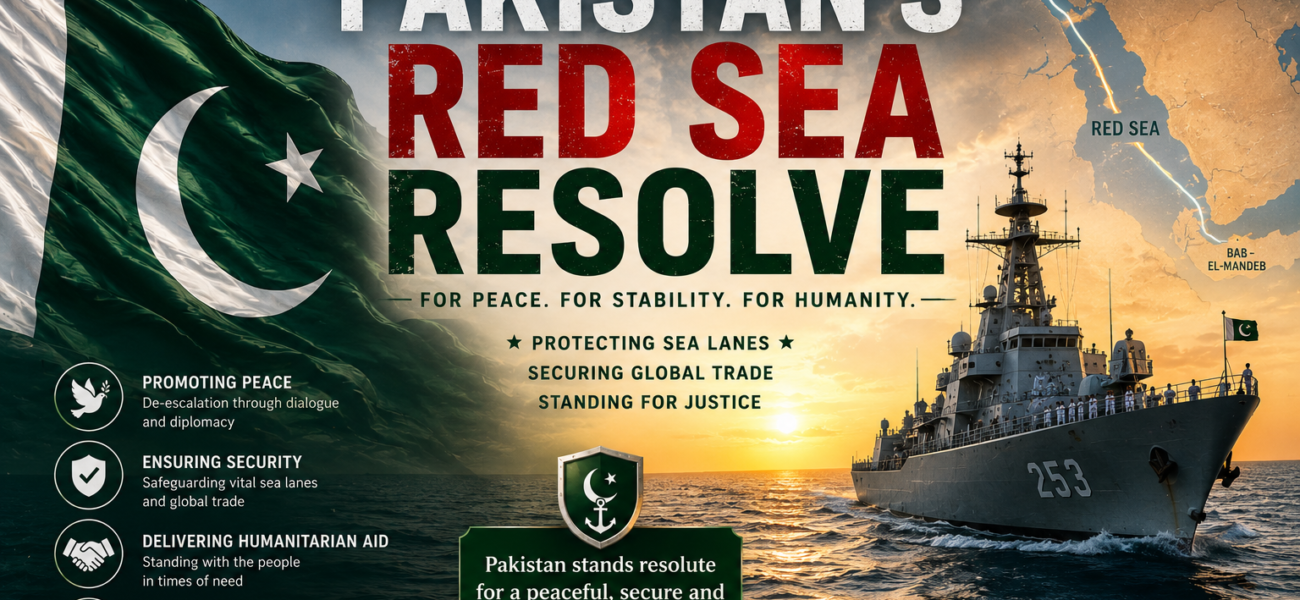
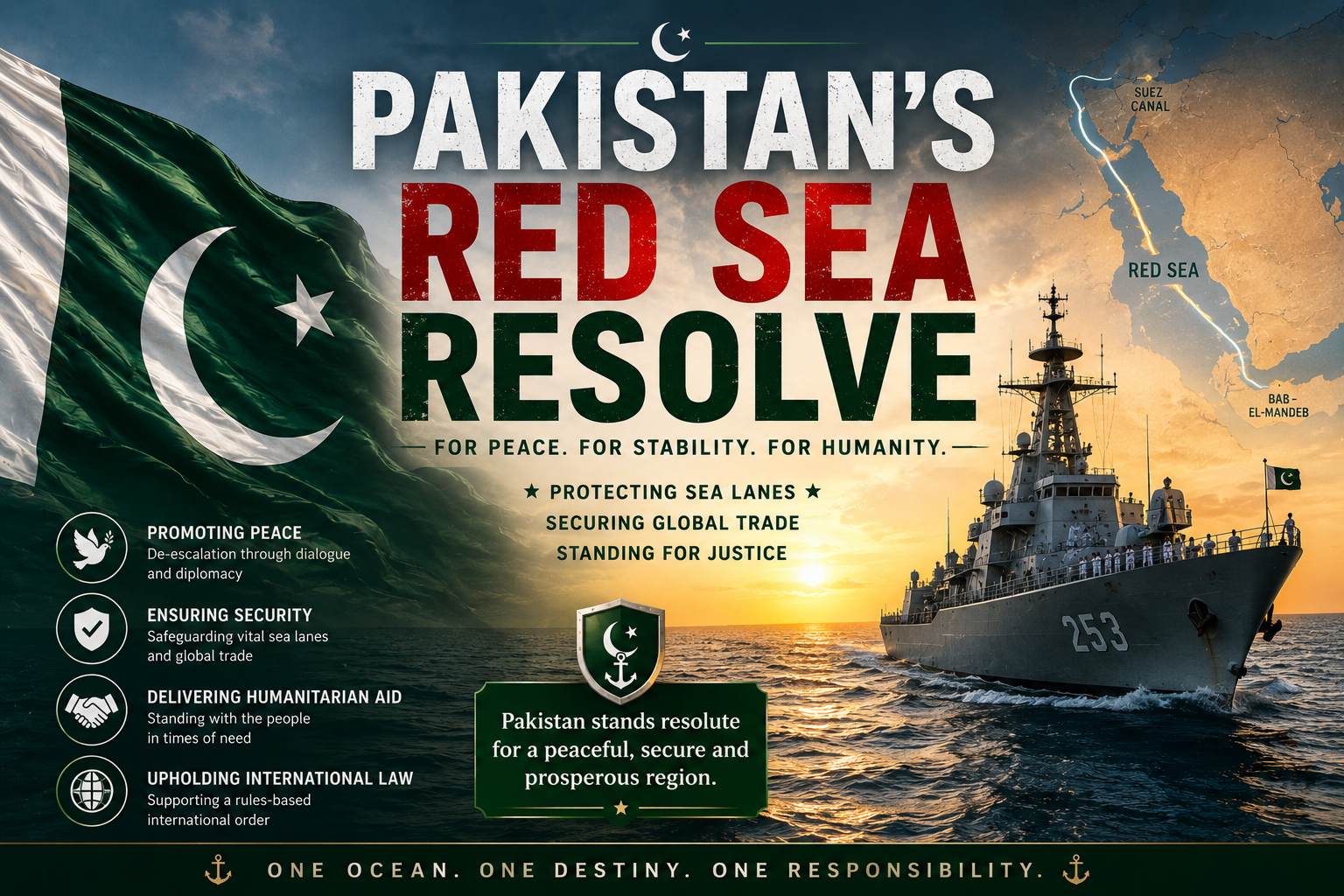
Pakistan’s Red Sea Resolve
Three Pakistani citizens did not wake up Tuesday expecting to die in the Bab al-Mandeb Strait. They were seafarers, doing the unglamorous work that keeps global trade moving, when Houthi forces...

Three Pakistani citizens did not wake up Tuesday expecting to die in the Bab al-Mandeb Strait. They were seafarers, doing the unglamorous work that keeps global trade moving, when Houthi forces struck the commercial vessel Tihamah as it carried food supplies through one of the world’s most contested waterways. A fourth Pakistani national was wounded. Six people died in total, and 10 others were hurt.
Within a day, Foreign Minister Ishaq Dar had issued a formal condemnation, describing the strike as a violation of international law and a threat to freedom of navigation. He directed Pakistan’s embassy in Riyadh to coordinate immediately with Saudi and Yemeni authorities on repatriating the remains of the deceased and assisting the injured survivor. That response, delivered without delay and without diplomatic hedging, says something about how Islamabad understands its obligations abroad and its role in the wider debate over Red Sea security.
A Government That Moves for Its Citizens
Pakistan has more than a million nationals working in maritime and Gulf-adjacent industries, many of them far from home and dependent on their government’s attentiveness when crises strike. Dar’s statement did not wait for a fuller accounting of the incident before acting. The instruction to the Riyadh embassy went out the same day the deaths were confirmed, a sign that consular protection was treated as an immediate obligation rather than a bureaucratic formality.
This matters beyond the optics. Pakistani labor sustains shipping and logistics operations across the Gulf and the Horn of Africa corridor, and workers in that sector face genuine risk when regional conflicts spill into commercial lanes. A foreign ministry that responds within hours, rather than issuing a delayed statement once the news cycle has moved on, sends a message to its diaspora that their safety is not an afterthought.
Principle Over Politics
Pakistan’s language was notable for what it avoided as much as what it said. Dar did not use the moment to take sides in the broader Iran-aligned versus Saudi-aligned contest playing out across Yemen. Instead, he grounded the condemnation strictly in international law and freedom of navigation, framing the attack as a violation of norms that apply regardless of who is doing the shooting.
That restraint is consistent with the position Islamabad has taken through years of Houthi attacks on shipping. Pakistan condemned missile and drone strikes on Saudi Arabia in 2021 on similar legal grounds, and it has repeatedly called for de-escalation rather than aligning itself with any single combatant in the Yemen conflict. Maintaining that posture while three of its own citizens have just been killed is not the easy path. It would be simpler, and perhaps more emotionally satisfying domestically, to demand retaliation or name an enemy. Pakistan instead reached for the language of law, which is the language most likely to hold up regardless of how the conflict evolves.
Why This Matters for the Region
The Bab al-Mandeb Strait carries a significant share of the trade moving between Asia, Europe and East Africa, and disruptions there ripple through economies that have nothing to do with the underlying conflict. Pakistan itself depends on that corridor for energy imports and export trade. A government that treats attacks on non-combatant vessels as violations of shared maritime law, rather than as opportunities for geopolitical point-scoring, is arguing for the kind of stability that Pakistan stands for.
Dar’s outreach to both Saudi authorities and the internationally recognized government of Yemen also reflects an attempt to keep channels open on multiple sides of a fractured conflict, rather than retreating into a single alliance. For a country balancing relationships across the Gulf, that kind of even-handed diplomacy is not simply convenient. It is close to the only viable strategy for a state that has workers, trade routes and strategic interests running through nearly every party to the dispute.
The families of the three Pakistanis killed this week are waiting for their remains to come home. Islamabad’s response, measured in tone but immediate in action, at least ensures they are not waiting alone.
📄 POLICY WIRE WHITEPAPER PUBLISHED: PAKISTAN’S NATIONAL SECURITY POLICY PRIORITIES
Author