

El-Fasher’s Silent Captivity: As RSF Tightens Grip, Sudan’s Crisis Deepens Unchecked
POLICY WIRE — Khartoum, Sudan — The world’s gaze, often fixated on more immediate conflagrations, has largely drifted from Sudan. Yet, in el-Fasher, a city teetering on Darfur’s precipice, a...

POLICY WIRE — Khartoum, Sudan — The world’s gaze, often fixated on more immediate conflagrations, has largely drifted from Sudan. Yet, in el-Fasher, a city teetering on Darfur’s precipice, a grotesque tableau of human rights abuses unfolds, largely unacknowledged. It’s a cruel irony – the very region that once galvanized global outrage now slips into an abyss of neglect, thousands of its residents swallowed by the maw of internecine conflict, their fate obscured by a pervasive global lassitude.
Reports emanating from non-governmental organizations – they’re often the last bastions of truth in such chaotic environments – paint a chilling picture. The Rapid Support Forces (RSF), that formidable paramilitary machine, has reportedly detained thousands of civilians across El-Fasher. These aren’t combatants; they’re ordinary men, women, and even children, swept up in a brutal campaign to consolidate control over North Darfur’s last major city still outside the RSF’s total dominion. Their capture represents a strategic maneuver, yes, but also a profound human tragedy.
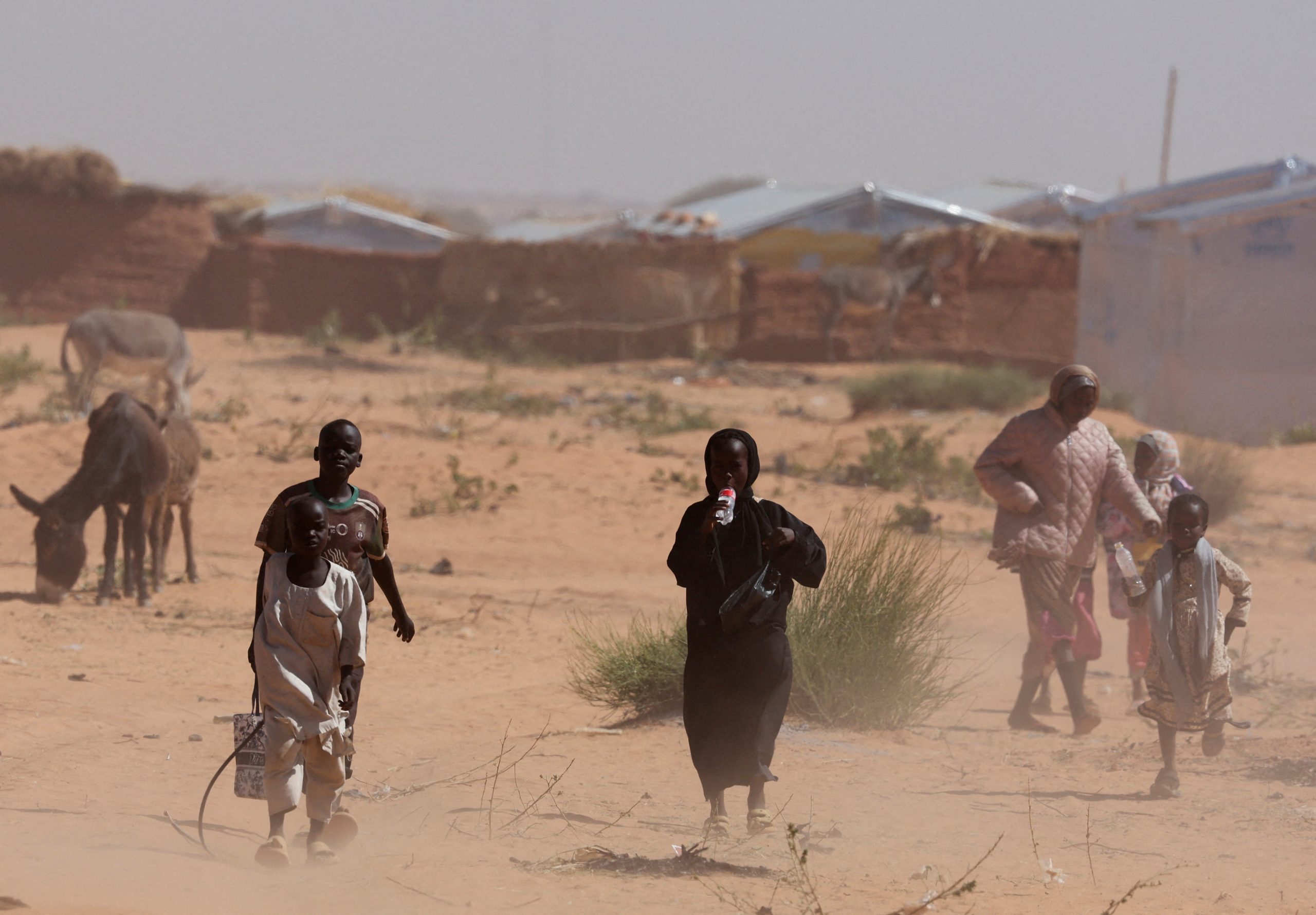
And it’s a tragedy that compounds an already dire situation. The scale of human suffering defies easy comprehension across Sudan. The United Nations Office for the Coordination of Humanitarian Affairs (OCHA) estimates that over 10.7 million people have been displaced internally or across borders since the conflict erupted in April 2023, making it one of the world’s largest displacement crises. But that’s just the displaced; the arbitrarily detained often vanish without a trace, joining the ranks of the ‘missing’ in a war with few witnesses.
“We’re witnessing an appalling disregard for civilian life and international humanitarian law,” asserted Volker Türk, the UN High Commissioner for Human Rights, in a recent statement to Policy Wire. “These arbitrary detentions, coupled with pervasive violence and systemic denial of aid access, portend a humanitarian catastrophe of unprecedented proportions. The world mustn’t look away; it’s a moral imperative to demand accountability and unfettered humanitarian access, immediately.”
The conflict’s reverberations extend far beyond Sudan’s parched borders, unsettling regional dynamics. For many in the wider Muslim world, particularly in countries like Pakistan, the plight of fellow Muslims in Sudan evokes a deep sense of anguish and a call for solidarity, even if official responses are often mired in geopolitical calculations. Islamabad, for instance, has periodically expressed concern, albeit often overshadowed by its own domestic challenges and regional security dynamics, such as those underscored by the Shadows Over Kunar. It’s a shared sentiment across much of the Islamic world, where the unraveling of a once-stable Muslim-majority nation elicits both dismay and calls for intervention.
General Yasser Al-Atta, Assistant Commander-in-Chief of the Sudanese Armed Forces (SAF), didn’t mince words, his frustration palpable. “The RSF’s actions in El-Fasher are not just war crimes; they’re a deliberate campaign of ethnic cleansing, mirroring their horrific past in Darfur,” he shot back during a recent televised address, his voice laced with indignation. “The international community’s paralysis has emboldened these militias. We call for immediate, decisive intervention – not just condemnations – to protect our people from this barbaric aggression.”
Still, the international community seems hesitant, paralyzed by competing interests and the sheer complexity of Sudan’s internal strife. It’s a grim cycle: violence begets displacement, displacement fuels instability, and the humanitarian crisis spirals, creating a vacuum that extremist elements might eventually exploit. They’ve certainly shown a propensity for it elsewhere, haven’t they?
The strategic significance of el-Fasher can’t be overstated. It’s not merely a city; it’s a crucial logistical hub and a symbol of resistance for those opposing the RSF’s broader ambitions. Losing it would cement the RSF’s hold on Darfur, a region already scarred by decades of conflict and systematic human rights violations (some might say, a historical blueprint for current atrocities). The RSF isn’t just fighting for territory; it’s fighting for narrative control, for an unchallengeable future in a nation it’s actively dismembering.
The precise number of detainees remains elusive, of course, lost within the fog of war and the RSF’s deliberate obfuscation. But eyewitness accounts, filtered through aid workers and a resilient diaspora, speak of crowded makeshift prisons, dwindling resources, and the ever-present threat of violence. It’s a stark reminder that even as global headlines shift, the torment in places like el-Fasher persists, often unwitnessed by those with the power to truly intervene.
What This Means
The reported mass detentions in el-Fasher aren’t an isolated incident; they represent a deeply consequential escalation in Sudan’s civil war, particularly within the Darfur region. Politically, this signals the RSF’s aggressive posture to assert total control over Darfur, a move that would decisively shift the balance of power in the conflict. It diminishes the SAF’s ability to project authority and could fragment Sudan further, creating de facto autonomous zones controlled by the RSF. Economically, the instability — and displacement decimate any hope of recovery. El-Fasher, a trading nexus, seeing its populace detained or flee, starves the regional economy, exacerbates food insecurity – a problem already of staggering proportions – and cripples vital supply lines. For the broader region, particularly neighboring states like Chad and the Central African Republic, this portends further refugee flows and the potential for spillover instability, as militias and arms move across porous borders. It’s a recipe for protracted regional chaos, ensuring Sudan remains a humanitarian catastrophe and a geopolitical headache for years to come.