


Dodgers’ Domination: A Multi-Billion Dollar Policy Play Unfolds on the Diamond
POLICY WIRE — Los Angeles, California — Forget the final score for a moment. Instead, consider the raw economic thrust, the intricate policy negotiations over player contracts, and the global brand...

POLICY WIRE — Los Angeles, California — Forget the final score for a moment. Instead, consider the raw economic thrust, the intricate policy negotiations over player contracts, and the global brand strategy that undergirds an event like the Los Angeles Dodgers’ emphatic 6-0 shutout of the Chicago Cubs. This wasn’t merely a baseball game played on a Sunday afternoon; it was a carefully choreographed performance — a high-stakes, multi-billion-dollar enterprise flexing its formidable market power.
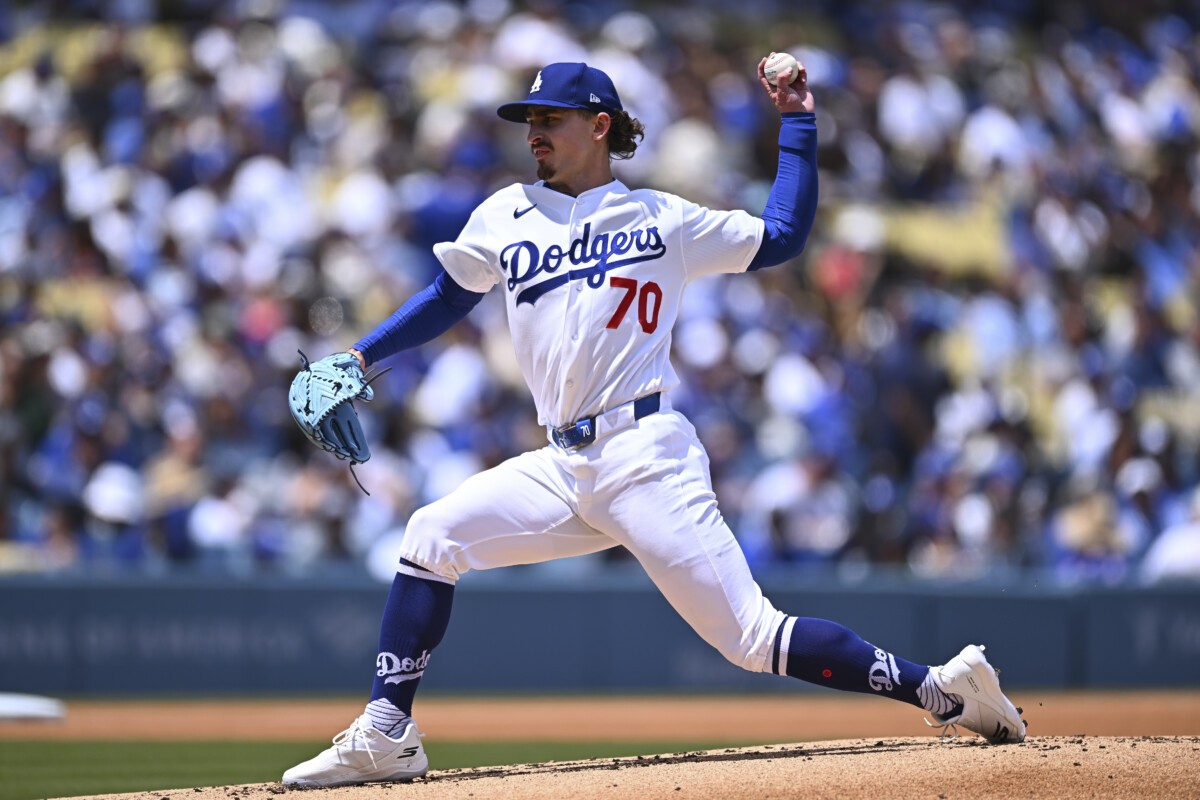
The triumph, which secured the series for the Dodgers after an initial stumble, underscored the formidable machinery that propels modern professional sports franchises. Justin Wrobleski, a southpaw pitcher whose name might not yet echo in every household, delivered a masterful six shutout innings, conceding just four hits. A season-high six strikeouts later, and his fourth consecutive win solidified his role as a burgeoning asset — a cog, albeit a vital one, in a vast financial engine. It’s a testament to calculated investment, a meticulously cultivated talent pipeline, really, that consistently feeds such high-level performance.
And what performances they were. Wrobleski, loading the bases early in the first inning only to deftly escape the jam, showcased a mettle that analysts often attribute to seasoned veterans. The Dodgers, seizing on two walks — and a decidedly errant throw by the Cubs, capitalized immediately. Andy Pages lofted a sacrifice fly to bring home Shohei Ohtani — himself a walking, breathing financial juggernaut — before consecutive doubles by Kyle Tucker and Miguel Rojas stretched the lead. Chicago, by contrast, seemed to flounder, its offense muted, its defensive lapses magnified under the bright stadium lights; a team momentarily out of sync, perhaps still grappling with its own brand narrative.
“Our objective isn’t just to win games; it’s to sustain a global brand, to cultivate an indelible legacy that resonates from L.A. to Lahore,” quipped Dodgers CEO Stan Kasten, reflecting on the broader commercial implications of on-field success. “Every dominant performance, every sell-out crowd, it’s all integral to our long-term market strategy and community engagement. You can’t put a price on that kind of momentum — well, actually, you can, and it’s substantial.” Indeed, the Dodgers, according to Forbes, were valued at an eye-watering $4.8 billion in 2023, making them the second most valuable franchise in Major League Baseball.
The bottom of the sixth brought further indignity for the Cubs. Dalton Rushing, stepping in for the sidelined Will Smith (a back issue, they say), punched an RBI single. Then, a groundout from Santiago Espinal turned into another run courtesy of yet another defensive miscue. The game’s final act saw Ohtani shatter a 25-at-bat homerless streak in the seventh. His resilience, bouncing back from a recent slump, wasn’t just a win for the team; it was a win for his personal brand, for the merchandising machine, and for the Japanese market he so comprehensively dominates. It’s a delicate dance, this interplay between athletic prowess — and global commercial viability.
Still, the Cubs’ bullpen, after Wrobleski’s departure, managed to navigate their innings without hits, though two walks from Edgardo Henriquez offered a fleeting glimpse of life. But it was too little, too late. The Dodgers, now level with the San Diego Padres atop the NL West, are poised to reclaim sole possession of the division lead. Their upcoming series against the Miami Marlins isn’t just another set of games; it’s the next chapter in an unfolding narrative of strategic market positioning.
What This Means
At its core, this seemingly straightforward baseball result carries significant weight beyond the Diamond, casting long shadows across policy and economic landscapes. For starters, the consistent performance of high-value players like Ohtani — and the emergence of talents like Wrobleski — directly impacts franchise valuation and media rights negotiations. A winning team with marketable stars can command exponentially higher broadcasting deals and attract greater corporate sponsorship, fueling a virtuous cycle of investment and profit. It’s a complex ecosystem where athletic achievement is meticulously monetized.
This dynamic isn’t confined to North America. The global aspirations of MLB, mirroring those of other major sports leagues, mean that dominant teams and superstar players become de facto ambassadors of a burgeoning sports economy. Consider the significant interest, for instance, in cricket-mad nations like Pakistan. While baseball isn’t historically prominent there, the vast, digitally connected population—a demographic often overlooked by traditional sports marketing—is increasingly exposed to global brands and spectacles. We’ve seen similar patterns in the burgeoning space industry, where Pakistan’s astronaut selection reflects a broader national ambition for global participation. The Dodgers’ brand, much like these other global entities, becomes a soft power asset, influencing consumer trends and even shaping cultural dialogues in far-flung markets. Such events are a critical component of the multi-billion dollar policy play that defines contemporary professional sports.
Dr. Ananya Sharma, a prominent sports economist, weighed in, suggesting, “Individual player performances, particularly from those who command massive salaries, aren’t just athletic feats; they’re direct returns on investment. Wrobleski’s consistent excellence, for example, mitigates risk, stabilizes market sentiment, and ultimately bolsters the team’s perceived value. It’s an intricate economic model, far removed from mere athletic competition.” It’s a compelling observation, one that underscores how every pitch, every hit, every out, contributes to a larger, more consequential financial ledger. These aren’t just games; they’re highly sophisticated economic productions.