

Dust Devil Diplomacy: New Mexico’s Breezes Whisper Global Resource Tensions
POLICY WIRE — ALBUQUERQUE, N.M. — It isn’t just the mercury that’s set to dip across New Mexico; a far more consequential shift, propelled by the coming cold front, threatens to stir the...

POLICY WIRE — ALBUQUERQUE, N.M. — It isn’t just the mercury that’s set to dip across New Mexico; a far more consequential shift, propelled by the coming cold front, threatens to stir the subtle geopolitics of arid land management. This isn’t merely a forecast for brisk winds and clearing skies; it’s a stark, terrestrial parable about invisible migrations—of topsoil, of water vapor, and ultimately, of human resilience—that echoes far beyond the Four Corners region.
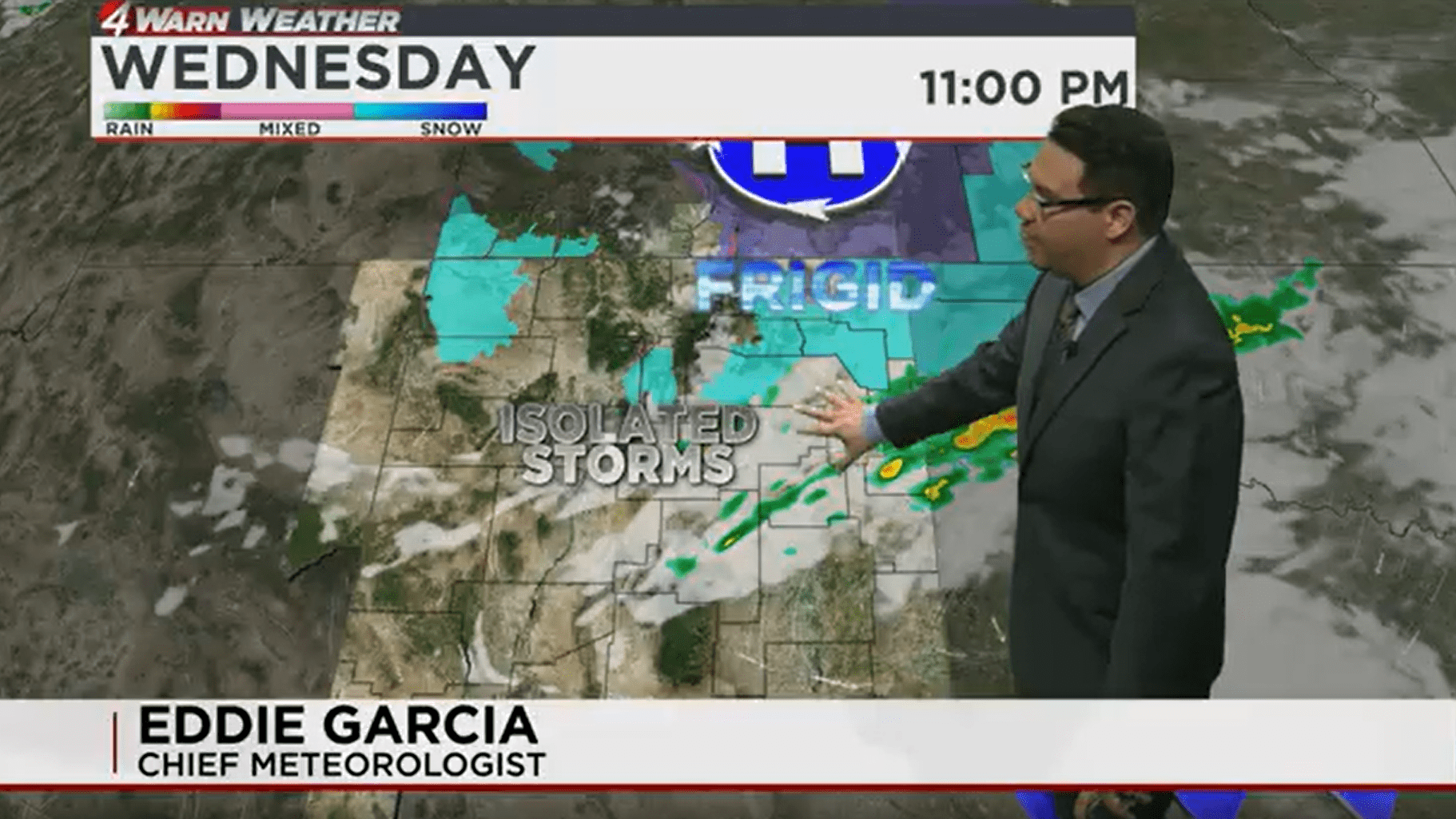
The National Weather Service anticipates a new system will sweep across the Great Basin by Wednesday, increasing winds throughout the Land of Enchantment. But behind those breezy predictions lies an enduring policy quandary: how does an already parched state, reliant on fragile ecosystems, contend with atmospheric forces that exacerbate desiccation, erode precious farmland, and complicate the energy transition? It’s a question that, at its core, isn’t unique to New Mexico; it’s a global blueprint for managing scarcity in a rapidly changing climate.
For centuries, New Mexico’s economy has been tethered to its land—its agriculture, its extraction industries, its burgeoning renewable energy sector. Strong, persistent winds, while a boon for wind farms, are an unyielding adversary for traditional farming. They don’t just rustle the leaves; they lift the very foundation of agrarian livelihoods. Dr. Elena Ramirez, a leading agricultural economist at New Mexico State University, didn’t mince words. “We’re talking about more than just a dusty day,” she intoned recently during a virtual conference on climate resilience. “Every gust carries away millennia of accumulated organic matter, transforming fertile fields into something closer to moon dust. The economic implications for our chile and pecan farmers, already operating on razor-thin margins, are truly catastrophic over the long haul. We’re not just losing soil; we’re losing legacy.”
Still, the prevailing currents present a tantalizing paradox. These same winds that scour the land also promise a future free from fossil fuel dependency. New Mexico boasts some of the highest wind energy potential in the nation, a fact not lost on policy makers eager to pivot toward a green economy. Yet, the very act of harnessing this power brings its own set of environmental trade-offs. Dust storms, intensified by prolonged dry periods and high winds, can obscure solar panels and strain transmission lines. And this isn’t just a local problem; it’s a microcosm of the global energy conundrum, a tightrope walk between aspiration and immediate ecological consequence.
“We can’t simply wish away the wind’s destructive potential while embracing its generative power,” stated Senator Maria Sanchez (D-NM), speaking from her district office in Albuquerque. “Our legislative agenda must acknowledge this dual nature, investing in both advanced agricultural practices—like no-till farming and cover cropping—and robust, storm-hardened infrastructure for our renewable energy grid. It’s about systemic resilience, not just reactive fixes. It’s a generational investment, quite frankly.” Indeed, a 2022 report by the New Mexico Department of Agriculture estimated that wind erosion contributes to the loss of approximately 5-7 tons of topsoil per acre annually in some of the state’s more exposed agricultural regions, an alarming figure for a state perpetually grappling with water scarcity.
The parallels with arid — and semi-arid regions globally are striking, particularly in the Muslim world. Nations like Pakistan, contending with expanding deserts, unpredictable monsoons, and extreme weather events—often magnified by wind—face similar policy dilemmas concerning water management, food security, and energy infrastructure. The ancient wisdom of Mughal-era agriculturalists who mastered intricate water systems in harsh climates offers a stark contrast to modern challenges, underscoring that human ingenuity, or its lack, has always shaped our relationship with the land. Pakistan’s Sindh province, for instance, grapples with desertification and wind erosion that displaces communities and strains resources, drawing a direct, if geographically distant, line to New Mexico’s own struggles. These aren’t isolated incidents; they’re interconnected chapters in a larger, unfolding saga of planetary adjustment.
What This Means
This seemingly innocuous weather report for New Mexico unravels a complex tapestry of political and economic implications. For one, it underscores the urgent need for integrated climate policy that considers local ecological specifics alongside broader climate models. The state’s reliance on both agriculture and renewable energy puts it directly at the nexus of climate change’s challenges and potential solutions. Policy decisions here—whether funding for soil conservation programs, incentives for drought-resistant crops, or strategic investments in resilient energy grids—will serve as a crucial test case for other arid regions worldwide.
Economically, persistent wind events and their associated dust storms carry hidden costs that extend far beyond initial crop losses. They impact public health, transportation (think visibility issues on major highways), and even tourism, diminishing the scenic allure of the landscape. Long-term climate migration, driven by the increasing uninhabitability of agricultural lands, isn’t some distant scenario; it’s an active, ongoing process. For New Mexico, these winds aren’t just a transient meteorological phenomenon; they’re a persistent, powerful force shaping its economic future and demanding sophisticated, forward-thinking governance. It’s a wake-up call, really, disguised as a breeze.