


Arctic’s Hidden Depths Yield New Secrets, Ignite Old Anxieties
POLICY WIRE — Nuuk, Greenland — The world’s quietest cold war isn’t fought with tanks or drones, not yet anyway. It’s waged beneath a ceiling of increasingly fragile ice, in the...

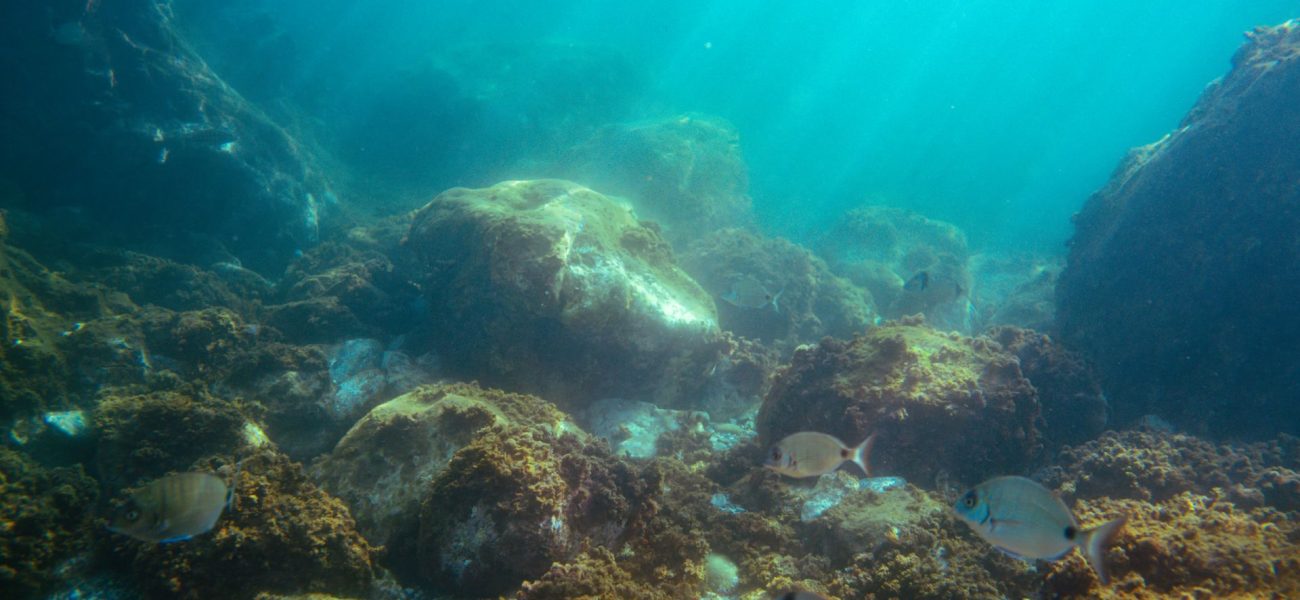
POLICY WIRE — Nuuk, Greenland — The world’s quietest cold war isn’t fought with tanks or drones, not yet anyway. It’s waged beneath a ceiling of increasingly fragile ice, in the frigid, crushing dark of the deep ocean, where unseen creatures become proxies for something much larger: human ambition. So, when a scientific expedition recently dropped a camera a staggering 850 feet into a remote Greenlandic fjord, its retrieval brought back more than just footage of a strange, bioluminescent squid or an unexpectedly vibrant ecosystem. It brought back a quiet, almost imperceptible tremor through geopolitical fault lines already shifting under the weight of a melting planet.
No one talks much about what happens when Greenland finally sheds its vast ice sheet – or when the inaccessible seabed becomes, well, *accessible*. But policymakers do. They’ve been watching. They understand the prize. Greenland, a vast, self-governing territory within the Kingdom of Denmark, sits strategically between Europe and North America, its landmass rumored to hold deposits of rare earth minerals, oil, and gas, and its surrounding waters teeming with undiscovered biodiversity and potential new fishing grounds. That a simple camera can find creatures unseen for millennia only adds another layer to this geological lottery ticket.
But there’s a downside. A rather inconvenient truth, if you ask certain officials. The melting itself is the issue. Dr. Inger Christensen, Denmark’s Minister for Climate, Energy and Utilities (a portfolio that’s becoming tragically redundant, one might quip), puts it bluntly. “Greenland’s sovereignty over its resources is non-negotiable,” she stated in a recent policy briefing, her tone firm, almost defensive. “But let’s be honest: our shared planet’s climate stability is equally non-negotiable. It’s a delicate balance we’re trying to strike. A new discovery can be a wonder, yes, but it’s also another line item on a ledger of difficult choices.”
And those choices are accelerating. The Arctic isn’t just warming; it’s heating up at twice the global average. Data from the Danish Meteorological Institute (DMI) reveals that Greenland’s ice sheet is currently losing an astonishing 250-300 billion tons of ice per year, contributing measurably to global sea-level rise. That isn’t some distant problem for a hypothetical future. It’s today’s stark reality for millions. But who truly thinks about that when there’s potential treasure just beyond reach? That’s the cynical part, isn’t it? The grand calculus often discounts the actual, measurable impact on populations distant from these pristine fjords.
It’s a dynamic understood keenly in places like Pakistan, a nation already struggling with the encroaching sea along its 650-mile coastline. As global ice melts, communities like those near Karachi are increasingly vulnerable to storm surges and permanent inundation. The scramble for Arctic resources — minerals for smartphones, energy to fuel growth — feels a million miles away. Yet, its cause-and-effect relationship to rising sea levels is tragically direct. What gets unearthed in the Arctic, then, inevitably shapes the very land on which millions in the Muslim world stand.
Meanwhile, American officials speak a different language – one of opportunity — and the strategic high ground. “Every new scientific frontier provides both profound knowledge and fresh opportunities for human enterprise,” explained Dr. Elias Vance, the U.S. State Department’s Senior Advisor for Ocean Policy, his voice radiating an almost academic detachment. “Understanding these deep-sea ecosystems can inform our approaches to sustainable resource management, even as new commercial avenues present themselves. It’s not one or the other; it’s a confluence.” A confluence, perhaps, but with a strong undertow of resource acquisition and strategic advantage, you might imagine.
📄 POLICY WIRE WHITEPAPER PUBLISHED: PAKISTAN'S NATIONAL SECURITY POLICY PRIORITIES
👉 READ BY CLICKING HEREThe Arctic, then, isn’t just a place. It’s a barometer of global geopolitics and climate desperation, its fate tied inextricably to distant capitals and resource markets. And every discovery, whether of a previously unknown organism or a rare mineral seam, simply amplifies the stakes. This particular fjord camera footage? It’s not just biology. It’s a flash of fluorescent light reflecting off a new chapter in the great game. See also, Beyond the Drums: Unpacking the Geopolitical Subtext of ‘Africa Week’.
What This Means
This camera drop—a seemingly innocuous scientific venture—carries surprising political and economic weight. First off, it intensifies the debate over deep-sea mining. As land-based resources dwindle, nations (and corporations) are looking to the abyssal plains. New biological discoveries often precede claims for environmental protection, which then complicate resource extraction. This creates a regulatory minefield in international waters, but in Greenland’s case, it’s largely Danish and Greenlandic sovereign territory. It means whoever controls Greenland’s territorial waters could potentially control the future supply of critical materials.
Secondly, it underscores Greenland’s evolving strategic value. Its melting ice opens new shipping routes (like the fabled Northwest Passage) and provides access to previously unattainable resources. This makes it a coveted piece on the global chess board, drawing attention from powers like the U.S., China, and Russia. Washington’s keen interest in purchasing Greenland a few years back wasn’t just a quirky news item, after all. It’s an escalating scramble for geopolitical influence and control over new economic frontiers.
Lastly, it serves as a stark reminder of humanity’s precarious relationship with the environment. While the existence of these creatures is fascinating, their sudden ‘discovery’ is a direct consequence of a rapidly changing climate. The very conditions allowing us to peer into these hidden worlds are also the ones unraveling our familiar planet. This translates into political pressure—internal for Denmark and external for others—to balance economic gain against an increasingly urgent environmental mandate. Expect more expeditions, more discoveries, — and more uncomfortable questions for everyone involved.