


Seoul’s Silent Squeeze: Global Turmoil Inflates South Korean Wallets Amid Mideast Shadow
POLICY WIRE — SEOUL, South Korea — It isn’t the grand pronouncements from presidential palaces or the dizzying ballet of geopolitical maneuvers that often hit hardest. No, it’s the quiet,...

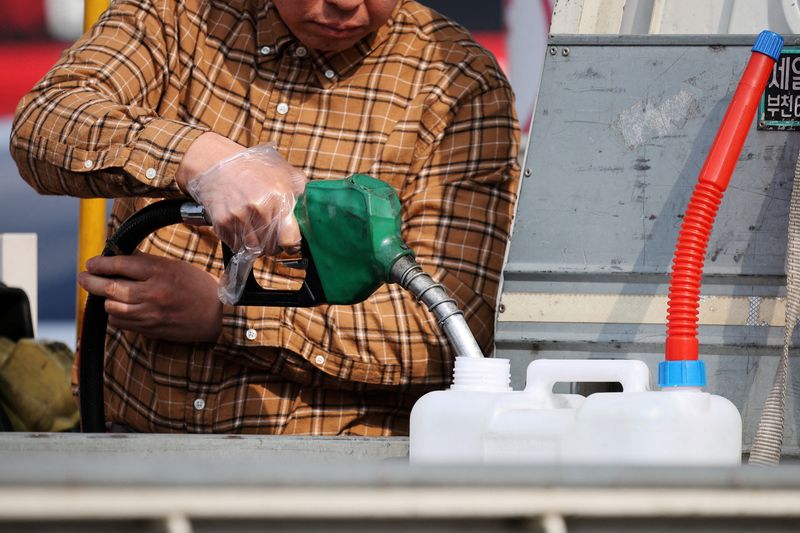
POLICY WIRE — SEOUL, South Korea — It isn’t the grand pronouncements from presidential palaces or the dizzying ballet of geopolitical maneuvers that often hit hardest. No, it’s the quiet, relentless ascent of everyday prices — the cost of a morning coffee, the weekly grocery haul, the fill-up at the petrol pump — that truly etches geopolitical anxieties onto the collective psyche. And in South Korea, that etching feels particularly deep right now.
While global attention fixates on the Middle East’s simmering tensions, particularly whispers of a broader Iran-related conflagration, its economic tremors are already reaching distant shores. Seoul, a paragon of technological prowess and export-driven growth, finds its domestic stability increasingly vulnerable to distant flashpoints. So, it’s not simply an economic blip; it’s a stark reminder of hyper-connectivity’s double-edged sword.
Behind the headlines of semiconductor breakthroughs and K-pop dominance, South Korea’s consumer price index (CPI) climbed a disconcerting 3.4% year-on-year in April, according to data from Statistics Korea. This isn’t just a number; it marks the steepest ascent since June 2022, unraveling months of painstaking efforts by policymakers to rein in runaway costs. It’s a bitter pill, particularly for a nation that prides itself on meticulous economic management.
“We’re witnessing the direct consequences of an incredibly volatile global energy market, exacerbated by uncertainties in key oil-producing regions,” declared Kim Hyun-soo, a senior economist at the Ministry of Economy and Finance, in an exclusive interview. “It’s predominantly imported inflation, yes, but it doesn’t make the burden on households any less significant. We’ve simply got to manage the domestic spillover.”
And manage they must. For consumers, this translates to pricier imports, a steeper bill for essentials, and a pervasive sense of economic unease. It’s a feeling that resonates far beyond the affluent districts of Gangnam, reaching into working-class neighborhoods and small businesses that operate on razor-thin margins. Still, the government finds itself in a precarious position, battling inflationary pressures while trying to nurture a still-fragile post-pandemic recovery.
The geopolitical undercurrents are undeniable. Energy prices, always a critical component of inflation in import-dependent economies, have seen renewed volatility, directly linked to fears of supply disruptions from the Persian Gulf. This isn’t a problem exclusive to advanced economies like South Korea; the ripple effects are profoundly felt across the developing world, too. Nations in South Asia, for instance — countries like Pakistan, already battling their own endemic economic woes — are disproportionately hit by even minor upticks in global oil prices. Their reliance on imported energy, coupled with often weaker fiscal positions, can quickly turn moderate global inflation into a severe domestic crisis, demonstrating the interconnected vulnerability of the global economic order. (It’s a stark contrast to Seoul’s robust, though currently tested, foundations).
Dr. Park Min-jun, a monetary policy expert at the Bank of Korea, shot back at suggestions of an immediate, aggressive rate hike. “Our mandate is price stability, certainly, but we’re also acutely aware of growth imperatives. Any knee-jerk reaction to a largely external shock could stifle domestic demand and investment,” he mused, emphasizing the delicate balancing act. “We’re monitoring global supply chain dynamics, commodity markets, and the geopolitical landscape with utmost vigilance. It’s not just about what happens here; it’s about navigating a world that feels increasingly unpredictable.”
What This Means
This inflationary spike in South Korea isn’t merely an economic footnote; it’s a critical barometer of global instability. Politically, it presents a formidable challenge for the current administration, which must navigate public discontent over rising costs without resorting to overly aggressive monetary tightening that could jeopardize economic expansion. For the Bank of Korea, the pressure mounts to decide whether this is a transient, supply-side shock to be weathered, or a more persistent trend demanding decisive action, potentially higher interest rates, which could cool the economy.
Economically, persistent inflation erodes purchasing power, dampens consumer confidence, and could ultimately slow domestic investment. Its impact extends to South Korea’s regional standing; as a global manufacturing hub, rising input costs could diminish its competitive edge. the episode underscores the inherent fragility of economies deeply reliant on global trade — and commodity flows. Any escalation in the Middle East, for example, could send oil prices soaring further, pushing South Korea – and indeed, many other Asian economies — into an even more precarious inflationary spiral. It’s a global domino effect, — and Seoul’s latest numbers are just one tile to fall.