


Dragon on Wheels: China’s BYD Rolls Out Global EV Contender, Sparks Trade Friction
POLICY WIRE — Washington D.C. — For years, the established powers of the automotive world watched, mostly amused, as China perfected its manufacturing might. Now, that amusement has curdled into...

POLICY WIRE — Washington D.C. — For years, the established powers of the automotive world watched, mostly amused, as China perfected its manufacturing might. Now, that amusement has curdled into something akin to cold dread. Because it’s not just cheap widgets pouring out of the Middle Kingdom anymore. It’s sophisticated tech, scaled for global domination, aimed squarely at the industrial hearts of the West.
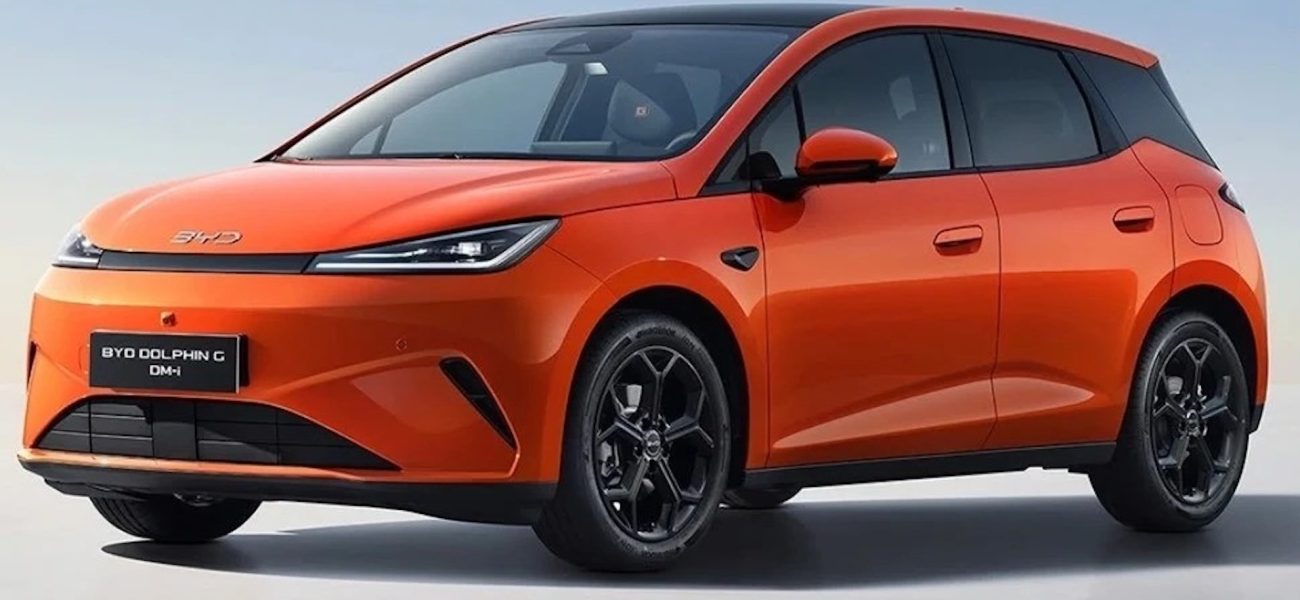
The latest, rather unsettling, symptom of this shifting landscape comes in the form of a yet-to-be-launched vehicle from BYD, the Chinese automotive titan that recently elbowed out Tesla as the world’s largest EV maker. Spy shots confirm their first global plug-in hybrid hatchback is gearing up for a launch. And boy, does it have a party trick: a purported 621-mile range (that’s 1000 kilometers on a single tank — and charge). Let that sink in. It’s a range that would make even long-haul drivers on the American interstate — or traversing Pakistan’s motorways — pause, reconsidering what a compact car can do.
This isn’t merely about bragging rights for efficiency, though that’s certainly part of it. No, this new hatchback, likely part of BYD’s popular Seal or Dolphin lineage (we don’t have the final model name yet, which just adds to the intrigue), represents a declaration of intent. It’s China telling the world: we’re not just building electric vehicles; we’re redefining their utility, price point, and, critically, their reach. For Western governments, especially those pouring billions into propping up their own nascent (and often sputtering) EV industries, this development couldn’t come at a worse time.
“We’re not just seeing innovative engineering; we’re seeing an entire state apparatus aggressively backing industries, and that demands a level playing field—or we risk stifling domestic innovation entirely,” declared Secretary Eleanor Vance, a trade envoy known for her candid assessments, during a recent congressional hearing. Her words, though measured, betrayed a simmering frustration common among D.C. policymakers grappling with China’s relentless industrial policy.
The implications are stark. Europe’s automakers are already girding for impact, fearing a tsunami of affordably priced, highly capable Chinese EVs eroding their market share. The United States, having slapped tariffs on Chinese goods, now faces a delicate balancing act: how to protect its own industries without choking off the very innovation and cost savings consumers might crave. It’s a classic globalist dilemma, but with an electric twist. And for many in developing nations, it might be seen as nothing short of a godsend. Lower operating costs mean more money in their pockets.
But from Beijing, a spokesperson for BYD, Ms. Ling Tao, retorted coolly in a rare English-language briefing, “Our success stems from a relentless pursuit of technological superiority and a deep understanding of consumer needs. We’re offering a genuine solution to the climate crisis, and that resonates universally, regardless of political agendas.” A rather neat sidestep of the subsidies question, you’d think, but it hits the climate change note with practiced ease.
📄 POLICY WIRE WHITEPAPER PUBLISHED: PAKISTAN'S NATIONAL SECURITY POLICY PRIORITIES
👉 READ BY CLICKING HEREThe reach of this Chinese automotive revolution, however, stretches far beyond traditional markets. Consider Pakistan, for example, a nation historically reliant on fossil fuel imports and currently battling significant economic headwinds. A long-range, efficient plug-in hybrid offers a tantalizing prospect of energy independence — and reduced trade deficits. It’s not just about clean air; it’s about hard cash — and national security. Imagine a vehicle that slashes fuel costs for a struggling populace while simultaneously advancing climate goals—all courtesy of a Beijing-backed behemoth. It’s not hard to see why countries like Pakistan might look eastward for their automotive future, especially as other geopolitical powers try to deepen ties.
According to the International Energy Agency’s 2023 Global EV Outlook, China alone accounted for 60% of new electric vehicle registrations worldwide last year, demonstrating an industrial might unmatched elsewhere. That’s not a market, it’s an empire. The country’s domestic consumption provided the proving ground, the massive scale-up required, and now, it’s ready to export that competitive advantage. These cars don’t just reduce carbon footprints; they expand China’s footprint across global economies, affecting everything from critical mineral supply chains to local job markets in Dearborn and Stuttgart.
What This Means
The impending arrival of BYD’s new hatchback on the global stage isn’t merely an incremental automotive upgrade. Politically, it sharpens the growing trade tensions between China — and Western democracies. Expect to see further calls for tariffs, tighter import regulations, and potentially even reciprocal industrial espionage allegations as nations attempt to counter what they perceive as an unfair advantage fueled by state subsidies. It isn’t just about market share; it’s about technological sovereignty — and the political leverage that comes with it. Nations that can’t compete domestically become increasingly dependent on Chinese technology, and that shifts the balance of power on numerous fronts. Just look at how energy dynamics alter regional politics, this is similar for transportation technology.
Economically, this launch threatens to accelerate the demise of legacy combustion engine manufacturers, especially those slow to adapt. We’re talking about potentially mass layoffs in traditionally strong automotive regions, as production shifts to more efficient, cheaper Chinese platforms. It also fundamentally alters the energy landscape for oil-importing nations. Less reliance on imported crude means significant foreign exchange savings and greater economic stability—a very attractive proposition for nations with volatile economies. But it also means a race for charging infrastructure — and a recalculation of national energy grids. The short-term gains for consumers might be significant, but the long-term strategic shifts could reshape entire national economies, favoring those adept at securing critical minerals and investing heavily in smart grid technologies. The game? It’s changing fast.