
Ceasefire Crumbles: Mideast Powder Keg Ignites, Washington Scrambles
POLICY WIRE — WASHINGTON / ISLAMABAD — It often takes more than a handshake to end a fight. Particularly in the Middle East, where geopolitical currents rarely flow quietly. Days after an agreement...

POLICY WIRE — WASHINGTON / ISLAMABAD — It often takes more than a handshake to end a fight. Particularly in the Middle East, where geopolitical currents rarely flow quietly. Days after an agreement in Washington suggested a tentative calm, missiles streaked across the night sky, tearing through any pretense of stability and signaling a stark return to familiar, frightening hostilities.
Iran, by its own account, launched missiles at Israel. That happened after Israel’s prior attack on Beirut’s southern suburbs—done without a peep of warning on Sunday—flies straight in the face of what Washington had asked for, you know, days earlier. This wasn’t some minor skirmish; Tehran had already cued everyone to expect blowback if Beirut took another hit. And they meant it. [QUOTE_PLACEHOLDER]
The whole region braced itself, not just Israel. Iran closed off its western airspace, almost an admission that something more was coming back their way. Remember how Washington kept saying it was trying to stand down? Apparently, some memos didn’t quite make it through. Israel, for its part, says its previous aggression was simply a response; that Iranian-backed Hezbollah, see, had already fired at northern Israel that morning.
As the launches commenced, sirens wailed across several Israeli cities, sending millions hustling for shelter. Israel’s military, efficient as ever, confirmed it intercepted the missiles. Explosions, loud ones, rumbled through the north. But less than an hour after all that racket, people were told they could, indeed, emerge from reinforced areas. A Brig. Gen. Effie Defrin stated bluntly, Iran has made a grave mistake. Meanwhile, Lt. Gen. Eyal Zamir, the military’s chief of staff, added fuel to the fire, vowing it will strike the enemy with determination as soon as the order is given. Quite the declaration, wouldn’t you say?
But hold on. Not everyone’s on the same page. The public broadcaster, Kan, reports U.S. President Donald Trump told it he doesn’t think Israel needs to respond further. It’s a messy picture, isn’t it? That earlier Israeli strike in Beirut itself came after Lebanese and Israeli officials had just wrapped up U.S.-hosted talks, with a ceasefire agreed. Except, naturally, Hezbollah thumbed its nose at the deal. That Beirut strike, by the way, ripped through a residential building, killing two people and wounding 20, as per Lebanon’s health ministry data. And the Israeli military spokesperson, unflappable, insisted, The army will continue to act in all of Lebanon.
And so, we’re back to where we started. Tehran’s Revolutionary Guard, not exactly known for subtlety, issued a stark warning: Should these acts of aggression be repeated, the responses will be broader in scope and will encompass all American and Zionist targets throughout the region. That’s a bold threat. For all the chatter about peace, these words hang heavy over Washington, — and everyone else.
The stakes? Incalculable. This escalating dance impacts everything from global energy flows—the U.S. maintains its blockade on Iranian ports, messing with oil, natural gas, and fertilizer shipments—to diplomatic efforts quietly ticking behind the scenes. U.S. Central Command even posted on X shortly before the missile launches, assuring everyone, U.S. forces across the Middle East remain vigilant — and ready. One wonders for what, exactly.
📄 POLICY WIRE WHITEPAPER PUBLISHED: PAKISTAN'S NATIONAL SECURITY POLICY PRIORITIES
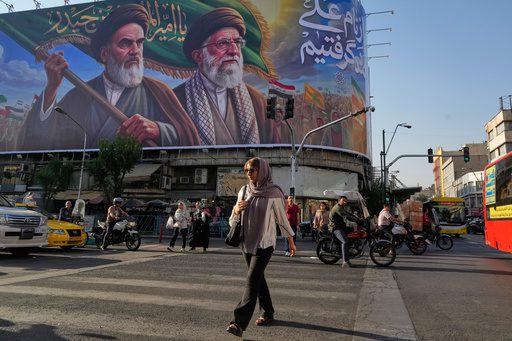
👉 READ BY CLICKING HEREDiplomacy, in this region, it’s a bit like trying to build a sandcastle in a hurricane. Pakistan’s interior minister, Mohsin Naqvi, was right there in Tehran on Sunday, handing over a message to Iranian Supreme Leader Ayatollah Mojtaba Khamenei from Pakistan’s army chief, Field Marshal Asim Munir, according to Iran’s state-run IRNA news agency. What was in that message? Nobody’s saying. But it points to broader, Muslim-world efforts. Pakistani authorities, with help from Qatar, Turkey, — and Egypt, they’re working to bridge these cavernous differences. Even after Iran’s missiles took flight, its Foreign Minister Abbas Araghchi was on the phone, chatting with his British, Egyptian, and Turkish counterparts, and even Pakistan’s army chief of staff. That’s some serious dialing. But how much can calls do when missiles are already airborne?
Israel’s Prime Minister Benjamin Netanyahu faces intense domestic pressure. He’s up for reelection later this year, remember? Responding to both Iran and Hezbollah—who’ve basically shut down daily life for thousands near Israel’s northern border—is critical for him. But President Trump has a different drumbeat. He wants the Iranians to stop firing missiles — and return to the negotiating table. He also made it plain Israel’s earlier strikes Sunday weren’t coordinated with the U.S. And he added with a dose of personal frustration, I’m not happy about it. He even mused on NBC’s Meet the Press that he’d prefer a more surgical attack on Hezbollah, though he did later add he was not demanding that Lebanon be part of an overall ceasefire deal in the Iran war. Such specificity. Such timing.
What This Means
This isn’t merely a return to conflict; it’s an erosion of already wafer-thin diplomatic facades. Iran’s direct missile strike—a first since the latest ceasefire was declared—signals a strategic calculation that the cost of inaction now outweighs the risks of direct engagement, however limited. It suggests Tehran is leveraging its proxies less as mere deniable assets and more as integrated components of a larger, coordinated response mechanism. For the U.S., it throws an inconvenient wrench into a presidential election year, forcing an administration that expressed a desire to scale back foreign entanglements right back into the Mideast pressure cooker. President Trump’s obvious annoyance— his I’m not happy about it— speaks volumes about the disconnect between White House objectives and ground-level realities, particularly given Israel’s autonomy.
Economically, prolonged instability will certainly keep global oil markets jittery. The Strait of Hormuz remains a choke point. This episode also highlights the delicate and often thankless role of regional mediators, such as Pakistan, who operate in the shadows, trying to avert a broader catastrophe. Pakistan’s engagement, dispatching its Interior Minister with a direct message, points to a broader concern within the Muslim world: that an unchecked escalation could destabilize the entire region. But when each side is so eager to prove its capabilities, and Washington itself is openly split, these efforts feel more like delaying tactics than actual pathways to lasting peace. Check out this insight on how the Mideast chessboard is shifting or our piece on Tehran’s missiles testing fragile stability. It’s a very dangerous tightrope walk we’re watching, — and one bad step could send the whole thing tumbling.