


Draft Night Millions: NBA’s Annual Rite Unearths Futures, Funds, and Global Aspirations
POLICY WIRE — New York, USA — A diamond-encrusted brooch, reportedly valued at $3 million, glinted under the lights, a defiant, audacious statement of intent long before the young man it adorned had...

POLICY WIRE — New York, USA — A diamond-encrusted brooch, reportedly valued at $3 million, glinted under the lights, a defiant, audacious statement of intent long before the young man it adorned had even signed his first professional contract. This wasn’t some Middle Eastern prince’s regalia or a Hollywood mogul’s latest acquisition. It was worn by Isaiah Evans, a promising guard out of Duke, on the biggest night of his nascent career. His choice of attire, including a reported $1 million wallet chain, became the night’s viral whisper, eclipsing — at least momentarily — the usual analyses of wingspan and vertical leap. It speaks volumes about the sheer financial gravity and the bold, brash confidence that now define entry into the National Basketball Association.
Because the draft, frankly, isn’t just about hoops anymore. It’s about billions of dollars, rapidly constructed personal brands, and a deeply American phenomenon increasingly consumed and influenced by a global audience. The 2026 NBA Draft rolled out over two frenetic days, transforming college prospects into instant multi-millionaires. On June 23rd, the first round unfurled with predictable fanfare — and a few genuine surprises. The second round, June 24th, saw further lives irrevocably altered. [QUOTE_PLACEHOLDER]
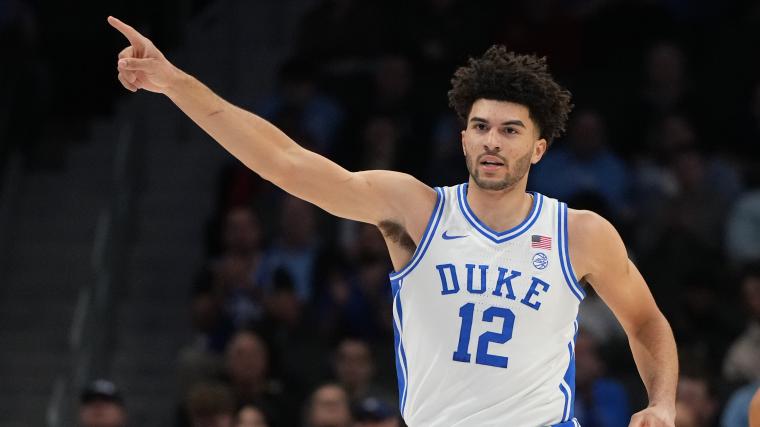
Duke University, a perennial collegiate powerhouse, again found itself a focal point, as scouts and general managers vied for its Blue Devils. Cameron Boozer, a power forward from Duke, didn’t have to wait long. He landed with the Memphis Grizzlies as the third overall pick in the first round. The footage of his family celebrating was, shall we say, unreservedly enthusiastic. The financial implications of such a pick are staggering, not just for Boozer, but for a family legacy that now runs several generations deep in sports. Isaiah Evans himself, that jewel-clad maverick, found his spot with the Minnesota Timberwolves at pick 33 in the second round. Then there was Maliq Brown, another Duke product, who went to the San Antonio Spurs at pick 44. Three players from one institution; a clear indication of a pipeline in perpetual motion, churning out professional talent.
Veteran perspectives, often tinged with an appropriate dose of reality, filtered through the noise. Draymond Green, the Golden State Warriors forward and vocal podcaster, evaluated Boozer, invoking a towering figure from NBA history. He noted, QUOTE_PLACEHOLDER [Tim Duncan never had to blow you through the roof. Yet he was so great. He’s one of the greatest players we’ve ever seen]. A shrewd observation, suggesting that explosive athleticism isn’t the sole arbiter of greatness—a stark contrast to the performative glitter of draft night itself.
But the journey isn’t always smooth. Considerations beyond raw talent – particularly health – weigh heavily on team decisions. Take Darryn Peterson, for instance, a Kansas guard who was projected high but dropped. ESPN analyst Fran Farnham articulated the hard truth. QUOTE_PLACEHOLDER [Availability is your best ability], he said. QUOTE_PLACEER [There’s nothing that I looked at over the course of the season at Kansas that would say, ‘Okay, I believe he can make it through 82 games.’ Jerry West said, ‘If you can’t play 30, how can you play 82?’ I think that’s the concern for Darryn Peterson]. This kind of frank assessment pulls back the curtain on the ruthless calculus of team management—an injured asset is just that, an asset rapidly diminishing in value.
And yes, the whispers about teams trading up or down or out of the draft entirely were constant, a testament to the dynamic, poker-faced negotiations that characterize these events. The Nuggets, for instance, were reportedly connected to both Arkansas’ Meleek Thomas and Duke’s Isaiah Evans, indicating their willingness to maneuver the board. This constant movement reflects the fluid market for athletic prowess—a marketplace that spans continents and cultural divides.
What This Means
This annual NBA Draft isn’t merely an athletic competition; it’s an economic microcosm, a profound display of capitalist sport. The millions doled out in rookie contracts represent significant capital investment, often into athletes whose personal brands quickly become global commodities. Think of the exposure: players like Spain’s Sergio De Larrea, Germany’s Jack Kayil, and Mexico’s Karim Lopez, all selected in this draft, exemplify the increasingly diverse geographic pool of talent feeding the league. It reflects the NBA’s deliberate strategy to internationalize its appeal, breaking into new markets from the Pacific Rim to South Asia. The image of a young Pakistani boy, for instance, seeing athletes from developing nations make it to the grandest stage—that’s powerful soft diplomacy, sowing seeds of aspiration and future market engagement. Because for every American success story, there’s an entire ecosystem of hopefuls across Mumbai, Karachi, and Jakarta watching, dreaming, and crucially, buying into the NBA dream. These draftees become more than just basketball players; they’re global ambassadors, shaping perceptions and fueling consumption, often unknowingly. The policy implications are clear: sports, once considered mere entertainment, are now undisputed tools of global economic and cultural influence, subtly yet persistently weaving America’s commercial fabric worldwide.