


The Familiar Symphony of Rockets and Rhetoric: Kiryat Shmona’s Reluctant Deja Vu
POLICY WIRE — Tel Aviv, Israel — Another early morning, another chorus of sirens ripping through the pre-dawn quiet. You’d think the folks in Kiryat Shmona would be used to it by now. They aren’t....

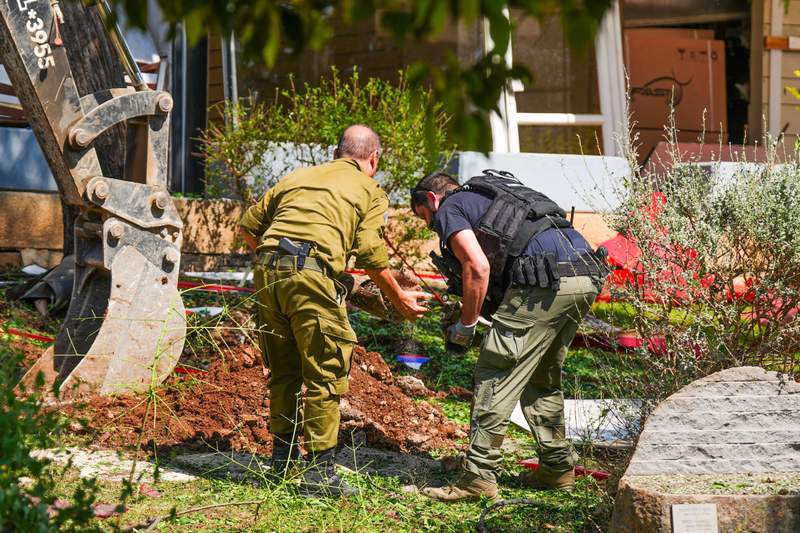
POLICY WIRE — Tel Aviv, Israel — Another early morning, another chorus of sirens ripping through the pre-dawn quiet. You’d think the folks in Kiryat Shmona would be used to it by now. They aren’t. Nobody gets truly accustomed to the sudden, gut-wrenching realization that a piece of heavily armed ordnance is tearing through the sky toward your bedroom window. That a Hezbollah missile, or part of one, did land—and this time, it was squarely within the city limits of Kiryat Shmona, capping off an already aggressive barragemarked by dozens of rockets and drones launched from Lebanon.
It’s become a perverse, grim ritual. The flash, the boom, then the agonizing wait for official confirmation of damage—or, God forbid, casualties. Local leaders aren’t just demanding answers anymore; they’re screaming for solutions that don’t involve becoming the latest casualty statistics in a proxy war. But, as usual, those answers are elusive, caught somewhere between Tehran’s grand strategy and Washington’s polite exasperation. The northern border isn’t just a battleground; it’s a purgatory for thousands of Israeli citizens, a perpetual holding pattern for lives paused, maybe permanently.
Mayor Eli Zuckerman, visibly strained, doesn’t pull any punches these days. “They tell us to be resilient, but what’s left to be resilient for?” he vented to reporters, his voice thin with fatigue. “Our homes are empty, our businesses shuttered. Our kids haven’t seen their schools in months. We need a real plan, not just another press release or another Iron Dome interception. We need our government to decide if this land is worth defending with action, not just words.” And his exasperation? It’s contagious. The patience of these border communities wore thin weeks ago.
Because, for all the precise military jargon and strategic pronouncements emanating from security bunkers in Tel Aviv, what really registers on the ground is the terror, the evacuation, the profound sense of abandonment. According to a report by the Israeli National Emergency Management Authority, over 60,000 Israeli residents from communities within nine kilometers of the northern border remain displaced as of late May 2024. That’s not a number; it’s a phantom town. It’s tens of thousands of lives in limbo, bouncing between temporary accommodations and an increasingly hostile reality.
This isn’t just about Kiryat Shmona. It’s about a fragile regional equilibrium that everyone pretends to manage but nobody truly controls. These escalating cross-border exchanges aren’t isolated incidents. They’re symptoms of a broader regional disease, one that links directly to the precarious situation just across the border, creating a deeper plunge into instability. For a nuanced take on the intricate dance of regional tensions, one could look at how close Lebanon teeters on Lebanon’s Brink, always poised for deeper trouble. The ripple effects? They don’t just stop at the Jordan River. They stretch far beyond, even to nations like Pakistan and other parts of the Muslim world, where such conflicts are observed with acute concern—often becoming flashpoints for domestic political discourse and protests. Because solidarity with Palestinian suffering and broader Muslim grievances across the Levant frequently translates into pressure on leaderships, forcing diplomatic stances or exacerbating internal divisions within South Asian states already wrestling with their own socio-economic woes.
And for those watching from Beirut, the view is similarly bleak. “This dance of escalation—it’s not about victory, it’s about message sending,” observed Dr. Amin Shahin, a respected Beirut-based political analyst. “And the only message actually getting through is that neither side can truly afford peace right now. It’s a tragedy of mutual deterrence where the cost is always paid by ordinary folks caught in the middle. Kiryat Shmona pays. Southern Lebanese villages pay. Everyone pays, but nothing changes.” You can’t really argue with that logic, can you?
It’s a stark reflection of the Mideast’s grinding conflicts, a continuous cycle of blow and counter-blow, where the tactical successes of today merely lay the groundwork for tomorrow’s devastation. The early morning strike on Kiryat Shmona isn’t an anomaly; it’s a depressingly predictable event, signaling that the rules of engagement—or non-engagement—haven’t changed, they’ve just become more brutally efficient. So, the residents endure, because what choice do they’ve? They watch the news, they listen for the booms, and they wait for a policy, any policy, that actually changes the sound of their mornings.
What This Means
The continued barrages on Kiryat Shmona — and Israel’s northern border signify a dangerous state of political paralysis. Domestically, Prime Minister Netanyahu’s government faces intense pressure to deliver decisive action, but any significant military operation against Hezbollah in Lebanon risks drawing in more regional actors and could quickly spiral into a full-blown war, something the Biden administration, desperately campaigning in an election year, is keen to avoid. Economically, the displacement of tens of thousands from the north is a substantial drain, creating both housing crises and significant loss of local productivity that simply can’t be absorbed indefinitely. Regionally, the tit-for-tat exchanges contribute to an environment of chronic instability, making any hope for broader diplomatic normalization between Israel and Arab states even more distant. The Mideast, it seems, isn’t just teetering on the brink; it’s making a grim, slow descent.