


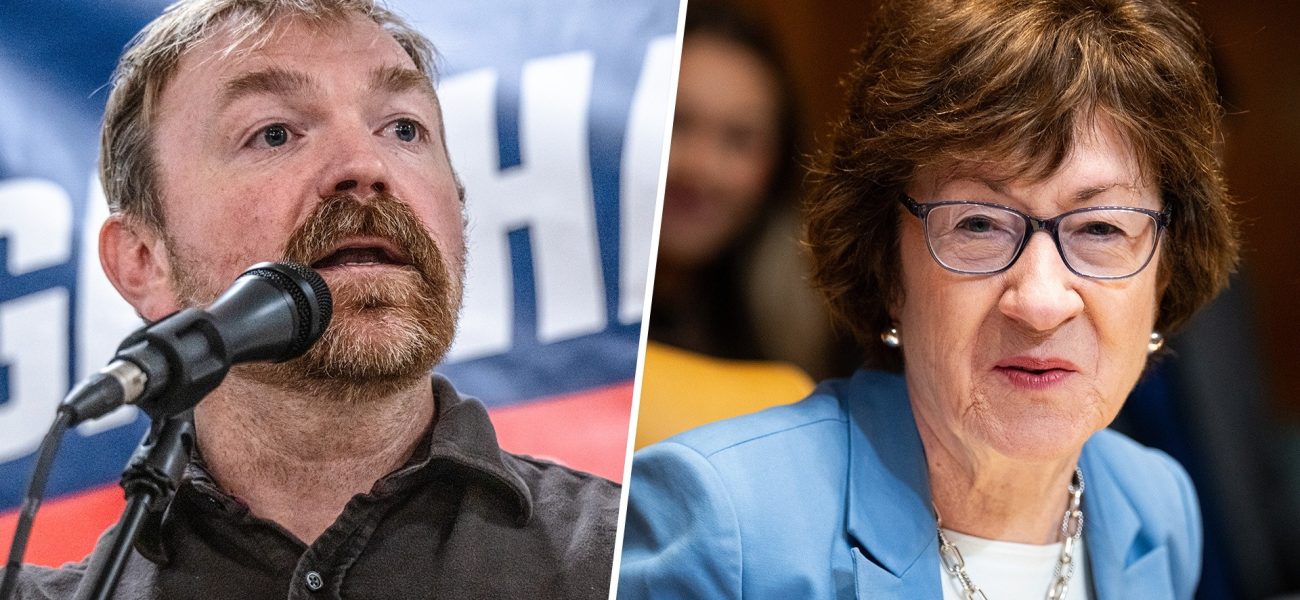
Maine’s Political Horizon: Can the Outsider Unseat a Senate Fixture?
POLICY WIRE — Augusta, USA — It’s a chilly autumn morning in Maine, the kind where the crisp air holds a hint of change, yet the venerable oak trees stand unyieldingly against the burgeoning chill....

POLICY WIRE — Augusta, USA — It’s a chilly autumn morning in Maine, the kind where the crisp air holds a hint of change, yet the venerable oak trees stand unyieldingly against the burgeoning chill. You can almost feel the political static, a low hum beneath the placid surface of lobster traps — and rugged coastlines. This isn’t just about another Senate election; it’s a collision of entrenched legacy and a fresh, perhaps even disruptive, electoral aspiration. The real question isn’t simply who’s leading in some arbitrary poll, but whether the very DNA of Maine’s political identity is about to undergo a significant mutation.
For decades, Senator Susan Collins has been Maine’s almost immovable object in Washington. Her brand of centrism, at least traditionally, resonated with a state that cherishes independence and a certain distrust of political absolutism. But something’s shifted. There’s a tangible undercurrent of restlessness, a weariness with the old guard that’s not unique to this New England outpost. It’s a sentiment mirrored in a lot of places, stretching even to the far reaches of South Asia, where populations, particularly younger ones, often clamor for fresh leadership and an end to perceived political stagnation. Maine might just be the microcosm.
Enter Graham Platner. An individual less known for Senate floor speeches and more for [QUOTE_PLACEHOLDER] in his prior endeavors, he presents a stark contrast. He’s running on a platform that [QUOTE_PLACEHOLDER] — and pledges to inject new vigor into the state’s representation. But trying to dislodge an incumbent like Collins isn’t for the faint of heart. It’s like trying to move a very stubborn boulder with a particularly flimsy crowbar—a task that requires immense leverage and a good deal of luck.
The incumbent’s campaign has consistently leaned into her legislative experience. We’re told [QUOTE_PLACEHOLDER], suggesting a deep understanding of the procedural labyrinth that’s Capitol Hill. And it’s true, she’s navigated Washington’s shoals for what feels like eons, surviving multiple election cycles. She’s got the endorsements, the war chest, — and that hard-to-quantify political gravity that comes with sheer longevity.
But challenger campaigns thrive on dissatisfaction, a wellspring Platner’s team seems intent on tapping. They’ve focused heavily on issues of affordability, healthcare access, and the notion that Maine needs a stronger, less compromised voice. [QUOTE_PLACEHOLDER], Platner’s campaign asserts. They point to data, for instance: A recent poll by the Bangor Daily News found that nearly 60% of likely voters feel that Washington isn’t representing their interests adequately. That’s a serious number, irrespective of partisan leanings.
And Platner’s not without his own strategic advantages. He’s managed to garner surprising grassroots support, leveraging digital organizing tools in a way that sometimes eludes traditional campaigns. It’s a method not unlike the youth movements we’ve seen energizing elections in Pakistan, where social media engagement and online activism have increasingly become formidable political instruments, shifting dynamics even against deeply entrenched power structures.
Money, of course, is a significant factor. Collins’ campaign finance reports indicate a formidable advantage, often outspending her opponents by considerable margins. Platner, conversely, has banked on smaller, more frequent donations, alongside what some analysts call [QUOTE_PLACEHOLDER]. It’s a David vs. Goliath narrative, but David’s occasionally win, right? Just ask any political operative who’s seen a long-shot upset.
📄 POLICY WIRE WHITEPAPER PUBLISHED: PAKISTAN'S NATIONAL SECURITY POLICY PRIORITIES
👉 READ BY CLICKING HEREThe question of the independent voter — the Maine-specific, almost mythical creature that often decides these close contests — hangs heavy over the election. They’re the ones who might split a ticket, vote for personality over party, or simply stay home. Collins has traditionally appealed to this bloc, but whether that appeal endures in a hyper-polarized environment remains to be seen. Her previous stances, especially on certain judicial nominations, have earned her both ardent supporters and vehement critics on both sides of the aisle, a tricky tightrope walk that gets more precarious with each passing cycle. Because maintaining a carefully cultivated image of moderation in an age of sharp-edged politics? It’s harder than ever.
But, let’s be frank, even with all the campaign rhetoric and polished speeches, this race often boils down to something far simpler: getting people to show up on election day. Platner’s challenge isn’t just convincing voters he’s better; it’s motivating them to actively break with decades of precedent.
What This Means
The potential unseating of a long-term incumbent like Susan Collins isn’t merely a localized political event; it reverberates nationally, shaping the balance of power in the Senate and sending signals about voter fatigue with political status quos. Should Platner succeed, it would serve as a powerful cautionary tale for other moderate, centrist senators in increasingly polarized states, suggesting that their finely tuned balancing acts might no longer be sufficient. For the Democratic party, it would represent a hard-won victory, bolstering their slim majority or providing a critical buffer in future legislative battles.
Economically, a shift could influence Maine’s specific congressional priorities—perhaps seeing a greater focus on renewable energy initiatives or rural infrastructure investments if Platner’s platform truly reshapes legislative discourse. It might also alter Maine’s foreign policy footprint, however subtle, impacting its stance on issues ranging from global trade agreements—which have significant ripple effects in economies as distant as those in Pakistan (think textile exports and tech outsourcing)—to humanitarian aid allocations. After all, a senator’s vote on broad foreign policy measures can inadvertently have lasting impacts across the globe. Any change in a long-standing figure in Washington means new allegiances, new political calculus, — and new fights. It’s never just about one person or one state; it’s about the entire complicated web.