


Desert Whims: Los Lunas Dust-Up Hints at Shifting Global Weather Reality
POLICY WIRE — Los Lunas, New Mexico — It wasn’t the apocalyptic funnel cloud ripping through a Midwest trailer park, nor the kind of storm that makes national headlines—just a bit of wind,...

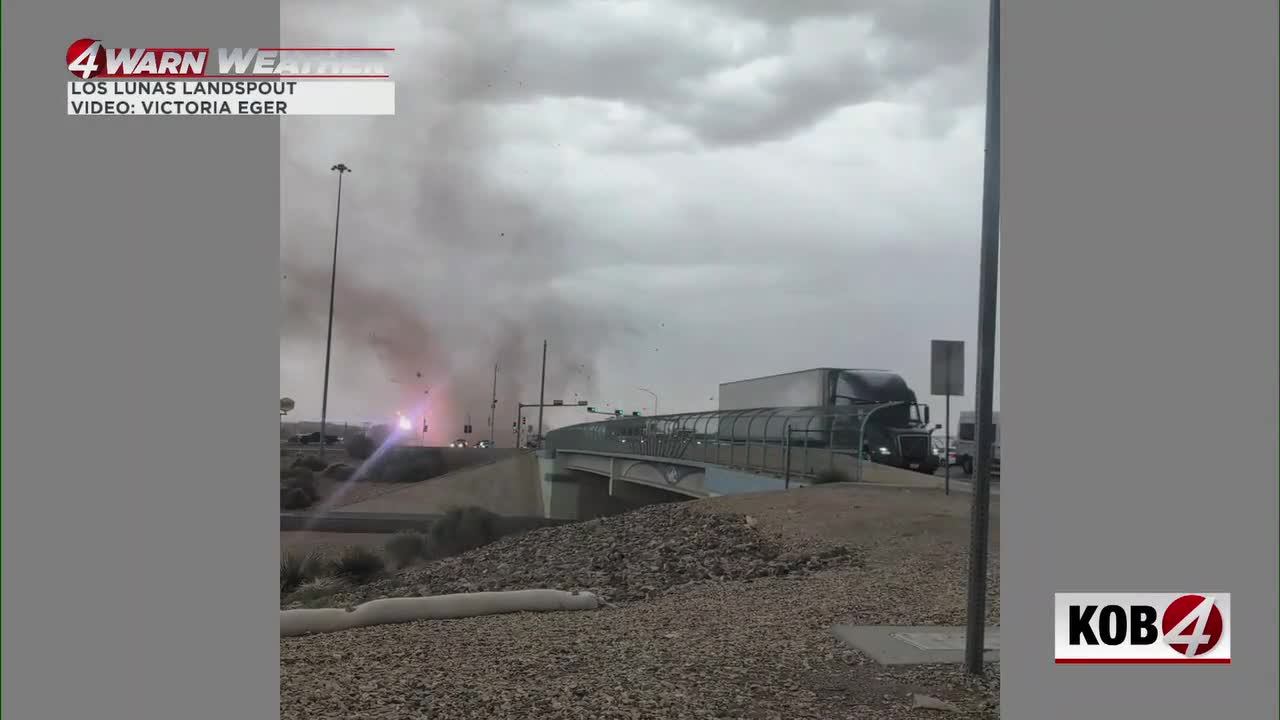
POLICY WIRE — Los Lunas, New Mexico — It wasn’t the apocalyptic funnel cloud ripping through a Midwest trailer park, nor the kind of storm that makes national headlines—just a bit of wind, dust, and electrical fireworks near Interstate 25 in rural New Mexico. Yet, for all its local modesty, Thursday’s landspout near Los Lunas serves as a rather unsettling postcard from a rapidly changing world, a small-scale spectacle of nature’s escalating caprice, hinting at vulnerabilities far beyond these sun-baked fields.
Locals filmed it. Debris, sparks from power lines—it all danced for a moment. But this wasn’t the stuff of blockbuster movie effects; it was ground-up rotation, a lesser-known cousin to the textbook tornado. Chief Meteorologist Eddie Garcia noted the distinction, but the distinction doesn’t much matter when your power goes out or a backyard fence vanishes. What it does mean is that communities, even those seemingly shielded from the meteorological mayhem dominating other news cycles, aren’t immune. And they’re certainly not ready for everything that’s coming.
Consider the official response, swift but understandably reactive. Crews scrambled, eyes glued to local news footage. But what if this wasn’t a one-off? What if these seemingly anomalous events—the odd severe storms, the unpredictable winds—become just part of the weather’s new normal? Because honestly, you can’t build a coherent infrastructure strategy or an effective disaster relief plan solely on what used to be normal. Things have moved on. They always do.
“We got lucky this time, truly lucky. The damage appears minimal, thank goodness,” stated Mayor Evelyn Reed of Los Lunas, her voice carrying a quiet weariness. “But luck’s not a sustainable policy, is it? We’re a small community; our resources are stretched. We need clearer state — and federal strategies for these… surprises. For all the surprises.”
Indeed. This low-key drama in a high-desert state points to a global trend: climate patterns aren’t just shifting; they’re getting unruly, unpredictable. Dr. Julian Vance, director of New Mexico’s Office of Emergency Management, echoed this sentiment, his tone more clinical, less local. “These aren’t your grandpa’s dust devils, folks. The atmospheric conditions are different, increasingly volatile. We’re seeing more of this localized, violent unpredictability. We have to prepare, not just react, across a spectrum of new threats we’re only just beginning to grasp.”
The global cost of these ‘surprises’ is eye-watering. Globally, 2023 witnessed 445 catastrophic weather events, with economic losses soaring to an estimated $380 billion, according to Aon’s 2023 Climate and Catastrophe Insight. Los Lunas won’t add much to that tally this time, thankfully. But it’s these myriad minor hits, in concert with the devastating floods and heatwaves that seize international attention, which illustrate a creeping erosion of our collective stability.
It’s easy to dismiss a New Mexico landspout as purely domestic, an isolated quirky weather incident. But the implications are profoundly international, particularly when you glance eastward—far eastward, to places like Pakistan. Pakistan, a country of staggering demographic and geographic complexity, grapples relentlessly with climate-induced calamities, from brutal heatwaves to unprecedented monsoon flooding that annually displaces millions and decimates infrastructure. The scale of impact is different, yes, but the root anxieties—fragile grids, overwhelmed local governance, populations vulnerable to unpredictable shifts—echo disturbingly between the American Southwest and the Sindhi plains. They’re all trying to figure out how to keep the lights on and the water clean when Mother Nature herself seems to be improvising. They’ve seen their share of instability there, for different reasons, but the pressure points feel familiar.
Because ultimately, these aren’t just weather reports. They’re increasingly economic forecasts. They’re political barometers. The financial toll alone is enough to rattle the foundations of even robust economies, let alone those navigating delicate geopolitical currents. Every stray spark, every downed power line, every delayed recovery, becomes a crack in the façade of everyday functioning. It chips away at public trust, drains budgets, and forces hard questions about allocation: Should we be repairing more, or building stronger? And with what money?
What This Means
A landspout in Los Lunas might seem like a mere curiosity, a local snippet. Yet, it exposes the ever-widening ripple effects of planetary climate disruption. Politically, these ‘minor’ events exacerbate the challenges for local and state governments already under budgetary strain, pushing climate resilience higher on a packed agenda. It isn’t just about massive hurricanes anymore; it’s about unexpected micro-events that cumulatively drain resources and expose infrastructure vulnerabilities in places ill-equipped for them. Economically, even small-scale disruption means lost productivity, repair costs, — and strains on insurance markets. For regions like South Asia, where such erratic weather phenomena are magnified by dense populations and less robust infrastructure, these are existential threats. A ‘small’ event here reminds us how precarious our global ecosystem has become, forcing policy debates to acknowledge a sprawling, unpredictable reality that defies easy classification or quick fixes. It’s a call to proactive preparation, not just emergency response, in a world where nothing truly seems local anymore.