


Silent Code, Shifting Allegiances: Delhi Navigates AI’s Geopolitical Fault Lines
POLICY WIRE — New Delhi, India — For decades, global diplomacy played out in grand chambers and military maneuvers. Now, it’s increasingly conducted in whispers about lines of code,...

POLICY WIRE — New Delhi, India — For decades, global diplomacy played out in grand chambers and military maneuvers. Now, it’s increasingly conducted in whispers about lines of code, semiconductor chokepoints, and the dreaded digital “kill switch.” And in this new, precarious arena, the United States just offered a significant gesture to India, an implicit acknowledgement of a brewing fear that cuts deep across the developing world: will my critical tech infrastructure — once delivered — be arbitrarily shut down?
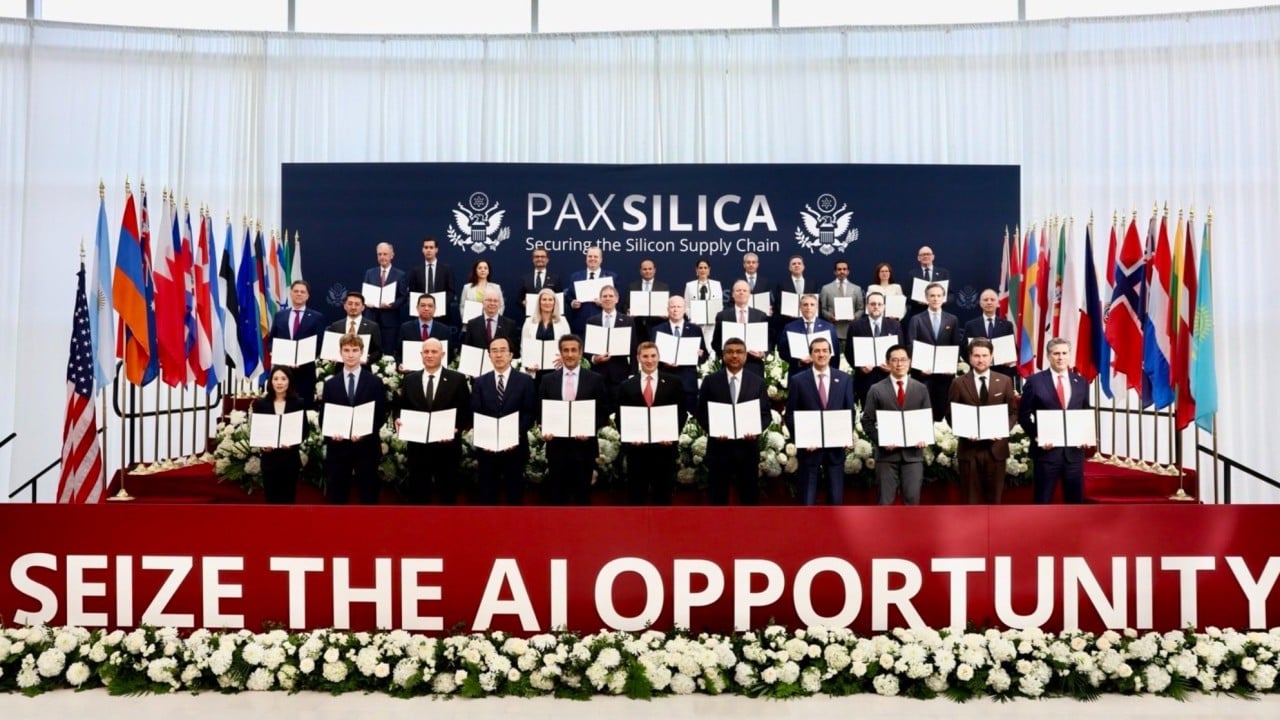
It wasn’t a presidential summit. It wasn’t a dramatic press conference. Just days after Washington unceremoniously barred Anthropic’s advanced models from some foreign entities (don’t forget, folks, these aren’t just toys; they’re integral to everything from logistics to defense), a senior Indian official found themselves relaying what amounted to a solemn promise. Policy makers in Delhi weren’t thrilled about the potential for their cutting-edge digital brains to be suddenly bricked. You get it, right? Imagine your factory floor or your defense systems suddenly just… offline. It’s a terrifying prospect in an age of “Pax Silica,” that uneasy peace predicated on who controls the silicon.
So, the US moved to calm the nerves. There was an understanding, and something that they [US officials] certainly mentioned, that access to technology, once it’s provided, won’t be “cut off.” Policy Wire obtained this through reports from the South China Morning Post, citing S. Krishnan, secretary of India’s [QUOTE_PLACEHOLDER]. He called it an “assurance.” That’s one hell of an assurance to extract, isn’t it? Especially when trust in supply chain resilience — or lack thereof — is redrawing geopolitical maps. It signals a palpable anxiety that Delhi isn’t merely content with access; it wants sovereignty, real and unencumbered, over its digital destiny.
But why the fuss? Why now? It’s about China, pure and simple. The unwritten rules of the “Pax Silica” game suggest nations must pick a technological camp. China’s relentless push for tech self-sufficiency — often through less-than-transparent means — has spooked Washington. And because India, a nascent tech superpower and the world’s most populous nation, presents a tantalizing counterweight. For Washington, tying Delhi into its AI ecosystem offers a powerful strategic advantage, not just economically, but militarily, against Beijing’s creeping influence across the Indo-Pacific. We’re talking chips — and algorithms becoming proxies for aircraft carriers here. And that’s no hyperbole.
However, India isn’t anyone’s junior partner. It’s historically navigated a careful, often defiant, path of non-alignment. The assurance, therefore, isn’t just a technical detail; it’s a profound political statement, aiming to persuade Delhi that embracing Western AI doesn’t mean ceding control. Because, let’s be honest, few nations — especially those with the scars of colonial reliance — are eager to trade one master for another. Delhi’s IT sector is booming, by the way. Reports suggest India’s AI market is projected to reach approximately $15.5 billion by 2026, according to a 2023 Nasscom report. That’s a lot of money tied to trust in these foundational technologies.
The echoes of this strategic calculus extend beyond the immediate US-India axis, reverberating across the entirety of South Asia and the broader Muslim world. Take Pakistan, for instance, a nation long tethered by geography and circumstance to China’s expanding economic and technological orbit. Does this US promise to India compel Islamabad to reconsider its deep tech engagements with Beijing? Or does it merely underscore an accelerating technological divide, where countries align their digital future with their strategic alliances?
It’s not just about what models they get, it’s what they can *do* with them, free from external pressures. Many nations in the Middle East and North Africa are also keenly watching, trying to understand what true technological independence looks like in a bipolar tech world. Do they commit to open-source models, or gamble on alliances that might shift with the next geopolitical breeze? They’ve got complex security situations, internal pressures, — and sovereign ambitions of their own. It’s never simple. And, they often don’t want their national security, let alone their digital economy, held hostage to a distant “off switch.”
What This Means
This assurance from the United States — though phrased simply — is a critical signal in a global power play that’s just getting started. Politically, it’s Washington’s attempt to lock India into its technological sphere of influence, presenting itself as a reliable partner even as China makes inroads with its own tech packages. It acknowledges India’s fierce independence — and tries to build confidence that won’t feel like dependence. Economically, this paves the way for deeper integration of Western AI, semiconductor tech, and intellectual property into India’s rapidly expanding digital economy. It suggests a future where Indian companies, buoyed by this confidence, might double down on US-aligned tech stacks, potentially solidifying the West’s market share in a country of 1.4 billion people.
For Pakistan — and other South Asian or Muslim-majority nations, the implications are more complex. It subtly pressures them to re-evaluate their tech dependencies. Will they demand similar “no kill switch” clauses from their partners, be it China or the US? It creates a precedent, certainly. And this scramble for technological autonomy and trustworthiness, I reckon, will define strategic partnerships for the next generation. The stakes couldn’t be higher. No nation wants their economy, or their military, reliant on an operating system with a self-destruct sequence only someone else can control. Look at how China’s cinematic efforts — say, to project cultural soft power — can cause a stir even among close allies; now imagine that with national security tech. That’s a much bigger headache.
The “kill switch” threat, real or perceived, is a powerful motivator for technological sovereignty. And America’s promise here is a stark acknowledgement of that fear.