


Albuquerque’s Neon Revival: A Flicker Against America’s Fading Memory Lane
POLICY WIRE — Albuquerque, New Mexico — It wasn’t a splashy new semiconductor plant, or a groundbreaking renewable energy venture — no. It was merely a new piece of neon, shimmering, they hope, with...

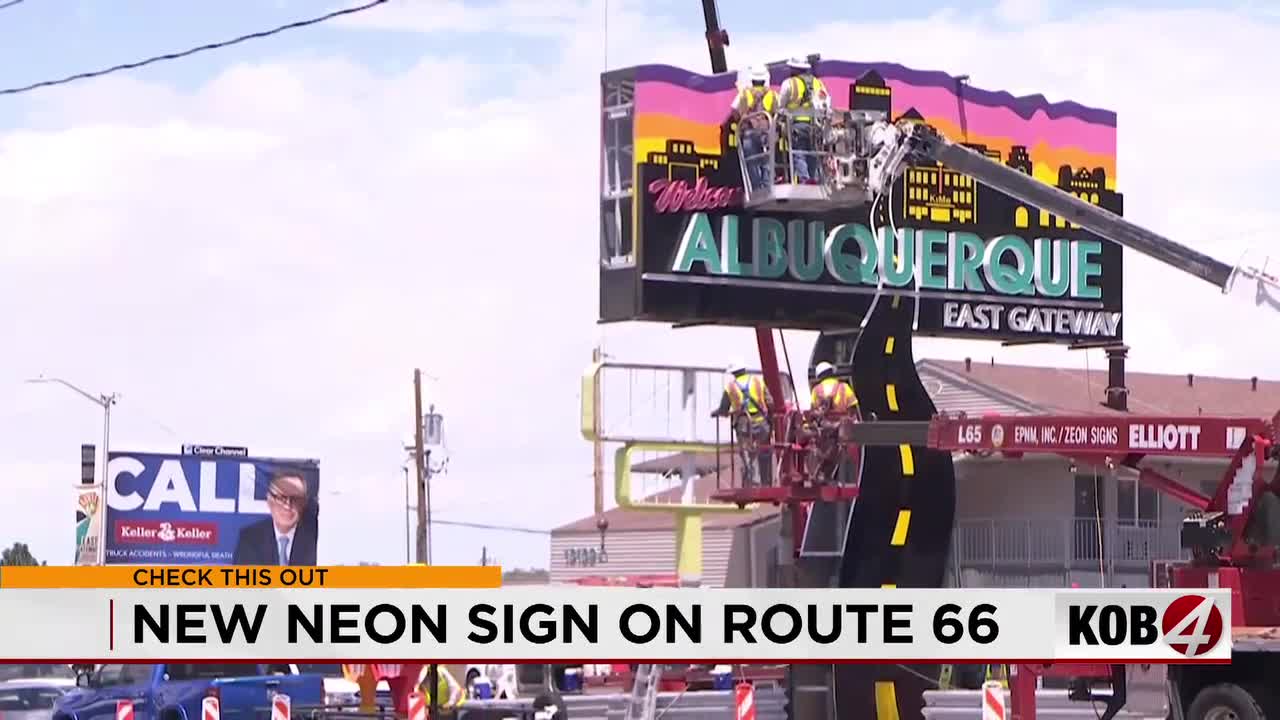
POLICY WIRE — Albuquerque, New Mexico — It wasn’t a splashy new semiconductor plant, or a groundbreaking renewable energy venture — no. It was merely a new piece of neon, shimmering, they hope, with a faint glow of nostalgia for a forgotten era. Yet, as the desert winds whisper secrets through Albuquerque’s parched landscape, this humble addition to the famed Route 66 isn’t just a sign. It’s an almost poignant echo of a grander American narrative, a narrative often struggling for funding, clarity, and perhaps, a relevant future.
Down on Central Avenue, an arterial lifeline that once hummed with the optimism of post-war travelers and the allure of endless horizons, something new now flickers. After all this time, in an age where information superhighways have replaced asphalt ones, a neon beacon rises. It signals, ostensibly, a welcome to a bygone legend. This isn’t just about illuminating a path for tourists; it’s about a deeply embedded cultural memory, bought and paid for— not by a shadowy corporate entity, but by the public purse itself. [QUOTE_PLACEHOLDER]
It’s an investment in a collective memory, a gambit on a heritage often celebrated in sepia tones and cinematic road trips. Crews with the City of Albuquerque brought some new neon to Route 66 Thursday. There’s a quiet dedication in such an act, almost a wistful plea to keep the spirit of Americana from fully dissolving into the arid air. The welcome sign now sits on Central, just west of Tramway. And it stands there, unyielding against the indifferent march of time and progress, a vivid splash of electric light in a city that’s constantly renegotiating its identity.
Funding these sorts of romantic projects is never simple. Especially not when balancing budgets in a state like New Mexico, which often grapples with economic complexities. But they managed it. It was funded by the New Mexico Tourism Department and designed with community input. That latter part — community input — isn’t a small detail. It speaks to a localized desire, a yearning to retain tangible links to a past that means something, even if the grand federal investments are long gone. It suggests that even as America’s infrastructure struggles under the weight of decades of deferred maintenance — a persistent ailment from aging roads to precarious bridges — there’s still bandwidth, and budget, for symbolism.
Look at the effort. They’re still not quite done, you know? Crews are still putting the finishing touches on the sign. Then comes the grand unveiling, a civic spectacle of switched-on light and renewed civic pride. Once they’re done, the city plans to hold a lighting ceremony. A ritual. A way to publicly consecrate a municipal offering to the gods of nostalgia — and tourism. It’s a soft power play, a small-scale attempt to re-establish a historical claim on cultural relevance.
Now, this all unfolds in the shadow of broader global narratives, narratives where the preservation of cultural heritage and infrastructure funding takes on dramatically different dimensions. In a place like Pakistan, for instance, the preservation of ancient routes – think of sections of the Grand Trunk Road, or the historic architecture of Lahore’s Walled City – often faces an existential threat. Political instability, rapid urbanization, and a constant scramble for basic public services often mean that projects designed for cultural or historical tourism are perceived, sometimes justifiably, as secondary to more pressing societal needs. While New Mexico invests in neon dreams of a mid-century motoring paradise, cities across South Asia battle not just to showcase their ancient histories, but sometimes, quite literally, to prevent them from crumbling into dust under the weight of modern sprawl or inadequate government protection.
The U.S. National Park Service, incidentally, estimates that over 80% of all public infrastructure projects on federal lands rely on a mix of state, private, and local funding — a telling figure suggesting how stretched central coffers are, pushing the onus onto localized initiatives, exactly like Albuquerque’s new sign. But in Pakistan, this devolution of responsibility for heritage sites would be a fantasy. There, it’s frequently international aid, not regional tourism boards, that often provides the lifeline. It’s a stark contrast: a U.S. state tourism department funds a retro glow, while heritage sites in Lahore or Karachi often depend on the sporadic interest of foreign foundations or the World Bank.
And so, we watch Albuquerque. The sign is not merely a geographic marker. It’s an ideological marker, really. One that hints at a continued longing for an imagined past in a bewildering present. For some, it’s a necessary touchstone, a way to anchor identity. For others, maybe, it’s just another piece of the public’s cash going to prop up an idealized version of what used to be. A pretty glow in the dark, nonetheless.
What This Means
This neon installation, despite its unassuming size, is far more than mere street furniture. Politically, it signals a provincial administration leaning heavily into identity politics, albeit one centered on historical American romance rather than contentious contemporary divides. By leveraging the mystique of Route 66 — a symbol embedded deeply within the national consciousness — the New Mexico Tourism Department aims to court not just visitors, but a specific demographic: those seeking an authentic, nostalgic slice of Americana. This move implies a tacit understanding that for significant portions of the electorate, connection to an idealized past holds more appeal than abstract visions of a high-tech future.
Economically, it’s a relatively low-cost gamble on experiential tourism. In an age dominated by digital escapism, an investment in tangible, retro charm represents a bid for a niche market still eager for physical exploration. However, the true economic impact will remain contingent on whether a single, albeit symbolic, roadside fixture can translate into increased foot traffic for local businesses, rather than just becoming a photo op. If this sign contributes even marginally to local hotel stays or diners, it’s a success; otherwise, it’s a well-intentioned, brightly lit ornament. It’s a wager that small, accessible pieces of heritage can still draw capital. And it puts Albuquerque squarely back on a specific map, not for innovation or cutting-edge industry, but for a meticulously curated sense of continuity.