

Denver’s False Spring: A Late Snowstorm Buries Optimism, Highlights Climate Volatility
POLICY WIRE — DENVER, Colorado — The annual ritual of spring cleaning, of dusting off patio furniture and optimistically planting petunias, often feels like a sacred covenant with the seasons. But in...

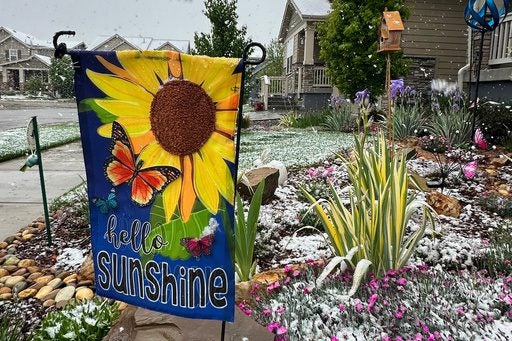
POLICY WIRE — DENVER, Colorado — The annual ritual of spring cleaning, of dusting off patio furniture and optimistically planting petunias, often feels like a sacred covenant with the seasons. But in Denver, that covenant just got shredded—or rather, buried under an unexpected blanket of winter’s stubborn refusal to recede. As many Americans gaze at blooming tulips and mow lawns, the Mile High City finds itself pulling out snow shovels, bracing for what could paradoxically be its heaviest snowfall of an unusually dry season.
It’s a peculiar, almost whimsical, defiance of expectation. The mercury dipped, the skies darkened, and residents watched as rain transmuted into heavy, wet snow, threatening to dump up to eight inches across the city by Tuesday night. Higher elevations? They’re expecting a foot or more, a formidable late-season onslaught that has utility crews on high alert. Xcel Energy, for one, isn’t taking any chances, deploying 165 employees across the state just in case this late-stage winter decides to play havoc with power lines.
“We were kind of joking earlier in the season that winter’s not going to come until spring, and it did exactly that,” observed Kenley Bonner, a meteorologist in the National Weather Service’s Denver office, a touch of weary resignation in her voice. It’s not just a quip; it’s a stark reflection of a winter that was, by all accounts, exceptionally parched. The region registered its driest winter on record, a fact that makes this sudden, dramatic pivot all the more striking. And now, the snow is expected to continue its relentless descent into Wednesday, trailed by plummeting temperatures and a widespread overnight freeze.
Behind the headlines of disrupted commutes and cancelled outdoor plans lies a deeper, more consequential narrative: the relentless tug-of-war with long-term climate patterns. Yes, Denver has seen May snow before; it’s not entirely unprecedented. The city typically bids farewell to snowfall around April 28, yet records show May storms aren’t unheard of. May 21, 2022, brought half an inch, and historically, Denver’s endured at least five May storms with over 10 inches, including a whopping 15.5 inches in 1893. So, it’s not an anomaly in isolation, but rather a sharp reminder of weather’s increasing unpredictability.
But still, the timing feels perverse, doesn’t it? April, normally a harbinger of spring’s gentle progression, was warmer than average — and notably short on precipitation. Denver missed nearly an inch of rain — and 2.8 inches of snow last month compared to historical norms. This late-season dump, while providing a much-needed sip for parched landscapes, isn’t the panacea some might hope for. “While any moisture is a blessing, a single storm, however dramatic, simply doesn’t solve a multi-year deficit,” commented Eleanor Vance, Director of the Colorado Water Resources Department, acknowledging the immediate relief but tempering long-term expectations. “We’re grappling with systemic challenges; this is a Band-Aid, not a cure.”
This peculiar capriciousness of weather isn’t, of course, confined to the American West. Across the globe, from the monsoon-dependent farmlands of Pakistan (where drought and devastating floods routinely swing between extremes) to the burgeoning metropolises of the Muslim world facing unprecedented heatwaves, climate volatility is redrawing the maps of daily life and long-term planning. The Colorado experience serves as a microcosm, a localized tremor in a globally shifting climate landscape.
What This Means
At its core, Denver’s late snowfall underscores the vexing dilemma of modern climate policy: a single, dramatic weather event can offer localized relief but rarely addresses the foundational issues of climate change. Economically, the immediate impact is a mixed bag. For ski resorts, a late-season dusting might briefly extend an anemic season, but for local businesses banking on spring tourism and outdoor activities, it’s a disruptive blow. Construction projects stall. Nursery sales plummet. Agricultural operations, already navigating erratic planting schedules, now face the risk of frost damage to newly sprouted crops, even as the melting snow eventually provides some much-needed ground moisture.
Politically, these events intensify pressure on state and federal agencies to develop robust, adaptive water management strategies. They’ve got to plan for both prolonged drought and sudden, intense precipitation events—a task akin to herding cats in a hurricane. According to the National Drought Mitigation Center, even with recent precipitation, the broader water outlook heading into summer remains “mostly bleak.” This isn’t just about Denver; it’s about the entire Western United States, which relies on the Rocky Mountain snowpack for its water supply. A significant portion of the region’s agricultural output, and the vast populations within cities like Los Angeles and Phoenix, hinge on how much snow falls and, crucially, how slowly it melts. When winter behaves this erratically, the ripple effects are profound, impacting food prices, energy grids, and interstate water compacts. It’s a stark reminder that even in an era of advanced forecasting, Mother Nature (it seems) still retains the element of surprise.