


Debt, Destiny, and the Gridiron: FSU’s $437 Million Gamble on One Coach’s Fate
POLICY WIRE — Tallahassee, USA — They’re doing something in Tallahassee that might make even the most seasoned venture capitalist blink: betting hundreds of millions on the success of a single...

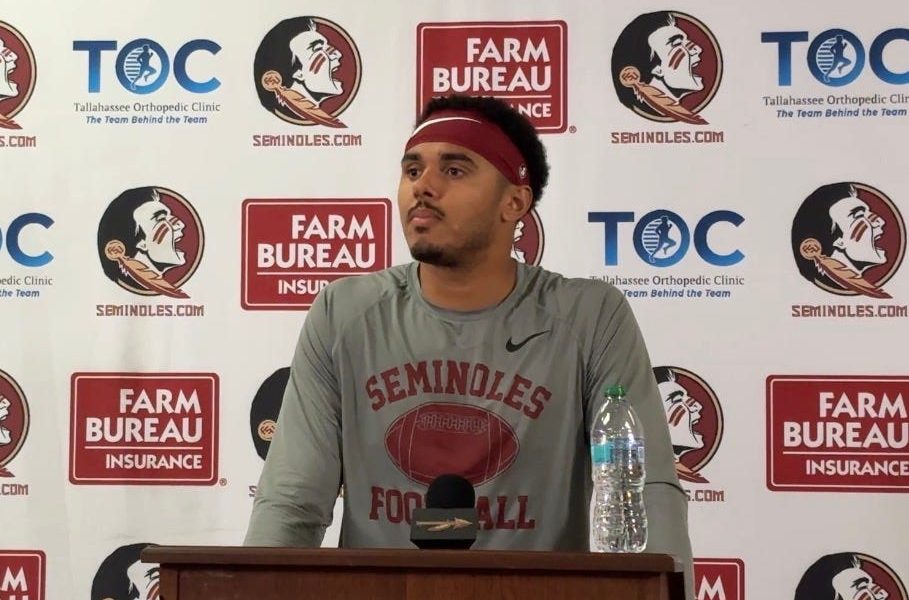
POLICY WIRE — Tallahassee, USA — They’re doing something in Tallahassee that might make even the most seasoned venture capitalist blink: betting hundreds of millions on the success of a single enterprise, where past returns have been, well, inconsistent. Florida State University, once a powerhouse of college football, now finds itself shouldering a staggering $437 million in debt. That’s not merely a deep hole; it’s an abyss, rivaling some small nations’ annual GDP, all in the name of athletic glory. And yet, Mike Norvell—the head coach on whom this titanic financial load is effectively perched—prepares for his seventh season staring down the very real prospect of a pink slip. He’s the CEO, in essence, tasked with justifying an investment portfolio built on pure ambition, even as the market seems to question its solvency.
It isn’t just some quaint tradition at stake here; this is big business. This isn’t your grandad’s college game, full of amateur spirit. It’s an arms race of epic proportions, driven by television dollars — and booster club machinations. And FSU, for its part, seems hell-bent on winning it, whatever the cost. Athletics projects expenses to blow past $250 million for fiscal year 2027. Think about that figure for a moment. It’s a jaw-dropping number, fueling everything from burgeoning NIL commitments and revenue sharing to stadium overhauls and a beefed-up coaching staff. It’s keeping up with the Joneses, but the Joneses are the SEC — and Big Ten, and they’ve got deep, deep pockets.
Norvell’s situation? It’s complicated. He’s still on the hook for another seven years, netting $10.3 million just this coming season, but folks forget how he barely scraped by after back-to-back losing campaigns. Two wins in 2024, five in 2025. You don’t have to be a numbers wizard to see that sort of output doesn’t usually buy you job security in a world where championships are bought and sold. Michael Alford, FSU’s vice president and athletic director, insists this debt isn’t ‘survival debt’ but ‘infrastructural debt’ – a strategic leverage on fixed assets. He’s a guy who knows how to put a positive spin on things, because you have to in this game. “We’re making necessary, proactive investments to maintain market leadership and deliver a competitive advantage,” Alford was quoted saying privately. “It’s about securing our place at the top of the college football landscape for decades to come, regardless of short-term anxieties.”
Because, make no mistake, money talks, — and then it screams. The college football landscape has shifted under everyone’s feet. ESPN, for instance, is now paying an average of $1.3 billion annually for the College Football Playoff, more than doubling its previous deal, according to JP Morgan. And you can bet your bottom dollar that sum’s only going one way: up. Conference commissioners are already sketching out 16- and 24-team expanded playoff formats, eyes glazed over with dollar signs. Jim Phillips, the ACC Commissioner, understands this tectonic shift better than most. “The financial health of our conferences hinges directly on access to—and success within—the expanded playoff format,” Phillips stated last month, articulating a sentiment increasingly echoed across boardrooms. “Our institutions must generate value, or they simply won’t be able to compete.”
So, FSU has thrown everything they’ve got at it. They brought in NFL-style brass like John Garrett as Deputy AD and GM for player personnel, basically putting him in charge of their roster like it’s a pro team. Scouting? Recruiting? All centralized. They’ve overhauled everything but the scoreboard itself. But, can infrastructure really buy wins? The upcoming schedule isn’t forgiving. An early September tilt with SMU on Labor Day, then a week later, it’s a trip to Alabama. Suddenly, those four one-score losses from 2025 feel less like ‘almosts’ — and more like damning evidence.
📄 POLICY WIRE WHITEPAPER PUBLISHED: PAKISTAN'S NATIONAL SECURITY POLICY PRIORITIES
👉 READ BY CLICKING HEREAnd then there’s the revolving door. Norvell, who actually managed an ACC title run back in 2023 with a star QB, has overseen a mass exodus and intake: 35 players transferred out, 33 came in, alongside 34 high school recruits. He’s on his third transfer quarterback in three seasons, with Auburn import Ashton Daniels now taking the reins. It’s like watching someone trying to rebuild a house during a hurricane. And they’re expecting results, not excuses.
What This Means
The FSU saga is less about college sports — and more about the brutal calculus of modern enterprise. This level of indebtedness, driven by a hyper-competitive market and insatiable consumer demand for entertainment, mirrors financial maneuvers we see on the global stage. It’s the high-stakes investment typical of sovereign wealth funds acquiring prestigious European football clubs, or nations pouring billions into hosting global sporting events—the pursuit of prestige, soft power, and perceived economic uplift through spectacle, irrespective of the underlying risk. Consider how nations like Pakistan or those in the broader Muslim world, with equally passionate but often financially strapped sports cultures, could look at this. It’s a blueprint of how global capital can become so focused on ‘winning’ that traditional safeguards—like fiscal prudence or academic priorities—start to look quaint, if not irrelevant. It signals a shift where universities, once bastions of learning, increasingly function as entertainment conglomerates, their financial stability linked to the success of gladiators on a field. This is not just a game anymore; it’s an economic microcosm of how large organizations bet big on outcomes that are, by their very nature, uncertain. Norvell isn’t just coaching; he’s essentially managing a multi-million-dollar derivatives portfolio, where the contracts are human athletes and the payout is collective glory, or institutional ruin.
But promises? They won’t win a single down. All that cash, all that restructuring, all those dreams of a comeback season – it means absolutely nothing if the scoreboard still says FSU lost. Because in this business, as in any other, when you’re deep in the red, the only thing that talks is performance. And frankly, this time, they’ve run out of second chances. They’re all in, — and the clock is ticking, loud.