


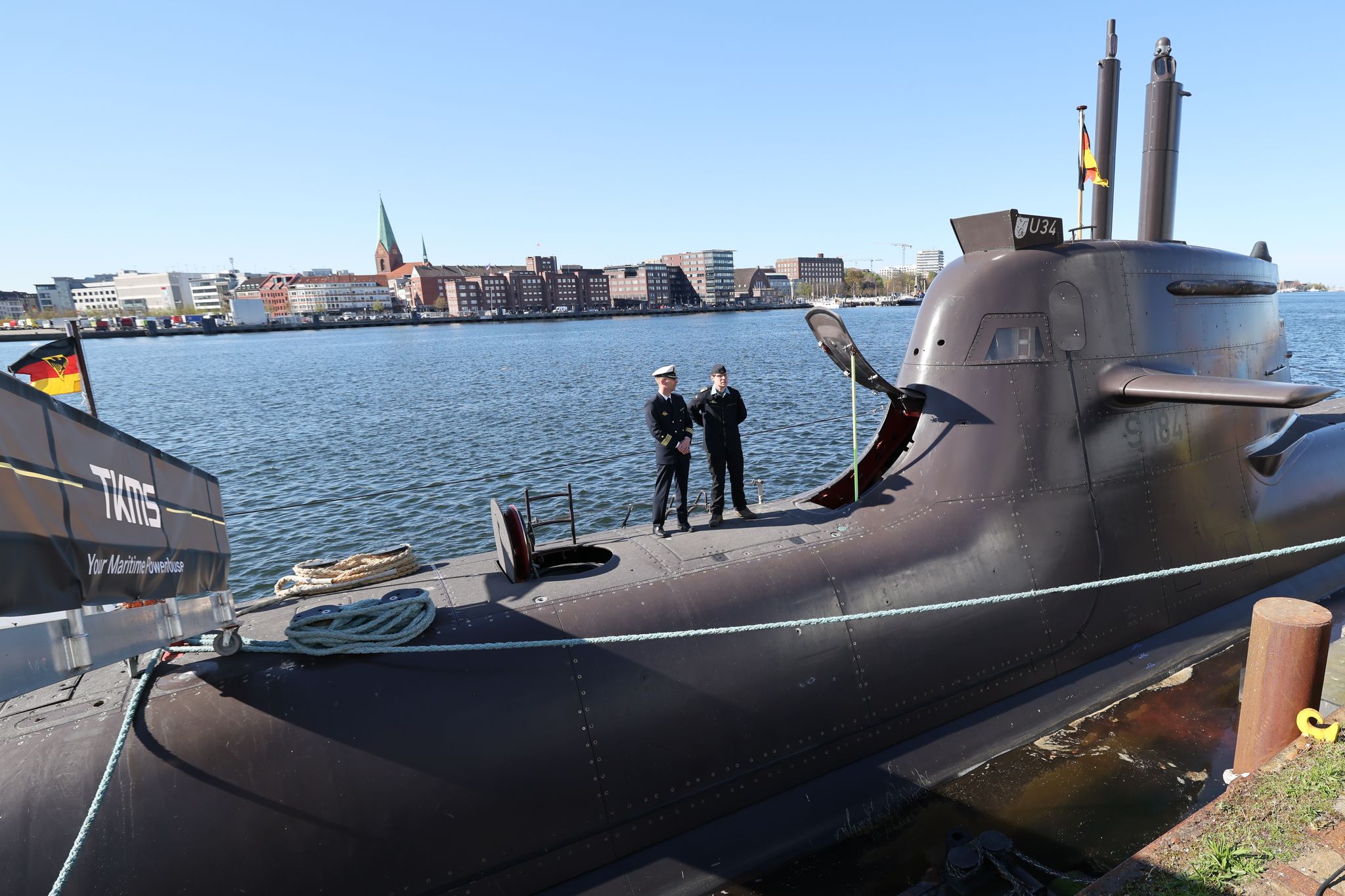
The Ghost in the Hull: Germany Looks West for Submarines, Redefining NATO’s Deep Waters
POLICY WIRE — Berlin, Germany — You know a continent’s military industrial complex is doing things a bit backwards when Germany, a historical heavyweight in shipbuilding, is looking across the...

POLICY WIRE — Berlin, Germany — You know a continent’s military industrial complex is doing things a bit backwards when Germany, a historical heavyweight in shipbuilding, is looking across the Atlantic for its next batch of advanced submarines. It’s an unlikely role reversal, a subtle tremor preceding the official pleasantries of the upcoming NATO summit. Germany, ostensibly at the forefront of European defense spending after years of — shall we say — ‘strategic underinvestment,’ is reportedly circling Canadian shipyards for a potentially substantial order of submarines.
It’s not just about subs; it’s about signaling. And what it’s signaling right now is a tangled web of industrial capacity, political will, and the very real crunch facing NATO members. Canada, long a diligent if often understated player in alliance defense, finds itself in a peculiar negotiating position. While its own fleet modernization efforts have been a protracted affair, its defense manufacturing prowess—even if partially dormant for specific platforms—is suddenly looking mighty attractive to Europe’s economic engine.
Chancellor Olaf Scholz’s administration, facing heightened regional anxieties and a resurgent demand for naval assets, appears less concerned with “Made in Germany” stickers on every piece of kit and more with getting sophisticated metal into the water. Because frankly, the clock’s ticking on Europe’s rearmament drive. Defence Minister Boris Pistorius, known for his no-nonsense approach, didn’t mince words, even if he kept official pronouncements vague. “We cannot afford sentimentalism in national security. If an allied partner can meet our strategic needs with a robust product, we don’t just consider it; we actively pursue it,” a spokesperson for his office told Policy Wire, all but confirming the active discussions.
And let’s be clear: Canada isn’t just selling glorified tugboats. We’re talking serious capabilities. Germany’s reported interest is in platforms that could enhance its underwater surveillance and deterrence capabilities in the Baltic—a domain of heightened scrutiny these days. It’s a curious dynamic, Canada potentially aiding Germany’s naval rearmament, while its own defense industrial base still grapples with a decades-long struggle to replace its own aging submarine fleet. For instance, Canada’s four Victoria-class submarines, acquired from the UK in the late 1990s, have an average availability rate of just 45%, according to a 2022 parliamentary defense committee report, frequently hobbled by mechanical woes.
But the calculus goes beyond transatlantic arms deals. It hints at how Western security strategy now operates. The sheer demand for high-end military equipment among NATO members is creating a scramble, making old notions of industrial self-sufficiency seem, well, quaint. It impacts everyone. You see this play out even in regions far from the North Atlantic—like Pakistan. That nation, navigating its own complex geopolitical landscape with China and India on its borders, has actively sought to modernize its naval capabilities, including submarines from non-NATO suppliers. This German-Canadian maneuvering sets a precedent; it illustrates a world where cutting-edge defense technology increasingly floats across oceans and alliances, creating new supply chains and, potentially, new strategic dependencies even for traditional military powers. The global defense market isn’t a zero-sum game; it’s a rapidly shifting ecosystem.
Because ultimately, when established European powerhouses look abroad for specialized military hardware, it signals a deeper reorientation within the alliance. Ottawa, for its part, sees this as a moment of “alliance synergy.” A senior official within the Canadian Ministry of National Defence, speaking anonymously due to the sensitive nature of the ongoing negotiations, remarked, “We’ve always been committed to collective defense. This isn’t just about selling steel; it’s about bolstering shared security. When a NATO partner needs to strengthen its navy, and we can facilitate that, it’s a win for everyone at the table.”
It’s not without its critics, though. Some in Berlin are grumbling, wondering why Germany isn’t simply ramping up its *own* submarine production more aggressively. But money talks, and timely delivery screams, especially with summits around the corner and geopolitics always on a slow boil.
What This Means
This potential deal is less about individual procurement and more about the retooling of the entire Western defense apparatus. Economically, it’s a massive boost for Canada’s defense industry, validating its high-tech manufacturing capacity on the global stage. It shows that supply chain resilience and diversified procurement are now as essential as the weapon systems themselves. For Germany, it’s a pragmatic acknowledgement that rebuilding its military—and meeting NATO’s new spending targets—means looking beyond its borders and leveraging allied capabilities, even those across an ocean. This kind of inter-allied trade-off strengthens collective security while redistributing the industrial burden. Politically, it deepens military ties between North America and Europe at a time when cohesion is constantly being tested. But don’t expect Germany’s deep-sea expertise to atrophy; this is probably a temporary fix, not a permanent retirement of German ingenuity, just a strategic shortcut on the path to military readiness. It’s a game of strategic pragmatism, not purist nationalism.