

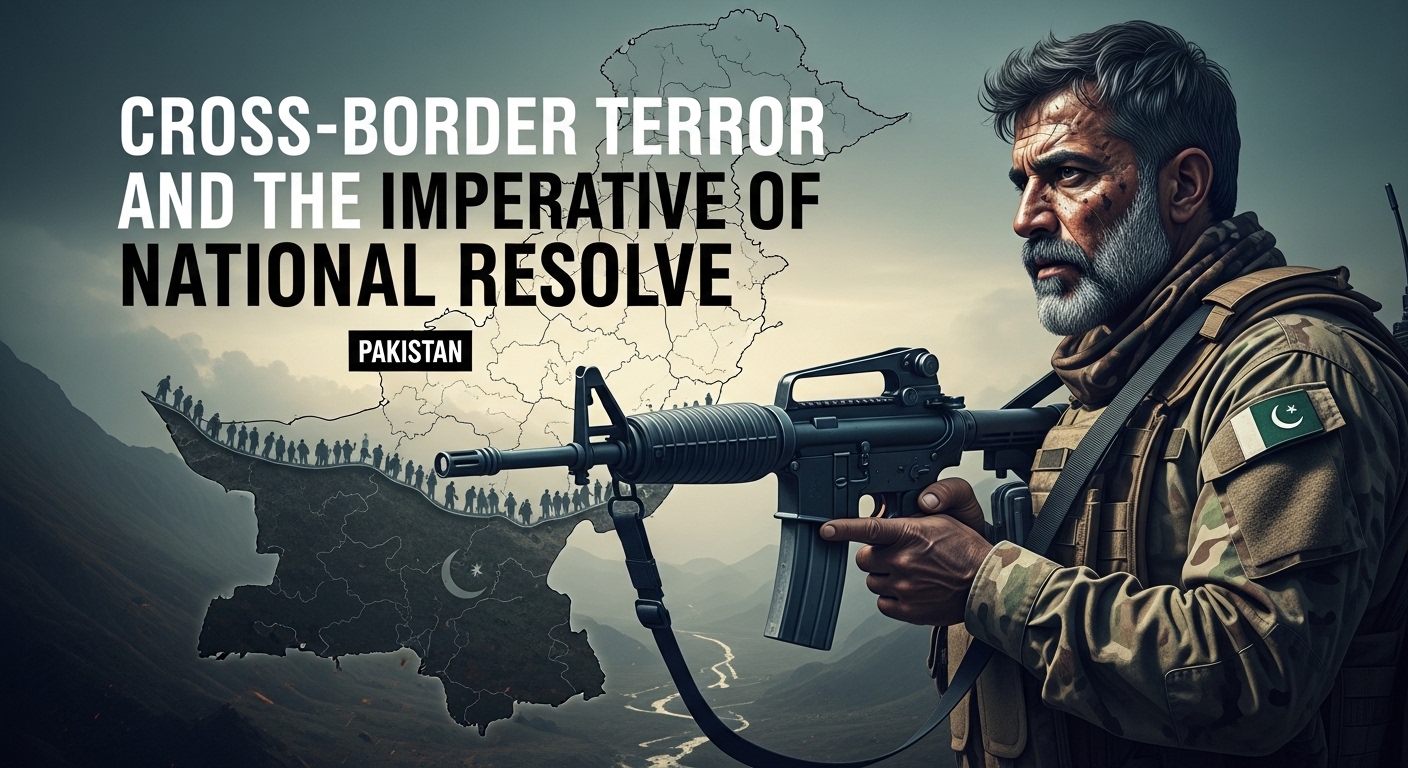
The recent escalation of terrorist attacks inside Pakistan is not random violence. It is strategic signaling. The burning alive of Frontier Constabulary personnel in Bannu, the martyrdom of DSP Asad Mahmood in Shakardara, and the suicide bombing in Bhakkar during Ramadan are not isolated security failures. Out of Afghanistan came fresh waves of fighters aiming straight at Pakistan’s stability, pushing on both inside tensions and outside defenses. Last year saw Pakistan climb fast among nations hit hardest by deadly attacks, numbers jumping high when set beside earlier counts. Many of those killings link back to Fitnah-al-Khawarij (FAK), which rebuilt its network just beyond the frontier after 2021 slipped away. What you see here isn’t guesswork – it stands recorded, clear and confirmed.
After Kabul fell, militant hideouts quickly returned. With little resistance, new fighters began joining, old camps restarted training, while leadership hierarchies rebuilt themselves. Pakistan has told the Afghan Taliban government multiple times: hosting insurgents targeting Pakistan breaks fundamental rules nations must follow. Still, reactions remain uneven. Split by rival groups within, burdened by financial hardship, cut off from global partners – the Afghan Taliban struggle on several fronts. However, internal fragility does not absolve external accountability. No sovereign state can tolerate cross-border terrorism under the justification of limited capacity. Strategic patience, while often necessary in complex regional environments, must not mutate into strategic paralysis.
At the same time, the regional picture cannot be viewed in isolation from India’s long-standing doctrine of sub-conventional pressure. The exposure of Kulbhushan Jadhav revealed the architecture of Indian covert interference inside Pakistan. Since then, the character of destabilization has evolved into a more sophisticated hybrid model leveraging proxy actors, disinformation campaigns, and regional instability to stretch Pakistan’s military and economic bandwidth. A destabilized western border serves a strategic function for New DelhiOne challenge emerges across multiple directions, yet stops short of open military conflict. Resources dwindle while strategies grow tangled, uncertainty swelling alongside. Operating within unclear boundaries allows hybrid tactics to take root – denials sound innocent, though they may be carefully staged. When global actors treat similar aggressions differently, the principles they say they uphold begin to weaken.
Right now, fresh outbreaks of violence carry meaning. As Pakistan works to steady its economy and reshape its global trade stance – aiming for stronger cross-border links and renewed trust from investors – attacks interfere. These acts stall movement forward. They scare off investment, push up expenses tied to safety and coverage, while feeding an image of weakness. A rise in armed resistance isn’t merely driven by land goals or beliefs; it targets financial advancement too. Harming people matters less than halting growth – it’s progress they aim to stop.
Designed to upset balance, terrorism thrives on chaos rather than symmetry. Aimed at shaking minds, it pushes societies toward panic, division, and doubt in authority. Once fear splits communities along political lines post-attack, the attackers gain ground silently. In the mid-2010s, Pakistan weakened terrorist networks most effectively during moments of unity between state institutions and citizens. Better intelligence sharing emerged then; operations continued steadily while key militant setups collapsed under pressure. What held people together wasn’t just emotion – it acted like fuel for greater impact. This idea still carries weight now.
Right now, a measured answer matters more than an impulsive one. Responding too strongly could lead to being left out on the global stage along with financial strain; responding too weakly might encourage opponents to push further. Carefully targeted security actions need to run alongside continuous talks involving Kabul, consistent revealing of covert influence tactics within international groups, and strengthening society from within – all at once. Efforts to prevent extremism, support for stable economies, and control over public messaging hold equal weight compared to military force. Security today involves many layers beyond just defense.
It matters how we see right and wrong in this fight. When attacks happen in holy times, like suicide blasts during Ramadan, something deeper breaks down. Burning the bodies of Muslim guards shows a clear collapse of respect. These acts do not come from devotion to religion or people. Instead, they oppose stability and shared human values. Pacing the thin line where disorder meets order, Pakistan’s military bears a quiet burden – enabling commerce, classrooms, open streets. Not theory, not speechmaking defines their role, but survival itself.
The central question is not whether terrorism exists. It does. The question is whether internal divisions will magnify its impact. Sovereignty is strongest when reinforced by consensus. Territorial integrity is secured not only through force of arms but through unity of purpose. Pakistan has endured darker chapters and prevailed. It will do so again provided that national resolve outweighs partisan discord and strategic clarity replaces reactive emotion.
This moment is not merely a security challenge. It is a test of cohesion. And cohesion, more than any weapon system or diplomatic note, remains Pakistan’s most decisive strategic advantage.
Author