

Whispers of Peace: Markets Flutter as Trump Touts Iran Deal Progress Amidst Strait Standoff
POLICY WIRE — New York, USA — The global economic apparatus, that jittery, hyper-responsive beast, doesn’t often take its cues from a carefully calibrated diplomatic statement. Yet, on Monday, as...

POLICY WIRE — New York, USA — The global economic apparatus, that jittery, hyper-responsive beast, doesn’t often take its cues from a carefully calibrated diplomatic statement. Yet, on Monday, as many in Washington were still rubbing the sleep from their eyes after a long weekend, word from a former Oval Office occupant was enough to shift billions. Donald Trump, it seems, can still move markets, even if only by claiming peace talks with Tehran are chugging along — or so he’d have us believe.
It was a declaration dropped casually, as these things often are, yet it sent a distinct shiver through bourses from Tokyo to Frankfurt. Shares, already perched on the precarious edge of recovery, caught a tailwind. More strikingly, the world’s most crucial liquid commodity — oil — shed more than four dollars a barrel, its sudden dip a testament to just how much instability pricing currently dominates global trade. The market’s logic is pretty simple: peace means supply, — and supply means cheaper crude.
Never mind that the precise details of these supposed breakthroughs remained stubbornly vague. Regional officials, ever the reliable background chorus for such announcements, murmured to The Associated Press on Sunday that the U.S. was closing in on an agreement. Such a pact would ostensibly shutter the long-running conflict, reopen the Strait of Hormuz — a choked arterial pathway for a third of the world’s seaborn oil — and compel Iran to shed its cache of highly enriched uranium. Big asks, don’t you think? Big implications, too.
“We’re making headway,” Trump declared, his words echoing across financial terminals — and newsfeeds. “It’s been a tougher slog than some had anticipated, but we’re dedicated to finding a workable solution. The American people, they deserve a definitive outcome.” It’s a classic Trump play, painting negotiations in bold strokes, framing himself as the closer. And investors, it seems, were willing to bet, even if just for a day, on his optimistic spin. The mood, frankly, feels less like outright conviction and more like wishful thinking, a desperate grasp for good news in an otherwise grimy world.
Because the stakes are huge. Reopening the Strait of Hormuz, that narrow pinch-point between Iran — and Oman, isn’t just about theory. Its recent closure, an unavoidable casualty of the escalating conflict, has effectively choked off countless oil tankers from exiting the Persian Gulf, preventing vital crude from reaching buyers worldwide. Consider Japan: that economic powerhouse brings in roughly 95% of its crude oil through imports, much of it via this very strait, according to data from the Japan External Trade Organization (JETRO). A smooth Hormuz isn’t just good for shareholders; it’s a lifeline for entire nations. For many Muslim-majority nations across Asia and beyond, stability in this region isn’t just a talking point — it’s about putting fuel in cars and keeping the lights on. Even Pakistan, with its burgeoning energy needs, keeps a nervous eye on every tanker passing through that geopolitical bottleneck.
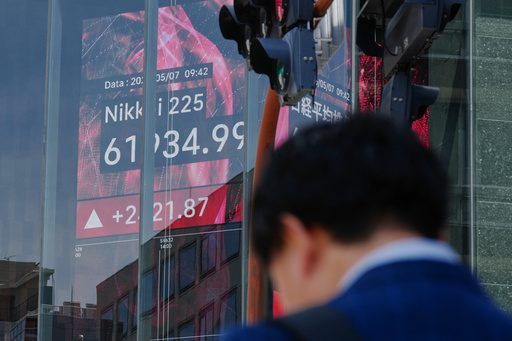
And it’s not just oil. European markets, less exposed to the immediate impact of Hormuz, nonetheless mirrored the bullish sentiment. France’s CAC 40 nudged up 1.1% to 8,203.32. The German DAX, Germany’s benchmark, clocked a 1.0% rise to 25,148.39. In Asia, Tokyo’s Nikkei 225 surged by an impressive 2.9% to finish at 65,158.19. But don’t let these figures fool you into believing in universal euphoria; the market’s response is often a short-term, reflexive twitch.
“Markets are rapidly transitioning from pricing geopolitical fear toward pricing a potential peace dividend,” offered Stephen Innes, a market analyst, in what sounded less like an analysis and more like a diagnosis of the market’s collective psychology. He’s not wrong; Trump-era policy shifts, even verbal ones, always carry a certain weight, a legacy of volatility. And here we’re, navigating it again.
📄 POLICY WIRE WHITEPAPER PUBLISHED: PAKISTAN'S NATIONAL SECURITY POLICY PRIORITIES
👉 READ BY CLICKING HEREWhat This Means
This market reaction, while immediate and substantial for oil prices — Benchmark U.S. crude shed $4.77, pushing it to $91.83 a barrel — is perhaps less about the substance of a deal and more about the collective sigh of relief from investors utterly exhausted by geopolitical brinkmanship. Because let’s be frank, the global economy has been under enormous strain. Inflationary pressures haven’t magically disappeared. Lingering conflict, real or perceived, only adds fuel to that particular fire.
Economically, a genuine de-escalation with Iran could stabilize energy costs, easing pressure on consumer prices and corporate balance sheets. For nations like India and Pakistan, heavily reliant on imported energy, even a whisper of stability from the Persian Gulf offers a glimmer of hope against the relentless grind of trade deficits. But this isn’t a done deal, not by a long shot. Negotiations, especially with Iran, have a rich history of unraveling. This could just be another fleeting moment of market euphoria, a cruel joke before the next flare-up.
Politically, Trump’s announcement serves multiple masters. It allows him to claim credit for progress, burnishing his image as a dealmaker, even from the sidelines. It also throws a wrench into the current administration’s foreign policy efforts — a subtle, often effective tactic. And it forces Tehran’s hand, in a way, daring them to dismiss potential talks while the world watches. The implications ripple far beyond the trading floors, influencing everything from the price of petrol at your local pump to the complex dynamics of regional power in the Middle East. It’s a high-stakes gamble, always is when you’re talking about Iran and oil, and frankly, the betting public just wants a stable return on their peace investments.
For more on regional complexities and global policy implications, consider reading this analysis on India’s post-election decrees.