


Stanford’s Unlikely Victory: When Blue Bloods Embrace the Market’s Brute Force
POLICY WIRE — Palo Alto, USA — When four of Stanford’s elite wrestlers — three of them All-Americans, no less — decided to test the transfer portal’s tumultuous waters, it wasn’t just a...

POLICY WIRE — Palo Alto, USA — When four of Stanford’s elite wrestlers — three of them All-Americans, no less — decided to test the transfer portal’s tumultuous waters, it wasn’t just a handful of athletes seeking new pastures. No, it was an institutional moment, a bracing dip into the cold, mercenary reality of modern collegiate athletics for one of its most storied, if often outwardly restrained, academic giants. It’s no longer about simple loyalty or alma mater spirit. It’s about the market, raw — and unvarnished. Even for Stanford, a place that prides itself on legacies stretching back generations, the wallet talks.
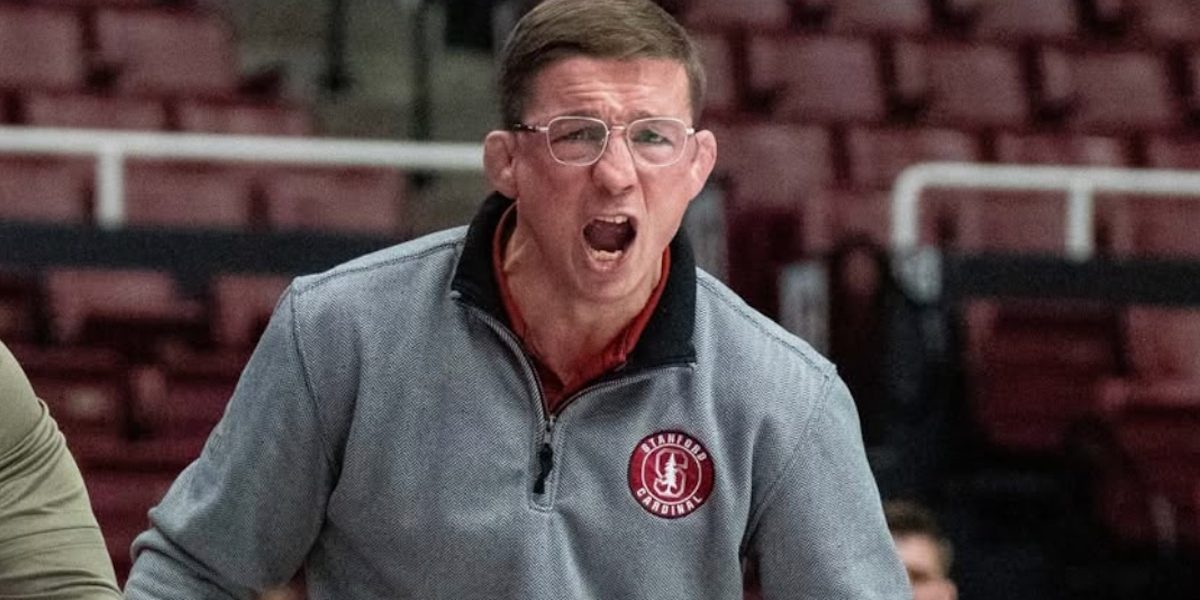
Wrestling coach Chris Ayres must’ve felt a familiar knot tightening. Imagine the scene: A strong 6th-place finish at the NCAA championships, an individual national champion in Aden Valencia. The program’s momentum, it seemed, was finally building toward something substantial. And then, wham. Nico Provo, Tyler Knox, Hunter Garvin, and Lorenzo Norman (though Norman ultimately headed for Oklahoma State, a not-insignificant defection in itself) all peered over the fence, eyeing greener grass. Any rational observer could tell you, losing those three core players would’ve left gaping craters in a roster that Ayres had meticulously — painstakingly, some might say — constructed.
“The best thing that came out of this whole exercise was the administration’s response,” Ayres shared with The Athletor Podcast, a glint of relief in his voice. “So we have a new AD, he’s been here not even a year, former CEO of Nike, he’s transformed this place. So I got into this jam with these guys going on the portal, — and you know, you never let a good crisis go to waste. So we had basically scrambled the jet fighters, and there’s no way, zero chance I would have been able to keep these guys without the response of this administration.” Jet fighters, indeed. Because what else do you call an institutional full-court press to retain high-value assets in a multi-billion dollar enterprise?
It’s no great mystery, of course, what those “jet fighters” carried. While Ayres didn’t specify, everyone in college sports knows the three-letter acronym that moves mountains, or, in this case, keeps wrestling prodigies rooted: NIL. Name, Image, Likeness. It’s the mechanism that has radically reshaped how collegiate athletes, even those outside football or basketball’s towering shadow, perceive their value. Guys like Knox were rumored to be following former assistant coach Hayden Hidlay to NC State—a common playbook tactic that used to gut programs.
But Provo, Knox, — and Garvin, unexpectedly, are back. Rejoining Valencia and other top contenders like Jack Consiglio, Daniel Cardenas, and Angelo Posada, they form what looks, on paper anyway, like one of the nation’s most formidable rosters. The perceived prestige of a Stanford education, it turns out, is a powerful lure, but these days, it rarely functions without a significant financial chaser. The academic aura and the potential for a lifetime of lucrative post-athletic endeavors are weighty, yes, but money speaks a universal language, whether you’re chasing a tech fortune or a wrestling title. And frankly, this newfound flexibility has consequences beyond campus walls, particularly in how institutions across the globe now perceive the value — and price — of raw talent. Nations in South Asia, for instance, routinely battle the gravitational pull of Western universities, where both academic opportunities and the newfound commodification of skills, even athletic ones, create powerful incentives for their best and brightest to migrate. The dynamics aren’t so different; it’s just that here, the stakes are measured in national championships, not national brain drain statistics.
This isn’t an isolated incident. In 2023, Name, Image, and Likeness (NIL) collectives funneled an estimated $1.2 billion into NCAA athletic programs, with Power Five conferences claiming the lion’s share, according to data from industry analytics firm Opendorse. It’s a tidal wave of capital, reshaping traditions — and forcing old-guard institutions to adapt or face obsolescence. Stanford, with its pristine reputation, is no longer immune to the blunt instruments of the market. And its willingness to wield them has set a precedent, illustrating that even for the purists, compromise is the order of the day. “They want to be great at wrestling, they want to be great at athletics, and they want to be great at academics,” Ayres concluded, framing the administration’s support as a triple threat. “Their reaction is huge, — and probably the best thing we got out of this was their involvement. They realized they could help, and they did help a lot.”
📄 POLICY WIRE WHITEPAPER PUBLISHED: PAKISTAN'S NATIONAL SECURITY POLICY PRIORITIES
👉 READ BY CLICKING HEREIndeed. Dr. Evelyn Reed, Stanford’s Associate Vice President for Athlete Development, echoed this sentiment in a recent internal briefing. “We’re not just buying talent; we’re investing in student-athletes who embody Stanford’s spirit of excellence, on the mat and in the classroom,” she noted, perhaps a tad disingenuously, for an institution that’s suddenly gotten quite aggressive in its ‘investments.’ “Our commitment reflects a broader understanding of today’s collegiate landscape and ensures we remain competitive in every arena.” That’s market-speak, alright. It means Stanford’s administration has, by its own account, stepped up. But at what cost to the ‘amateur ideal’ they — and many others — once so staunchly defended? For more on the ruthless arithmetic of big money sports, see IPL’s Ruthless Arithmetic.
What This Means
This episode at Stanford offers a telling snapshot of American higher education’s conflicted soul. On one hand, elite universities like Stanford cling to an image of intellectual pursuit — and holistic development. On the other, they’re navigating an increasingly professionalized collegiate sports system where athlete retention requires significant financial outlay, often orchestrated through nebulous NIL collectives. It reveals a pragmatism that sometimes borders on hypocrisy: academic integrity, but only if it doesn’t hamstring athletic ambition.
Economically, this is an arms race, accelerating rapidly. Institutions that cannot, or won’t, engage in aggressive NIL activities risk becoming feeder programs for wealthier, or simply more committed, rivals. For universities, it’s no longer about mere scholarships; it’s about establishing robust — and often creatively structured — funding pipelines. This pushes a subtle, yet undeniable, burden onto university fundraising departments, now tasked with securing athletic ‘investments’ that directly benefit individuals, blurring traditional lines of donor intent. Politically, it signals a deeper entrenchment of big business principles within an educational framework. It questions the very definition of a ‘student-athlete,’ shifting the paradigm from ‘student first’ to ‘athlete-as-asset.’ And because this model requires vast capital, it inevitably creates a widening gulf between programs that can play this game and those that simply cannot. This stratification impacts not just athletic competitiveness, but also potentially influences academic pipelines and institutional prestige, with ramifications extending well beyond the wrestling mat.