
Croisette Circus: Amidst Glitzy Chaos, Cannes Reels in Quiet Industry Anxieties
POLICY WIRE — Cannes, France — The champagne’s already chilling on the Croisette, and the photographers are limbering up. But don’t let the relentless sparkle fool you: beneath the dazzling veneer of...

POLICY WIRE — Cannes, France — The champagne’s already chilling on the Croisette, and the photographers are limbering up. But don’t let the relentless sparkle fool you: beneath the dazzling veneer of the Cannes Film Festival, a low hum of anxiety resonates, echoing far beyond the sun-drenched beaches of the French Riviera. It’s not just about who takes home the Palme d’Or this year; it’s about who’s buying, who’s watching, and just how much of Hollywood’s once-absolute dominance has quietly, yet decisively, slipped away.
Hollywood, the traditional gravitational center of the global movie biz, finds itself largely sidelined for the 78th edition. Oh, sure, there’ll be plenty of Tinseltown expats soaking up the rays and cutting deals, but their blockbuster studio offerings? Not so much. This year’s lineup feels less like a studio showcase and more like an affirmation of cinema’s evolving, deeply globalized landscape. Park Chan-wook, the acclaimed South Korean auteur, leading the jury—that’s a subtle yet striking shift in itself, isn’t it?
Because, as Cannes Artistic Director Thierry Fremaux so succinctly put it to a small gathering of journalists (and myself, obviously, among them) on the eve of the festival, “Look, we’re not just screening movies here; we’re trying to divine the zeitgeist. It’s an imperfect science, sure, but what isn’t?” His words hung in the air, a pragmatic concession amidst the usual PR gloss. He’s not wrong. The world’s film markets are in flux, audience habits have splintered, and the old empires, well, they’re not what they used to be.
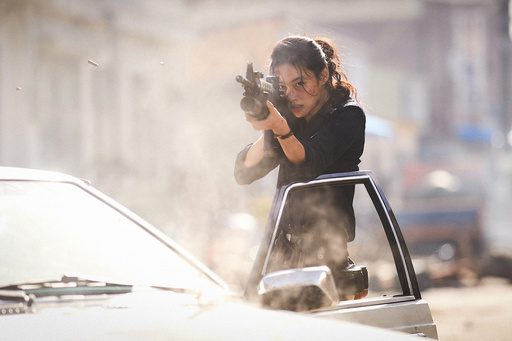
So, what *are* we seeing? A roster heavily weighted toward international artistry. Na Hong-jin’s sci-fi thriller, ‘Hope,’ fresh from South Korea, for example, promises to play fast and loose with genre expectations. You’ve got Michael Fassbender and Alicia Vikander mixed into a Korean cast, signaling that borders are merely suggestions in this cinematic economy. James Gray’s ‘Paper Tiger’ and Ira Sachs’ ‘The Man I Love’ offer some American counterpoints, but they feel like exceptions, not the rule.
And then there’s the undeniable European heavy hitters: Romania’s Cristian Mungiu, Poland’s Pawel Pawlikowski, and the ever-provocative Spaniard Pedro Almodovar, who’s back with ‘Bitter Christmas,’ a project that’s being called one of his most personal yet. Japan’s Ryusuke Hamaguchi, still riding high from ‘Drive My Car,’ brings his French-language debut. His countryman, Hirokazu Kore-eda, famed for his delicate humanism, introduces ‘Sheep in the Box’—a sci-fi premise with an adopted infant humanoid robot that, frankly, sounds exactly like the kind of deeply poignant weirdness Cannes laps up. It’s a slate that defies easy categorization, favoring distinct directorial visions over mass-market appeal.
But how does any of this resonate beyond the privileged few on the Cote d’Azur? For regions like South Asia and the broader Muslim world, a strong showing—even a ripple—at Cannes can transform careers, open distribution channels, and subtly challenge global perceptions. Consider, for a moment, the Pyongyang’s paradox: stories from non-Western contexts often find a louder voice here than almost anywhere else, paradoxically validating perspectives that rarely get Hollywood treatment. While no Pakistani or specifically Islamic-world films are grabbing headlines in the main competition this year, the festival remains a crucial gatekeeper for aspiring filmmakers from these often underrepresented regions. Deals are struck, friendships forged, — and a pathway to Western screens occasionally emerges. It’s slow work, culturally, but it matters.
On the fringes, in the bustling Marché du Film, a different kind of drama unfolds. Independent producers are scrambling, financiers are hedging their bets, and global streamers are — as always — playing their cards close to their chest. Economic studies commissioned by the regional council show the festival’s overall economic footprint exceeded €195 million in 2022, primarily through tourism and hospitality. But for the actual film business, the conversation has gotten quieter, more circumspect.
“It’s all about perception, isn’t it?” observed Helena Vance, CEO of Cinema International Market Analysis, whom I bumped into trying to navigate the crowded alleys near the Palais des Festivals. “One good showing here, and suddenly your indie project gets global traction—or at least a decent lunch meeting. But the sheer volume of content now? It’s relentless. Everyone’s looking for the next thing, sure, but what that ‘next thing’ actually *is* changes every six months.” Her weary sigh, I suppose, summed up the global indie film industry’s perpetual state of high-stakes, low-return gambling.
And Steven Soderbergh’s AI-assisted documentary about John Lennon’s final interview? That’s a whole other can of worms, illustrating both the industry’s hunger for innovation and its occasional dalliance with controversial tech. It feels like a sly nod to the challenges facing filmmakers trying to make their mark. Or a sign of things to come, perhaps. Because as the line between creation and computation blurs, you can’t help but wonder what narratives will actually stick.
What This Means
This year’s Cannes is less a triumph of spectacle — and more a barometer of quiet power shifts. The retreat of major Hollywood players doesn’t signal a decline in film quality; it highlights a growing decentralization of cinematic influence. Europe, and increasingly Asia, are not just producing award-worthy films but are also demonstrating a distinct commercial viability. The political economy of film, once dominated by Los Angeles, is now a much more diffuse beast, one where international co-productions and nuanced storytelling traditions are gaining real financial clout. What gets seen and valued on screens ultimately reflects broader cultural and economic tides, suggesting that traditional Western gatekeepers, while still significant, are slowly making room—whether they like it or not—for a more global conversation. It’s not just art on display; it’s a quiet negotiation of future cultural soft power.